Ladakh's Saffron Experiment Blooms In Record 30 Days, Raises Hopes For Large-Scale Farming
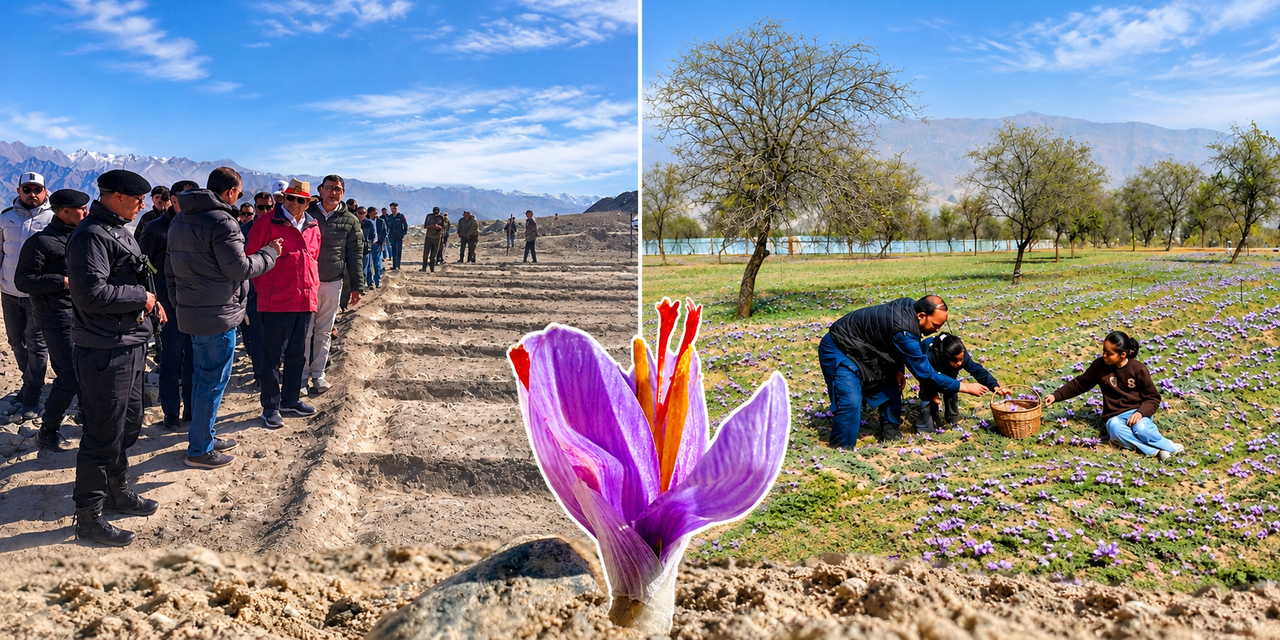
Ladakh's experiment with saffron cultivation has achieved an encouraging breakthrough, with the first flowers blooming just 30 days after planting. The experimental project, launched on previously barren land in Leh, has recorded flowering much earlier than the usual two-month timeline, raising hopes of introducing large-scale saffron farming in the high-altitude Union Territory.
ALSO READ: WHO Report Flags Healthcare Inequality In Bangladesh, Millions Struggle To Afford Treatment
Ladakh's Saffron Experiment Records Early Success
Lieutenant Governor VK Saxena announced the development on Friday, sharing pictures of the saffron cultivation project on X. The initiative aims to explore the possibility of growing the high-value crop in Ladakh, building on the region's success with high-altitude Lilium cultivation.
"I am pleased to announce an ambitious experiment of introducing saffron cultivation to Ladakh, for the very first time, on a large scale," Saxena said in his post.
He also talked about the project's potential to create fresh opportunities for local agriculture and entrepreneurship.
"This breakthrough lays a promising foundation for commercial-scale production, thereby, opening up new avenues for cultivation, agro-based entrepreneurship in Ladakh and paving the way for a stronger, thriving, self-reliant local economy."
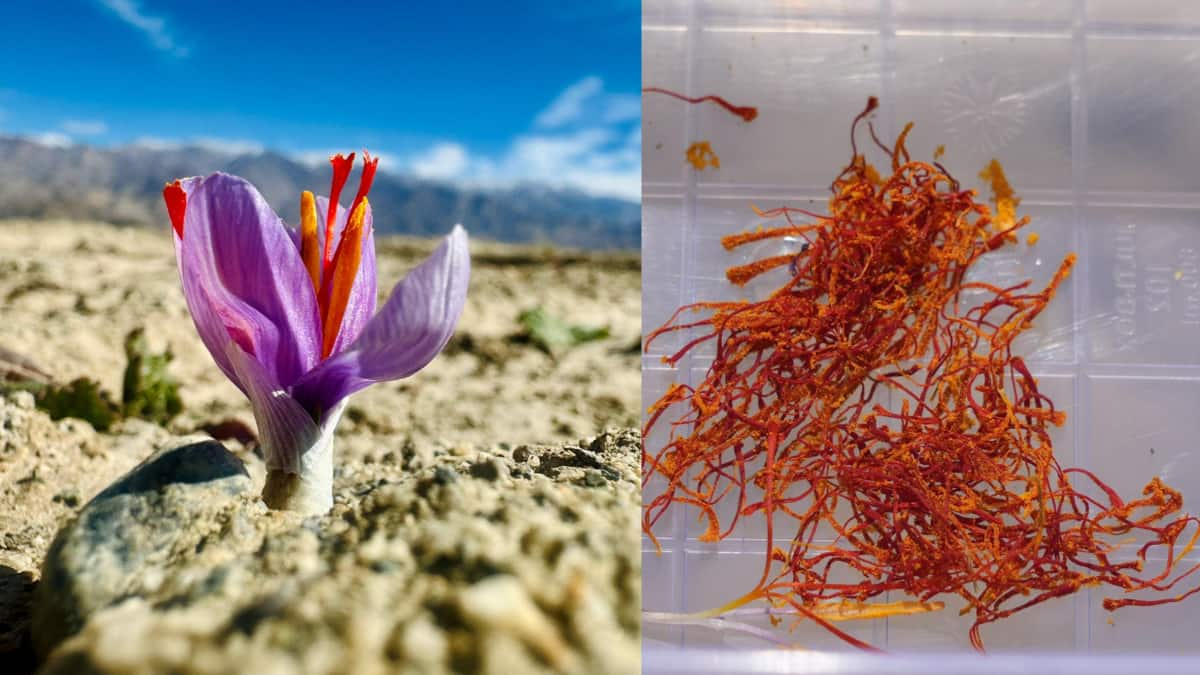
Breaking new grounds in Ladakh’s high-altitude agricultural landscape! Proud to announce that the experimental saffron cultivation, over recently restored degraded land in Leh, has begun to blossom, in a record-breaking 30 days, against the usual two-month timeline for the first bloom. Inspected the saffron field today to witness the first saffron bloom. On an average, 20 to 25 flowers are blooming daily with 72 flowers blooming this morning. In just 04 days, nearly 22 grams of pure saffron has been collected. This remarkable achievement is a powerful testament to the resilience of our environment and the immense, untapped potential of high-altitude farming in our region. This breakthrough lays a promising foundation for commercial-scale production, thereby, opening up new avenues for cultivation, agro-based entrepreneurship in Ladakh and paving the way for a stronger, thriving, self-reliant local economy. My deepest appreciation and congratulations to the Agriculture Department of UT Ladakh, our dedicated and hardworking field staff, for significantly contributing to the success of this pilot project.
— LG Ladakh (@lg_ladakh) November 1, 2026
Saxena congratulated the Agriculture Department of UT Ladakh and the field staff for their contribution to the pilot project.
90,000 Iranian Saffron Corms Planted Across 4,000 Square Metres
According to PTI, the experimental project was launched on October 2, with nearly 90,000 premium Iranian saffron corms weighing around 800 kg planted across 4,000 square metres of previously barren land at Spituk Pharka in Leh district.
The planting material was selected to suit Ladakh's high-altitude agro-climatic conditions.
During his inspection of the field, Saxena witnessed the first flowering. An average of 20–25 flowers are blooming daily, while the field recorded 72 flowers in a single morning.
ALSO READ: Why Do You Feel Sleepy After Eating? 4 Reasons Behind Post-Meal Lethargy
Importance Of Saffron Farming In Ladakh
Saffron is a high-value agricultural crop with strong market demand and the potential to offer farmers an additional source of income.
Jammu and Kashmir currently accounts for approximately 90 per cent of India's total saffron production, making it the country's leading cultivation region.
The Ladakh project is being conducted as a pilot to determine whether the crop can thrive in the region's climatic conditions and assess its commercial potential. If successful, the experiment could open up new possibilities for agriculture and local livelihoods in the cold desert region.
This content is published by ABP Live - Lifestyle and has not been created or edited by Hello Headlines. View original