The Second Life Of Festive Gift Boxes

Some gifts can be more than just gifts; they can be keepsakes. At least that’s what brands are hoping for this Diwali.
Along with the familiar ritual of exchanging sweets, dry fruits and gifts, D2C brands are hoping that customers sign a covenant of sorts while completing their last-minute festive shopping. Because, once the goodies are gone, most boxes often end up in storerooms or dustbins.
But D2C players are giving the humble gift box a second job.
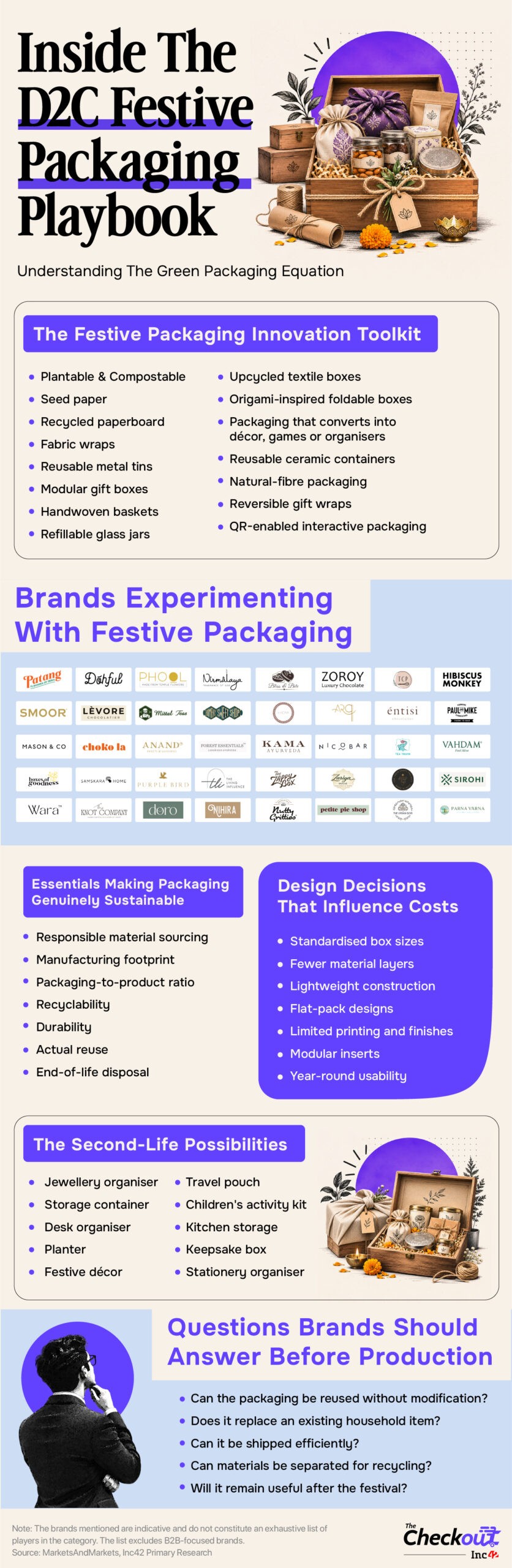
Think handcrafted wooden mini trunks that double up as jewellery organisers or beautifully illustrated tins that find a place on kitchen shelves, or even intricately designed boxes that become decorative pieces in their own right.
When it comes to the festive season, packaging is no longer just about protecting or presenting a product. It is designed to be treasured, reused and memorable.
Gifting platform IGP has designed a bag that doubles as a rangoli stencil. Meanwhile, Jaipur-based artisanal confectionery Bliss & Bite has taken a more luxurious route, packaging its chocolates in hand-painted Pichwai wooden chests that can later find a second life as jewellery boxes or keepsake organisers.
New-age brands Phool, Nihira Mithai, Nutty Gritties, Petite Pie Shop, The Urban Dori and Parna Varna are among those experimenting with festive gift boxes, reusable tins, keepsake containers and multipurpose hampers designed to have a life beyond the celebrations.
The goal is simple. Get consumers to think about the brand and recall it the rest of the year. In the right home, the packaging becomes a marketing asset. And if the gifting experience proves memorable enough, perhaps they’ll return for another purchase.
But here’s the business reality: Behind these creative experiments are design costs, minimum order quantities, production timelines and the risk of being left with hundreds of festive boxes once the celebrations end.
So, as D2C brands try to make festive packaging sustainable, more memorable and commercially valuable, one question deserves a closer look: Can a gift box that refuses to become waste also become an investment that pays for itself?
Beyond Brand Recall
For D2C brands, the real test of festive packaging begins after the celebrations end. Beyond making a lasting impression, the focus is on acquiring new customers, encouraging repeat purchases and sustaining the festive sales momentum long after the season is over.
RENÉE Cosmetics’ festive campaigns have consistently delivered an uptick in sales during Q3 of the financial year (October to December), which typically includes Diwali, cofounder and CEO Ashutosh Valani told Inc42.
The startup claimed that for three consecutive years, sales in the following quarter (January to March) have matched or exceeded Q3 levels. It did not share specific data about each quarter, so the sales numbers could not be independently verified.
Plus, RENÉE cannot attribute these improvements exclusively to its festive season packaging. If you consider the whole campaign, it includes costs for packaging, storytelling, the product itself and marketing activities.
So what can brands do to measure their campaign success and performance? For IGP, rather than assigning a packaging-specific sales figure, it is about examining customer reactions, reviews and social sharing. The customer success team also collects feedback that shapes the next year’s campaign design.
Tarun Joshi, founder and CEO of IGP, puts it, “We judge a festive packaging campaign by whether it leaves customers delighted and makes the experience memorable. Customer delight is harder to count, so we make the packaging useful and DIY-friendly, and look at how customers react and share it.”
But once again, we must stress none of these measures conclusively isolates packaging’s contribution from festive demand, product quality or the broader marketing efforts. In other words, brands can measure what happens after these festive unboxing, but not how much of it happened because of the box.
So, how much should brands spend in terms of both efforts and money on packaging when its returns are so difficult to quantify?
Untangling The Economics
The cost of festive packaging can be relatively easy for an established brand to absorb. For an early stage startup, however, the same exercise can put considerable pressure on margins, pricing and operations.
Valani told us the additional cost has a marginal 1-2% impact on RENÉE’s gross margins, with growing scale and declining customer acquisition costs making it easier to absorb.
IGP, meanwhile, treats creative packaging as advertising expenditure, sometimes building entire campaigns around it.
But the equation changes for early stage startups such as Farm Didi. The startup begins preparing its festive hampers six to eight months before Diwali, coordinating reusable packaging, handcrafted products and production across rural women’s groups. This makes festive gifting a resource-intensive exercise, leaving little room for aggressive discounts.
“That is why it is very important for us to target the right set of customers. We are not looking to target those customers who are looking for heavy discounts,” added Farm Didi cofounder Manjari Sharma.
For smaller brands, minimum order quantities (MOQs) add another layer of risk. Lifestyle brand Includ cofounder Ashwin Rastogi pointed out that customised packaging often requires brands to commit to minimum production volumes across multiple sizes, making the investment difficult to justify if demand falls short. Unlike established players, early stage brands may not have the sales volumes to absorb these costs.
So, while larger brands have more flexibility to absorb or justify packaging expenditure, newer or smaller players must find ways to make every order commercially viable. But even favourable unit economics cannot solve one problem – what happens when brands invest in festive packaging and the expected orders never arrive?
Unlike a digital campaign that can be paused, unsold gift boxes can remain in inventory long after the festivities end. This brings us to a more fundamental question: Should every brand be investing in festive packaging in the first place?
Taking The Gamble
In conversation with industry leaders and startups, it became evident that not every brand needs a Diwali hamper to outshine its competitors and create strong brand recall. Brands need to remember that they need to sell the hampers too to recover their investment.
Arjun Vaidya, founder of Dr Vaidya’s and now an investor at V3 Ventures, believes that brands need to recognise if they have a qualified sales pipeline in the months and weeks before Diwali.
“We are not a Diwali brand, and if you are in the same place, don’t waste time, effort and energy to buy these boxes and do this packaging because it’s a big cost. Having inventory on hand can quickly become a problem,” Vaidya explained.
The problem is that festive packaging has an expiry date. A Diwali-themed box may be difficult to sell once the festival is over, leaving brands with inventory they cannot easily repurpose.
Yet, avoiding festive gifting altogether isn’t necessarily the answer. Food, fashion and certain premium products naturally lend themselves to gifting. Everyday essentials, however, may struggle to attract buyers simply because they come in a festive box. Channel partnerships may drive sales for such brands.
Even for brands in the right categories, execution matters. Festive hampers must offer something genuinely different and, importantly, be priced for the intended customer. A beautifully designed box alone cannot justify an unrealistic price tag.
Rather than competing during peak festive sales, when marketplace traffic costs are high, Includ founder Rastogi suggested occasions such as Halloween and Christmas, where competition is relatively lower and the opportunity to stand out is higher.
Brands can assess whether the additional demand generated will be large enough to justify the upfront investment, inventory risk and higher cost of competing during the season.
Although brands are increasingly pitching reusable packaging as a greener alternative to conventional gift boxes, the real question is how many of these premium wooden boxes, elaborate hampers and reusable containers actually find a second purpose in customers’ homes?
The challenge is that brands have limited visibility into what happens after unboxing. This creates a distinction between packaging that delivers marketing value and packaging that delivers measurable environmental benefits.
A box worth photographing or keeping may strengthen brand recall, but that alone does not make it a right choice if the product itself is not up to par.
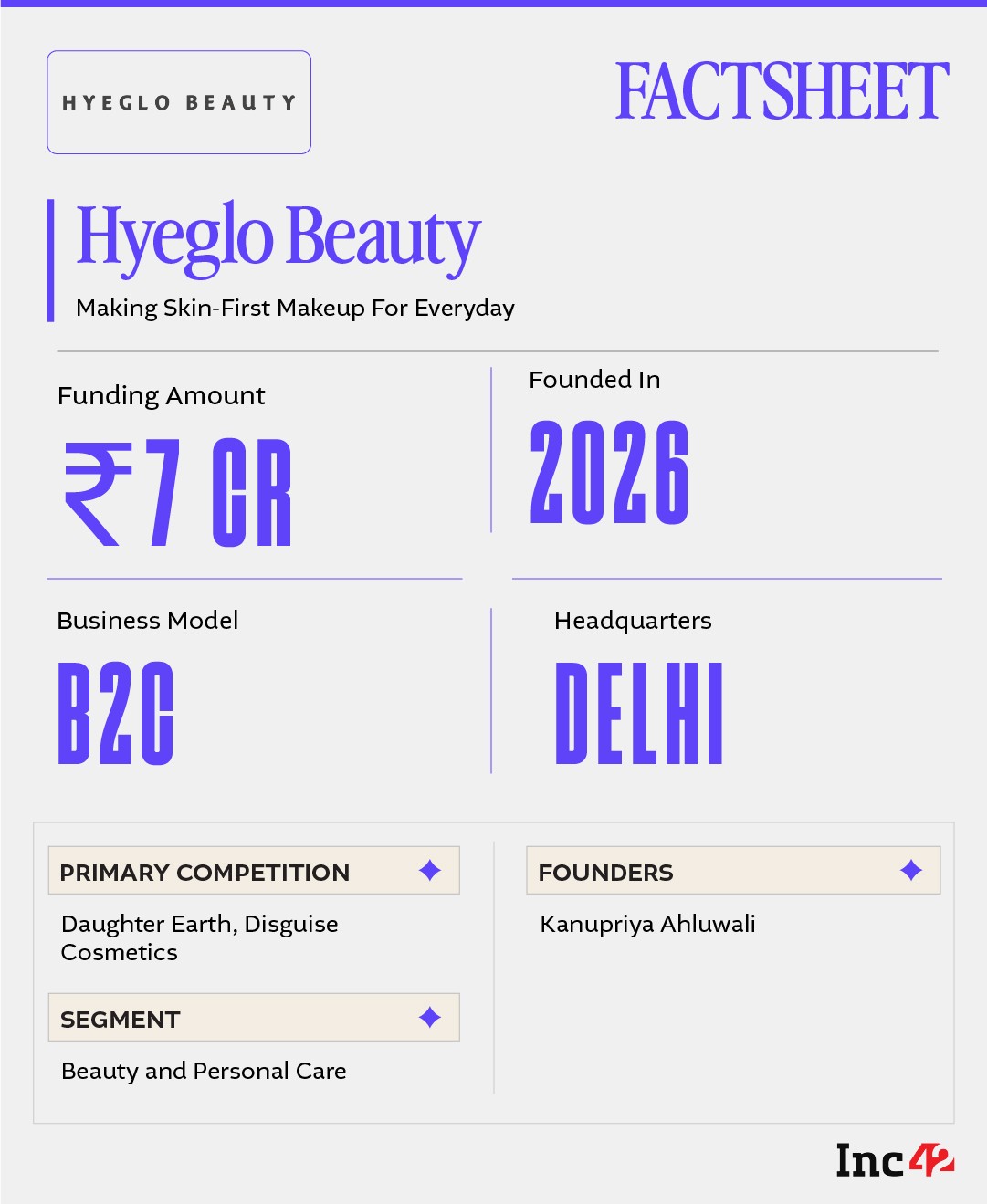
THE STARTUP SPOTLIGHT | HOW HYEGLO BEAUTY IS BRINGING SKINCARE SCIENCE INTO EVERYDAY MAKEUP
- Hyeglo Beauty is building a skin-first colour cosmetics brand by combining makeup pigments with clinically tested ingredients and functional skincare activities. It claims that its formulations are designed to deliver makeup coverage while supporting skin hydration and overall skin health.
- Its product range includes tinted moisturisers, lip and cheek balms, and lip oil stains, with prices ranging from ₹799 to ₹1,350 on its website.
- The startup follows a D2C-led model, selling through its own website. It is looking to build its presence in India’s colour cosmetics market, competing with established and emerging makeup brands.
THE DEEP DIVE
ECOMMERCE BUZZ
Numour’s Fundraise: The D2C skincare startup founded by Divya Jain in 2025, is reportedly in talks to raise $3.1 Mn from Sharrp Ventures. e startup combines skincare formulations with beauty devices and sells products across its website, ecommerce marketplaces and quick commerce platforms.
AI Kitchen Startup’s Fundraise: Smart kitchen appliance startup upliance.ai is in advanced talks to raise $3 Mn–$4 Mn in a Series A round. The startup uses generative AI to automate cooking processes and plans to use the proposed funding for R&D, product improvements and international expansion.
Troovy’s ₹100 Cr Bet: The healthy snacking startup has raised ₹100 Cr in a Series B round led by Fireside Ventures. The startup plans to expand manufacturing and offline distribution while entering new categories, including namkeen, biscuits and cookies.
Bijnis’ B2B Quick Commerce Pivot: Bijnis has rebranded as Zorit and raised ₹27 Cr in a funding round led by Sparrow Capital. The Delhi-based startup has shifted from a manufacturer-retailer marketplace to an inventory-led B2B quick-commerce model, delivering products to neighbourhood retailers from local dark stores.
Edited by Nikhil Subramanium
The post The Second Life Of Festive Gift Boxes appeared first on Inc42 Media.
This content is published by Inc42 and has not been created or edited by Hello Headlines. View original