‘Ramayana’ Review: Ranbir Kapoor, Yash’s Resplendent Retelling Hits The Bullseye
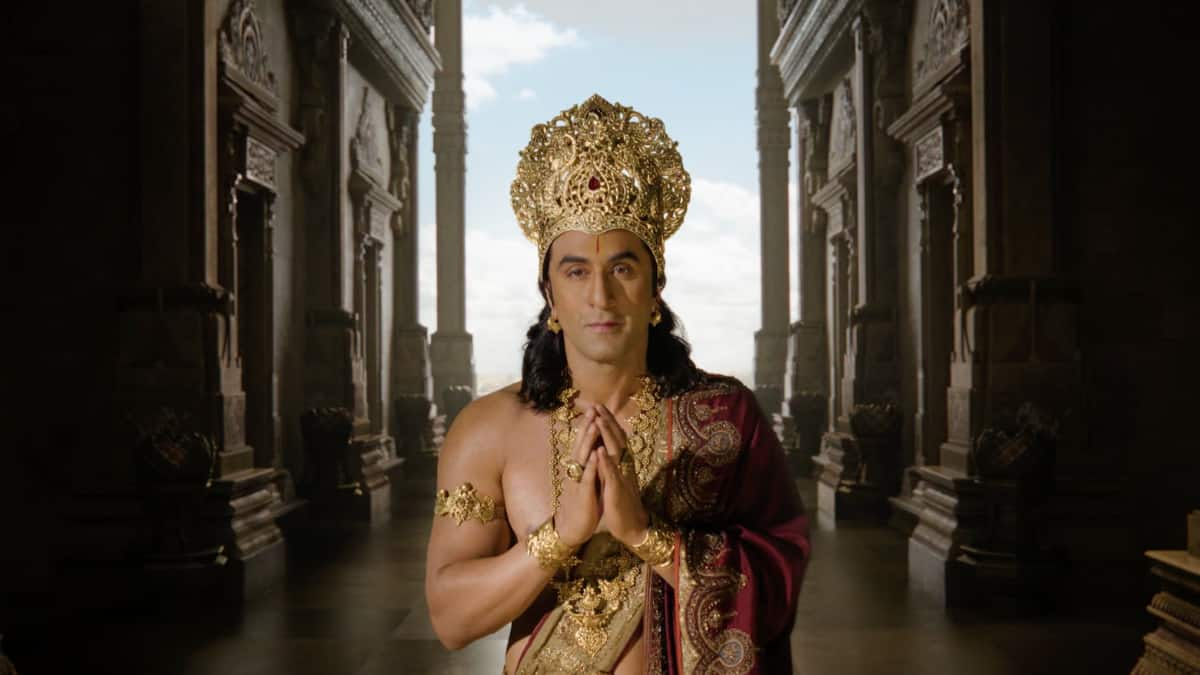
I didn’t grow up with the Ramayana. In my Muslim home, the epic reached me in fragments -- Ram sent into the forest for 14 years, and his wife, Sita, abducted by Ravana, who has ten heads. I also heard about how Sita was kidnapped after crossing the “Laxman Rekha” to pacify an angry sadhu. Friends, school and social media posts filled in a few more blanks, but I never had the bedtime retellings or watched Ramanand Sagar’s Ramayan. So, I walked into Nitesh Tiwari’s film as an outsider, curious and a little unsure whether an epic so deeply rooted in faith and tradition would have room for someone like me. It did. And I walked out impressed, emotionally invested and wanting more.
Ramayana Story
The film follows Valmiki’s epic poem Ramayana and begins by delving into Ravana’s backstory. We meet a man once immersed in music, someone who seemingly had little to worry about beyond his passion. But everything changes when his mother reveals the plight of their community, which is struggling to find food despite having once ruled and enjoyed prosperity. She also tells him that his siblings Kumbhakarna, Vibhishana and Shurpanakha, along with his half-brother Kubera, are ordinary beings like him. Ravana, however, is different.
Driven by a desire to rise above his circumstances and make his mother proud, he embarks on a journey that sees him walk for days before undertaking tapasya for thousands of years. His devotion eventually pleases Lord Brahma, who grants him powerful boons. Dashanan then arrives in Lanka, defeats its inhabitants and claims the throne. He transforms the kingdom into the magnificent Golden Lanka and goes on to become the ruler of all three worlds.
The film also explores key chapters from Lord Ram’s life. Believed to be Lord Vishnu incarnated in human form, Rama is born to King Dashrath and Queen Kaushalya of Ayodhya. We watch him grow into the royal heir, trained in archery and warfare by revered gurus. Yet, what sets him apart from his three brothers - Bharata, Lakshmana and Shatrughna - and the other princes of his age is not merely his prowess with weapons. It is his gentleness, his respect for people and his commitment to dharma: doing what is right, even when it comes at a cost.
Ayodhya adores him.
His path eventually crosses with Sita, the princess of Mithila and daughter of King Janak. At her swayamvar, Rama wins her hand by lifting Shiva Dhanush - which no one could, by the way, at the swayamvar - only to accidentally break it. Lakshman remains by his side throughout, less a sibling and more a shadow who never strays.
Then comes the turning point. On the eve of Rama’s coronation, his stepmother Kaikeyi, after Manthara poisons her mind and reminds her of King Dashrath’s promise, demands that Rama be sent into exile for 14 years. Bound by his father’s word, Rama accepts his fate without a murmur. Sita and Lakshmana, meanwhile, refuse to let him embark on the journey alone. Lakshmana leaves his wife in the kingdom and goes with Sita and Rama.
Their passage into the forest becomes an exploration of wild, unfamiliar and dangerous territory. It is here that Ravana, the powerful king of Lanka protected by a boon from Brahma, abducts Sita and takes her to Lanka. Rama and Lakshman then set out to bring her home.
“Ravana teeno loko ka swami hai, to teeno loko ke saamne uska vadh karunga,” this is what Rama said. The next part will probably show how.
What works
For someone who knew only the broad strokes of the epic, the film fills in the gaps beautifully.
Kaikeyi’s demand is one thing, but the moment she becomes emotional while watching Rama leave for vanvaas adds a layer of poignancy that is hard to ignore.
Dashrath’s grief at being separated from his most beloved son and Rama’s calm acceptance of every obstacle in his path are given enough breathing room to truly land. You don’t need to know the epic by heart to feel the weight of these moments.
I had always wondered why Ravana abducted Sita but had never Googled it or asked anyone, simply because I never felt the need to. The film answers that question, too, with considerable detail. We see how Shurpanakha becomes enchanted by Rama and attempts to approach him by assuming Sita’s form. When Lakshman discovers her deception, he cuts off her nose. Shurpanakha then approaches Ravana and provokes him into seeking revenge, setting the stage for the events that follow.
The pacing, however, is where the film demands a little patience. Since the story is divided across two films, the first act takes its time introducing characters and establishing their worlds. Viewers who know the epic inside out may find themselves fidgeting. As a newcomer, though, I was grateful for the deliberate approach. Every character is introduced with care, and I never found myself wondering who mattered or why.
Once the second half kicks in, the action becomes sharper, the storytelling more assured, and the spectacle begins to take centre stage.
Breathtaking Visuals
This is arguably the film’s biggest strength. The kingdoms, palaces, creatures and celestial realms are brought to life with evident care, and each world has a distinct identity instead of feeling like a variation of the same visual template.
The action sequences are cleanly choreographed, and watching the film in 3D adds an immersive layer to the experience. Whether it is snow seemingly falling towards you, blood splashing across the screen or the wind and other elements surrounding Rama and Lakshman as they navigate the forest, the visual experience often feels tangible. The trailers, it turns out, have revealed only a sliver of the spectacle that awaits audiences.
That said, the visual effects are not without their flaws. The dubbing also falters in a few scenes, with the voices occasionally falling out of sync with the characters’ lip movements. Kumbhkaran’s character comes across more as a caricature than a being born out of mythology.
In a film that aims to envelop you in wonder, these occasional slips can momentarily pull you out of the experience.
Performances
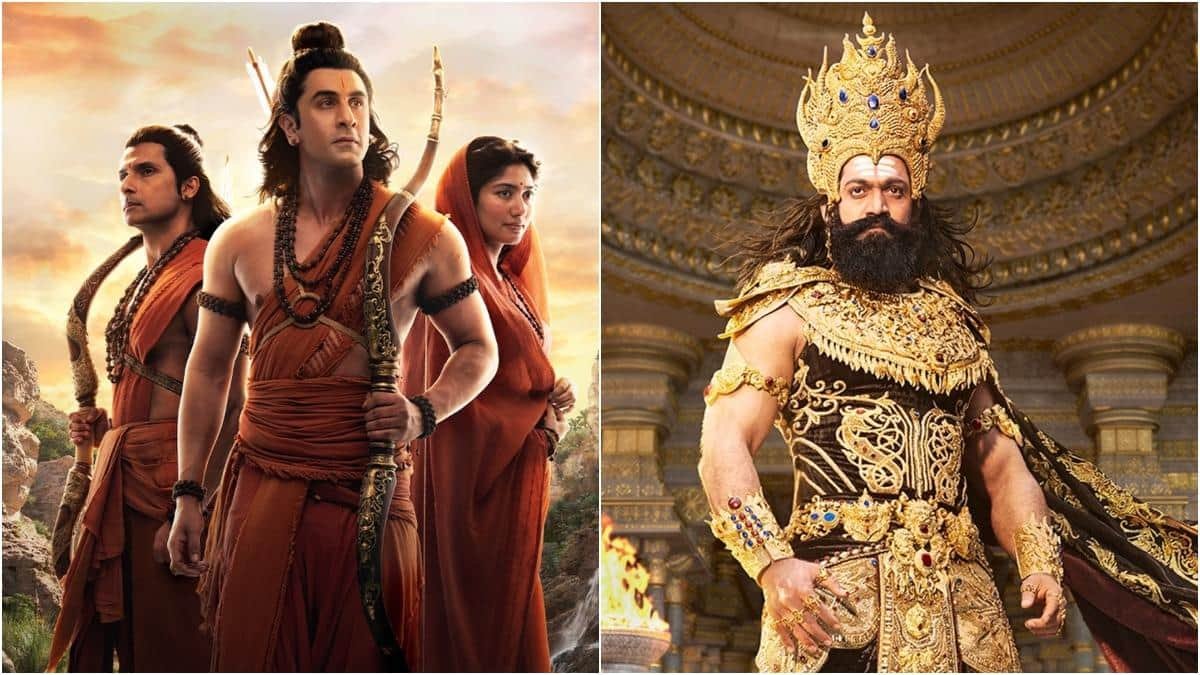
Ranbir Kapoor as Rama: Kapoor settles into the role with a quiet, controlled performance. Those who grew up watching earlier screen portrayals of Rama may miss the character, but Kapoor’s restraint works in the film’s favour. He brings a composed, humane quality to the role.
Sai Pallavi as Sita: This Sita is not simply a woman waiting to be rescued. She heals, fights and stands her ground. The film gives her agency, and Sai Pallavi brings a sense of strength and grace to the character.
Ravie Dubey as Lakshman: Dubey strikes a balance between loyalty, temper and common sense. His scene explaining why he cannot leave Sita alone says a great deal about the character without requiring him to raise his voice.
Yash as Ravana: Yash commands attention through sheer presence. His first glimpse of Sita is particularly chilling, hinting at the darkness and obsession that will shape his character.
Lara Dutta as Kaikeyi and Sheeba Chadha as Manthara leave a lasting impression despite their limited screen time. Arun Govil, who famously portrayed Rama on television, appears as Dashrath.
Music
The expectations surrounding the music were understandably high. With Hans Zimmer and AR Rahman associated with the film, the score had a monumental task ahead of it. The songs and background music lend scale to the action and, at times, a near-spiritual elevation to the narrative. However, despite moments of grandeur, the music may not entirely live up to the towering expectations surrounding it.
Verdict
Ramayana Part 1 has its share of weaknesses, but they don’t linger for too long. Almost every other scene is breathtaking, and film does not lose sight of the fact that this is, at its heart, a story about relationships, duty, faith and sacrifice.
More importantly, the film works both as a homecoming for devotees who have grown up with the epic and as a warm, welcoming invitation for people like me, who are experiencing its story in depth for the first time. It never makes the newcomer feel like an outsider, and that is no small achievement for a tale so deeply woven into the cultural fabric.
The war with Ravana to bring Sita back from Lanka, along with Hanuman’s pivotal role, is still to come. The sequel, therefore, has plenty to live up to. But this first instalment has raised the bar considerably high.
This content is published by ABP Live - Entertainment and has not been created or edited by Hello Headlines. View original