OPINION | India's Refurbished Phone Market Is Growing. It Now Needs A Higher Standard
This year, the cost of owning a new smartphone moved sharply. AI data centres are buying memory chips in huge quantities, and Counterpoint Research expects handset makers to lose out as chipmakers prioritise them. The result shows on the price tag. Counterpoint's tracker has smartphone prices in India up about 21% so far in 2026, the highest of any market it follows. IDC expects the global average price to reach a record $465 this year, even as shipments fall.
Buyers feel it most at festival time. On this year's festive sales, the cheapest iPhone on offer was the iPhone 15, at about ₹68,000 before offers. With household budgets already stretched by the cost of living, many buyers are not giving up on the phone they want.
They are changing how they buy it.
The data shows the shift. In the first half of 2026, India's refurbished smartphone volumes grew 13%, while sales of new phones fell about 11%, according to Counterpoint.
Why Buyers Are Choosing Refurbished
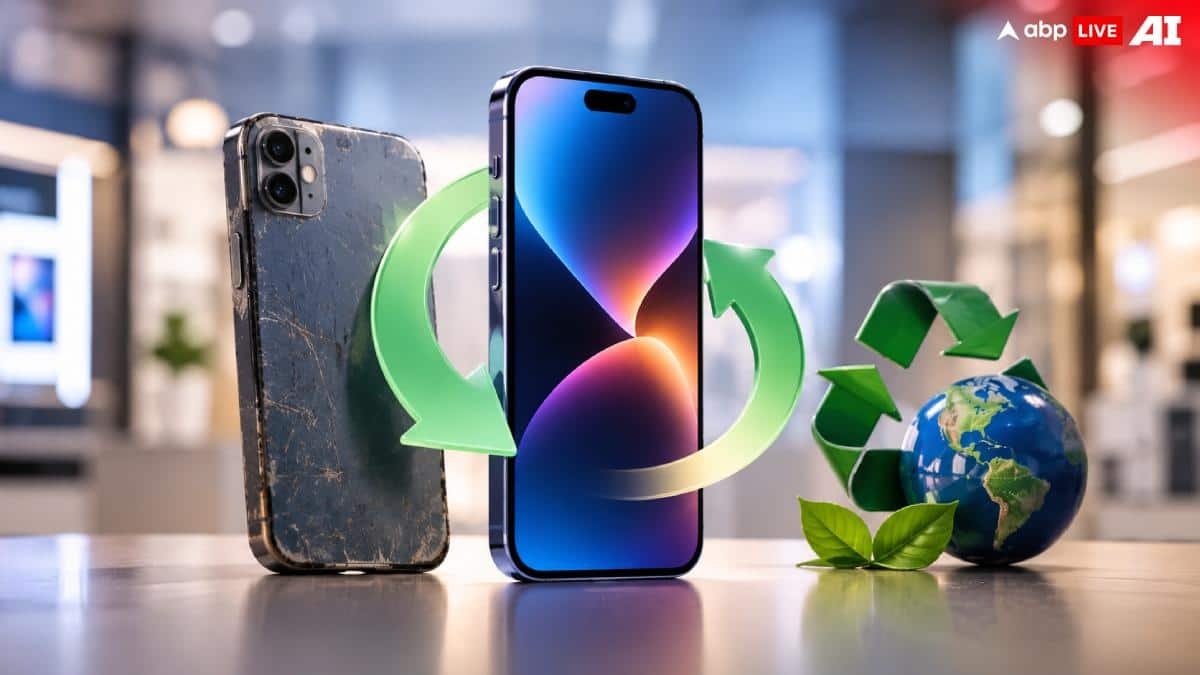
A good refurbished phone gives most of what a new one does, for far less. Take a seven-year-old iPhone 11. A refurbished one in India now sells for about ₹15,500 on average, according to a recent price survey by Mint. A new iPhone starts at several times that, and for everyday use, calls, camera, apps and a good display, the experience is close for most people.
There is a second reason that is easy to miss. A phone is built from a lot of value: the chips, the memory, the display, the battery. When you buy new, you pay for all of it again, at prices that are rising. When you buy refurbished, that value has already been made. You are buying the same hardware, plus the work to bring it back to a good standard.
It is also the lighter choice for the planet. The world made 62 million tonnes of e-waste in 2022, and only 22.3% of it was formally recycled, according to the UN. A phone that is used for a few more years is a phone that is not thrown away early.
Five Myths, Answered Honestly
The word refurbished covers a very wide range, from a phone that has only been wiped and cleaned to one that has been tested and repaired to a set standard. Most myths come from that gap. A renewed phone will never be a new phone, and I would rather say that first. But most of the fears are fixable.
- "Refurbished means broken." Not necessarily. Many refurbished phones were simply traded in or upgraded by owners who had a working phone.
- "The quality will be poor." It depends on who refurbished it and how. Ask what was tested, what was repaired, and to what standard. A phone that has only been cleaned is not the same as one that has been repaired and tested.
- "It will be slow." A phone's chip does not slow down because it has been used before. What matters is whether the model still gets software updates, so check that before you buy.
- "The battery will be dead." This is the most reasonable worry, because batteries do wear. The answer is to ask for battery health in writing. On an iPhone you can check it yourself in Settings, under Battery. Players sell phone we which comes with 100% battery health.
- "There is no warranty, so it is unreliable. “Not every seller offers the same level of protection. Before buying, check how long the warranty lasts, what it covers and how you can get the phone serviced if something goes wrong. Some organised players offer longer warranty periods and access to service centres across multiple cities. The important thing is to understand what is actually covered, rather than relying on the warranty claim alone.
What To Check Before You Buy
Ask the same seven questions of every seller. A good one will answer them easily.
- Warranty. How long is it, is it in writing, and where is the nearest service centre?
- Battery. What is the battery health, and is it in writing? On an iPhone, check it in Settings.
- Repairs. Which parts were replaced, and are they original?
- Standard. Avoid vague grades. Ask what was tested and what the phone has to pass.
- Legitimacy. Dial *06 to see the IMEI and check the phone has not been blocked. The government's Sanchar Saathi portal has a Know Your Mobile check for this. Make sure the phone is free of any account lock and that the previous owner's data is erased.
- Paperwork. Ask for a proper invoice, and a clear return policy.
- Software. Ask how many more years of updates the model will get. If a seller cannot answer these clearly, that is your answer.
Evolution Of Refurbished: Moving Towards Higher Standards
As the refurbished smartphone market matures, a new approach is emerging that places greater emphasis on consistency and quality assurance. While traditional refurbished devices may be sold across multiple condition grades, some organised players are moving towards a more standardised proposition, with defined quality benchmarks and fewer uncertainties for buyers.
This approach involves structured refurbishment processes, extensive device testing, clearly defined battery-health standards and warranty coverage. The objective is to simplify the buying experience by reducing the ambiguity that often comes with comparing devices across different sellers and grades.
For consumers, the distinction is important. The next phase of the market's evolution will depend not just on making smartphones more affordable, but also on ensuring that buyers have clarity about the quality, performance and support they can expect from their purchase.
After-Sales Support Will Define Consumer Trust
A warranty is only as valuable as the service infrastructure supporting it. As consumers increasingly consider refurbished devices in the premium segment, access to reliable after-sales support will play a crucial role in shaping their confidence.
Leading organised players are increasingly focusing on strengthening this proposition through extended warranty coverage, wider service networks and convenient service options, including doorstep pick-up and drop-off. Such measures can help address one of the category's biggest concerns: whether support will be available if a device develops an issue after purchase.
The opportunity is particularly significant beyond metropolitan markets, where access to dependable service can influence purchasing decisions. For consumers making a substantial investment in a premium smartphone, the assurance of accessible support can be as important as the initial price advantage.
Ultimately, the industry's ability to combine affordability with dependable after-sales service will be critical to building long-term consumer trust.
The Market Will Grow Only As Fast As Trust Does
Demand is not the question. New phones are unlikely to get cheaper soon: Samsung itself expects higher component costs to continue through the second half of this year. Buyers will keep looking for better value.
The question is who they will trust. About 80% of India's refurbished volume still moves through the unorganised sector, according to Counterpoint. That is where most of the myths come from. A buyer there often gets a grade that means something different at every seller, a battery they cannot see, and little or no warranty.
This is where organised players matter. They can offer what a street market cannot: a written warranty and service centres to honour it, one clear standard instead of grades, test records for every phone, proper invoices, and a seller who will still be there next year. I would like the industry to agree on what refurbished means. A common standard, tested and disclosed, would do more for this market than any advertising.
(The author is the Founder and CEO of ControlZ)
Disclaimer: The opinions, beliefs, and views expressed by the various authors and forum participants on this website are personal and do not reflect the opinions, beliefs, and views of ABP Network Pvt. Ltd.
This content is published by ABP Live - Technology and has not been created or edited by Hello Headlines. View original