OPINION | Six Years Longer, Still No Promise For Agniveers
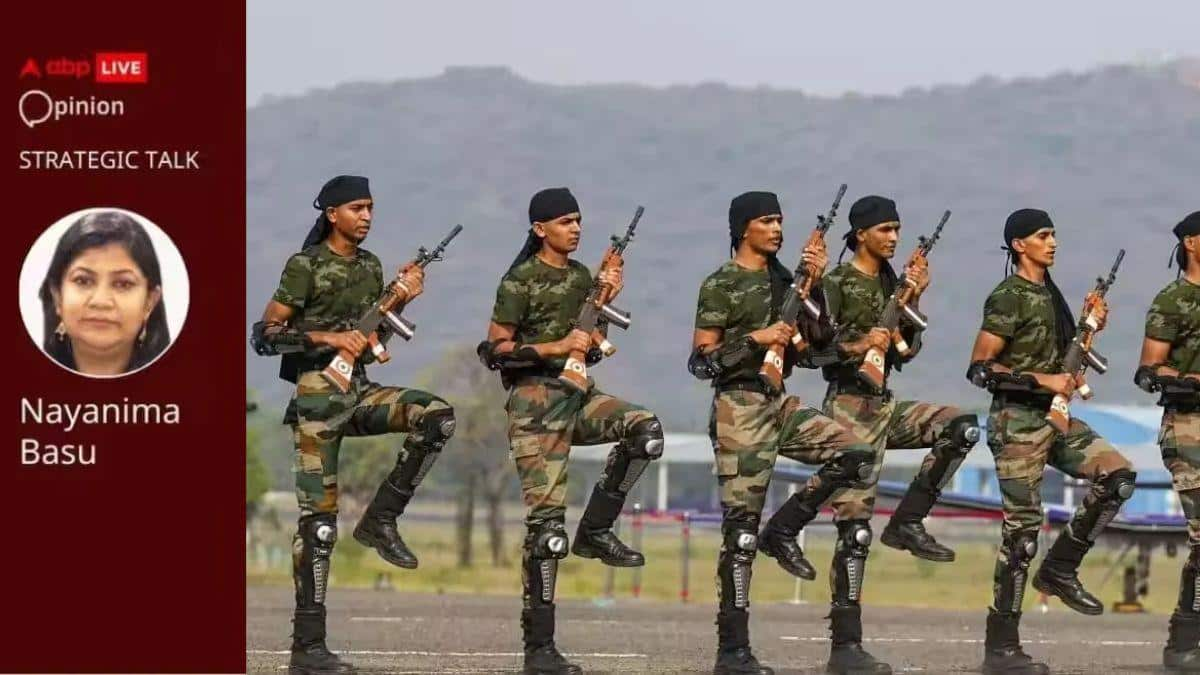
The government calls it a “Second Tour of Duty”, the Chief of Defence Staff General N.S. Raja Subramani calls it a “pathway for all Agniveers to be absorbed”. What was announced on November 4, 2026, just weeks before the first batch of 2022 comprising over 18,300 Agniveers was due to walk out of uniform, is being described as a course correction of sorts. It is not. It is an admission that the original Agnipath scheme was unworkable, dressed up as generosity, and it leaves the core injustice of the scheme intact.
Under the revision, announced by the CDS at media presser, the 25 per cent who are selected on merit after four years will still be taken into the regular cadre as before. The remaining 75 per cent, who were to be discharged in December, will now be offered a voluntary two-year extension — a fifth year at Rs 43,500 a month and a sixth at Rs 47,500 — with an enhanced Seva Nidhi package. At the end of six years, they will be considered for regular enrolment, subject to willingness and “objective selection criteria.” On paper, that sounds like everyone now gets a chance. In practice, it creates a two-tier army, extends uncertainty by two years, and postpones the political problem rather than solving the military one.
The original provision of Agnipath was never just its brevity. It was its premise, that you can ask a 17-and-a-half-year-old to risk his life for the nation while telling him, from day one, that there is a 75 per cent chance the nation will discard him at 22. The revision does not remove that premise. It stretches it. An Agniveer who is not in the top 25 per cent at year four now faces a new choice - leave with Rs 11.71 lakh and no pension, no gratuity, no ex-serviceman status worth the name, or stay on for two more years in the hope, not a guarantee of being regularised at year six.
And, if he is regularised at year six, he will be placed one rank below those regularised at year four. Two soldiers who joined on the same day, wore the same uniform, and patrolled the same border will now enter the regular cadre with different seniority, different pay progression, and different pension clocks, purely because one cleared an arbitrary cut-off two years earlier. That is not meritocracy. This will create more divisions inside the barracks amongst the Agniveers.
The government has been vague, deliberately so, about what objective selection criteria at year six will mean. How many will be taken? Will it be 100 per cent of those who stay? Or, 50%? Will there be another quota? The CDS said “all willing Agniveers will be enrolled… subject to criteria,” a formulation that promises everything but it hardly guarantees anything. After four years of being told one thing and given another, Agniveers have every reason to read that sentence with suspicion.
If the state believes these young men and women were fit to be soldiers after four years and the government’s own assessment says they showed “outstanding performance in skills, motivation, physical fitness and technological prowess” then why make them audition again at six? And if they were not fit, why keep them in uniform for two more years on sensitive postings? The two-year extension solves a problem for Delhi, not for the soldier. It prevents the thousands of trained, yet, unemployed young men from hitting the streets in an election season in Uttar Pradesh, Punjab, Uttarakhand, Himachal Pradesh and Manipur — the very states that supply the bulk of India’s soldiers.
The reason why the Agnipath was created in 2022 with an eye on the defence budget. It was not primarily a military reform. It was a fiscal reform. India’s defence pension bill for 2026-27 is budgeted at Rs 1.71 lakh crore for over 34 lakh pensioners. That is a real fiscal burden. Hence the need to create a class of soldiers who would serve without earning a pension at all. The revision keeps that logic intact.
ALSO READ: OPINION | Interests, Not Sentiment, Will Save India-US Ties
Agniveers in years five and six still get no pension, no gratuity. Even those eventually regularised will have lost six years of regular service for pension purposes compared to a traditional jawan who joined at 18 and served 15-17 years. A six-year version with a slightly higher Seva Nidhi does not repair it. It merely extends the probationary period.
In terms of military effectiveness, the armed forces maintain that Agniveers have performed well. Perhaps they have. Young, fit, tech-savvy soldiers are an asset. But an army is not a startup that thrives on churn. It thrives on cohesion and the deep, tacit knowledge that comes from serving together for a decade or more. A system that sorts soldiers into “25 percent regulars” and “75 percent on extension” at year four, and then sorts them again at year six, is a system designed to destroy cohesion.
How do you build a section, a platoon, a company when a third of its men are constantly wondering if they will be retained, and when the man next to you will outrank you forever because he made a cut-off you missed by two marks? Additionally, do you send him on a difficult operational deployment, knowing he is effectively a temporary worker? The original scheme already created this dilemma. The revision prolongs it. Other major militaries that experimented with short-service models — the US, UK, Israel — did so with robust veterans’ benefits, educational pathways, and guaranteed post-service employment. India offered a lump sum and a certificate. Now it offers a slightly larger lump sum, a skill certificate, and a written exam before the physical test.
If the government had listened to veterans, to the parliamentary standing committee, and to the Agniveers themselves, a real reform would have been straightforward. Several suggestions have been made to raise retention to at least 50 per cent, and eventually to 70-75 per cent, with a clear, transparent, and predictable pathway. Firstly, A soldier should know in his first year what he needs to do to stay and not wait for a Cabinet announcement three weeks before discharge. Secondly, give all Agniveers, whether retained or not, full ex-serviceman status, gratuity, and access to the same resettlement benefits as short-service officers. Thirdly, according to several veterans and the parliamentary committee, there needs to be a guarantee of pension parity. A soldier regularised at year six should not be penalised for the state’s indecision. His service should count from day one. Fourth, recruitment policy cannot be seen through the prism of elections.
Announcing a fundamental change on November 4 for a batch that was to exit on November 21 looks less like a policy move but more a panic management. The government insists the scheme was “never set in stone” but recurring revisions create more instability that the Army cannot afford.
The November 2026 revision is better than letting 18,300 Agniveers leave with just a handshake and some money. To be fair, the government did listen and change course, and that change was needed. But this should not be called a full reform yet.
The system has moved from a four-year contract with a 75 per cent chance of leaving, to a six-year contract where the chance of staying is still not clear. Those who stay longer will also join at a lower seniority, and will still have no pension for six years.
In simple words, young soldiers are being told to serve longer, wait longer, and keep hoping that they will be kept. A country that asks its youth to risk their lives should not make them feel unsure about their future job. If Agnipath has to work, it cannot remain just a way to save money. It has to become what it was promised to be a dignified, secure, and respectable way to serve India.
ALSO READ: OPINION | From Warsaw Pact to Delhi Pact: Poland's Pivot To India
This content is published by ABP Live - India and has not been created or edited by Hello Headlines. View original