How Satin Group’s Sankalp plans to empower India’s next wave of founders
India’s startup ecosystem is witnessing a growing wave of innovation in climate action and sustainability. From students developing affordable technology solutions for micro, small and medium enterprises (MSMEs) to early-stage entrepreneurs tackling circular economy challenges, the ideas are promising. But turning a climate-focused idea into a scalable business requires more than passion. Founders need access to capital, industry networks and structured mentorship to translate their vision into viable enterprises.
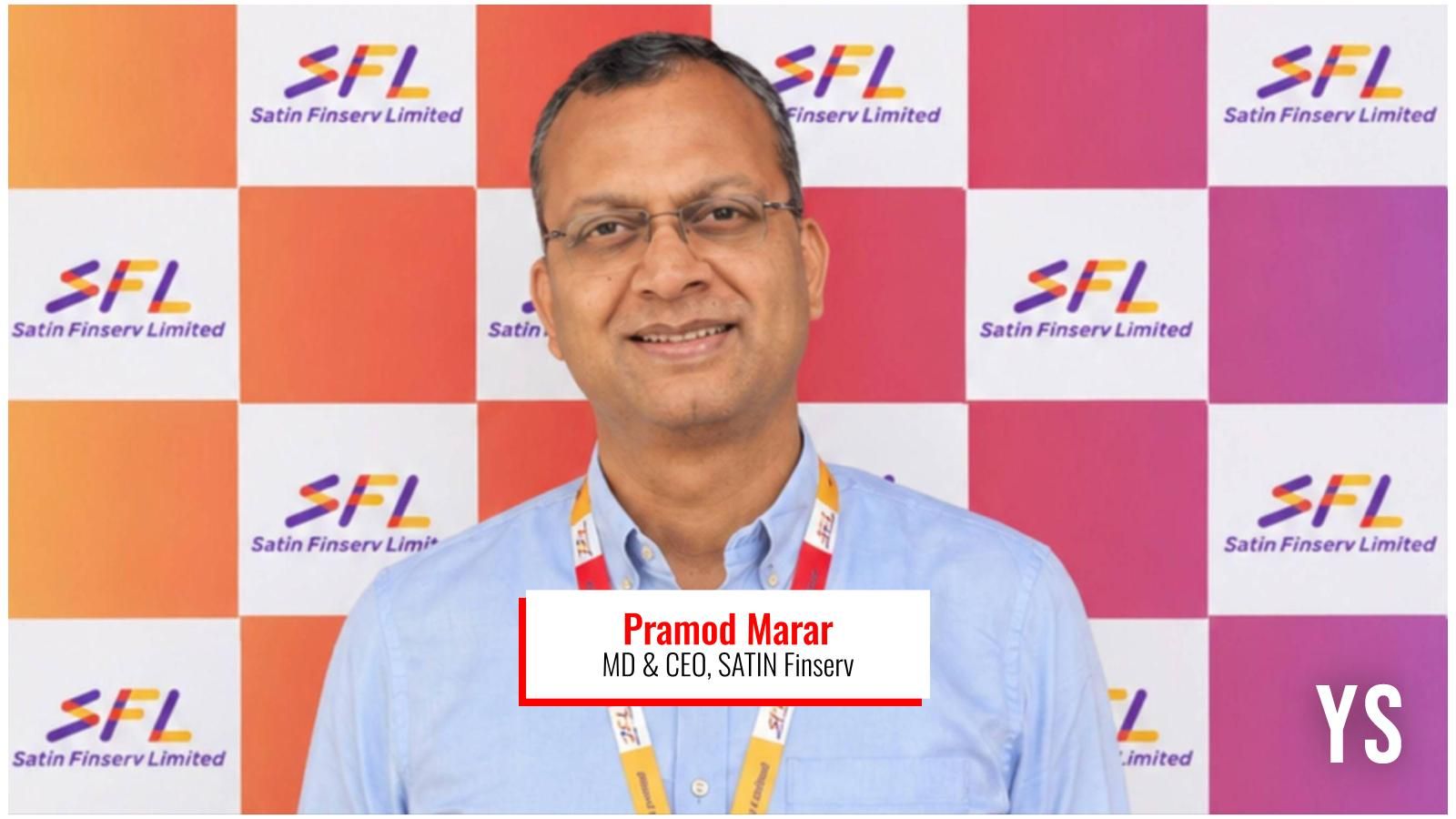
Recognising these gaps, Satin Group, based in Gurugram, Haryana, launched Sankalp this September. It is a platform designed to nurture sustainability-focused ideas from students and early-stage entrepreneurs. In an exclusive interaction with YourStory, Pramod Marar, CEO of Satin FinServ Limited, discussed the thinking behind the initiative, the importance of non-financial support alongside funding, and the role financial institutions can play in scaling climate innovation.
Sankalp operates through two distinct tracks: student-led business ideas and early-stage startups. The student track encourages college students to develop technology-driven solutions to climate and environmental challenges. The startup track focuses on young businesses working in areas such as clean mobility, circular economy, waste management, and sustainable supply chains. Sankalp winners stand a chance to win Rs 32 lakh, with Rs 10 lakh for students and Rs 22 lakh for startups.
Applications for the first cohort closed on October 4. Sankalp says the response has been encouraging, with more than 17,000 registrations and over 1,000 teams taking part. Student innovators, it adds, showed a notable interest in technology-led solutions for climate challenges.
“We were pleasantly surprised to see a strong focus among students on creating technology-led solutions in the climate space,” Marar said.
The genesis of Sankalp
Marar brings more than two decades of experience across banking, microfinance, and sustainability-focused entrepreneurship. Having started his own venture early in his career, he experienced firsthand the challenges faced by entrepreneurs seeking initial funding, particularly those from salaried or service-sector families without access to financial backing.
“Startup wasn’t a cool term at that time; it wasn’t even a term that existed. I come from a middle-class service background family. There was a lot of moral support, but there was no financial support. That’s when I realised how difficult it was to access early-stage capital,” Marar recalled.
While founders may have the passion and business acumen to develop an idea, scaling it requires a broader support system. Capital is only one part of the equation; access to expertise, networks and institutional support can be equally important.
“Most startup founders are very passionate about their ideas and have the acumen to scale them. But scaling requires a lot of elements beyond capital. That’s why we started Sankalp — to help build the ecosystem around sustainability and climate innovation,” Marar said.
Satin Group, which was founded in 1990, comprises three non-banking financial companies (NBFCs) focused on microfinance, housing finance, and corporate and SME lending. Its broader ecosystem also includes Satin Growth Alternatives, a debt fund, and Satin Technologies, its technology arm. This combination of financial and technological capabilities provides the group with multiple avenues to support emerging sustainability-focused businesses.
University incubators play an important role in nurturing early-stage ideas, but Sankalp aims to go further by helping entrepreneurs bridge the gap between developing a concept and preparing it for the market.
“I wouldn’t call it a scaled-down version because we actually try to go beyond the conventional model of incubation. We want to understand whether we can support founders through experienced mentorship, both at an individual level and through institutions, as well as through debt and equity,” Marar said.
With applications closed, Sankalp has moved from a wide pool of ideas to a tighter evaluation. KPMG is the programme’s assessment partner. It is independently evaluating every application against a predefined framework, helping with shortlisting and identifying the most promising ventures. Satin says this keeps the selection objective and based only on merit.
Thirty teams have made it to the virtual jury round, where they will present to a panel of practitioners, venture capital (VC) fund managers and lenders. The shortlisted ventures cover climate tech, circular economy, clean energy, sustainable cities, waste management, water management and sustainable agriculture.
According to Satin, what stood out was not just the range of ideas but the depth applicants showed in their chosen areas. Judges will look at the strength of the idea, innovation, feasibility, scalability and potential for meaningful impact.
Based on the jury’s assessments, select finalists will go on to the in-person Grand Finale, where they will present before a jury and industry leaders for final evaluation and recognition.
The jury rounds are also meant to open doors beyond the prize money. Both the virtual round and the Grand Finale will have representatives from VC funds, incubation centres and institutional investors, who can evaluate the ideas and explore funding possibilities. Satin has also signed formal arrangements with certain incubation centres to offer institutional mentoring to the selected founders. In addition, Satin Growth Alternatives, the group’s Category II alternative investment fund (AIF), will look at the ideas from an investment angle.
Satin is careful about what this means for funding. At this stage, it says, Sankalp is not an announced debt-and-equity programme. Any financing would be considered case by case, depending on the business model, stage of development, funding needs and suitability, with the aim of finding viable opportunities and exploring ways to support their growth.
For Satin, the programme fits in its wider ambition to help build a more sustainable and climate-resilient economy. Financing remains central to its business, the company says, but Sankalp gives it a chance to engage with emerging innovators and understand how climate-focused business models are evolving, along with the opportunities and challenges in the space. It also helps Satin spot solutions that may, over time, match its own financing capabilities.
The group has already been building towards this. Satin Finserv set up its Sustainable & Emerging Businesses (SEB) vertical in August 2025 to offer financing to sustainability-oriented and emerging enterprises, with a streamlined process and dedicated relationship support. In the last 12 months, it has disbursed loans of roughly Rs 400 crore to businesses focused on sustainability, either as users or providers of sustainability-focused solutions.
Sankalp complements that effort, Satin says, by helping it discover promising entrepreneurs and innovations.
Why Sankalp matters for India’s green transition
India’s transition towards a low-carbon economy will require more than technological breakthroughs. It will also depend on whether promising innovations can secure funding, find customers, and scale sustainably. Financial institutions, established businesses, and entrepreneurs all have a role to play in building this ecosystem.
Sankalp seeks to bring these stakeholders together, combining access to finance with mentorship and industry connections. Its approach reflects the idea that supporting climate innovation should extend beyond funding a promising idea or awarding a one-time prize.
“Rather than just waiting for institutions to put their money on the table, can financial institutions come together to create a platform that helps founders go beyond simply raising capital?” Marar said.
By seeking to connect entrepreneurs with financing, expertise, and potential commercial partners, Sankalp aims to create a longer-term support system for sustainability-focused businesses.""
This content is published by YourStory and has not been created or edited by Hello Headlines. View original