What Indian Muslim politics can learn from Mamdani, El-Sayed
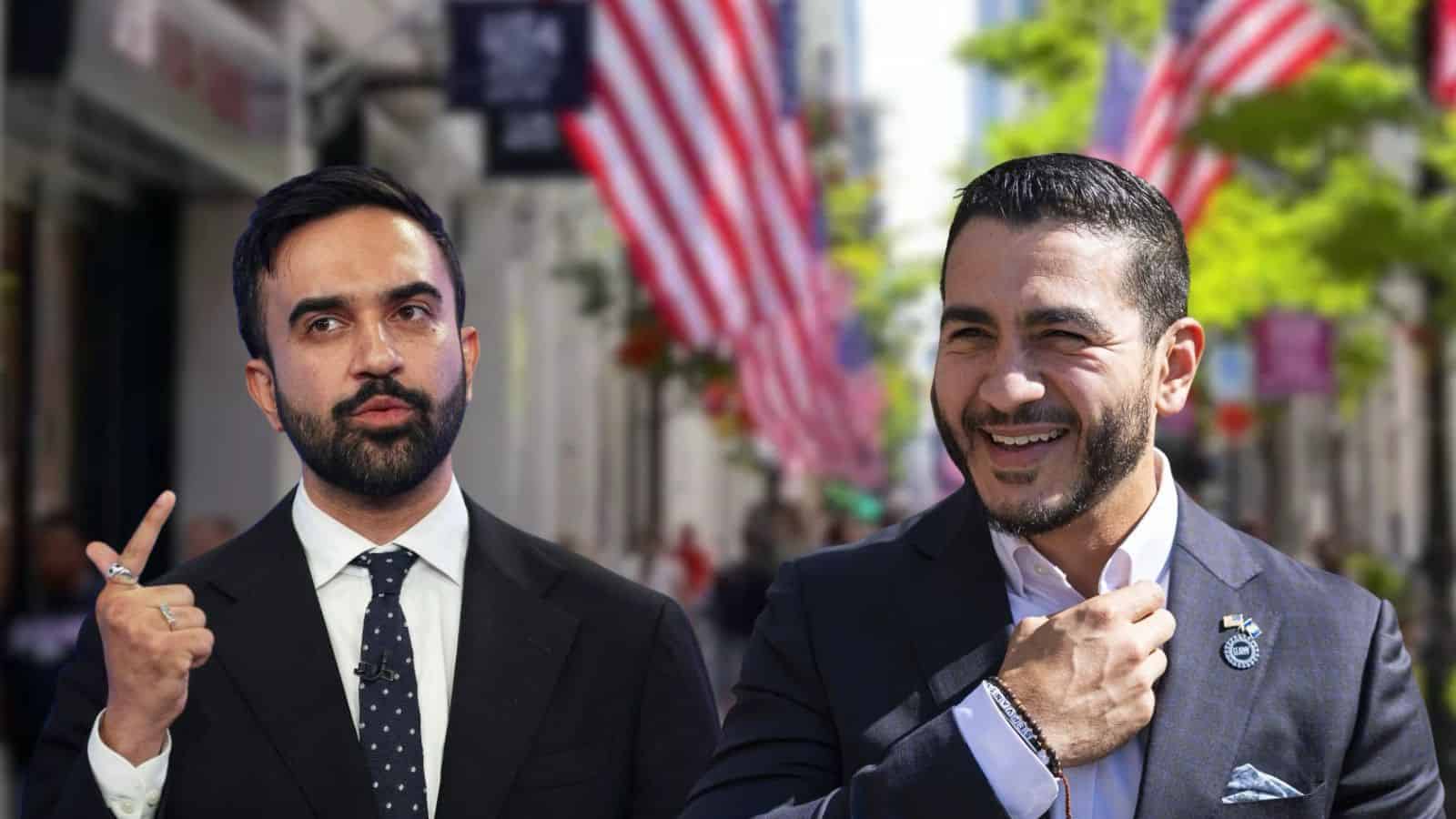
Abdul El-Sayed, a 42-year-old physician and the son of Egyptian immigrants, has made history as the first Muslim elected to the United States Senate after winning Michigan’s open seat. His victory comes almost exactly a year after Zohran Mamdani won the race for mayor of New York City.
Muslims make up roughly 1 per cent of the American population, yet they have been winning public office in growing numbers. Keith Ellison became the first Muslim in Congress in 2006 and Ilhan Omar and Rashida Tlaib widened the door in 2018 as the first Muslim women to get there. This would have been unimaginable in the aftermath of 9/11, when some Muslims were changing their names and getting rid of anything that identified their faith.
Indian Muslims, by contrast, are around 14 per cent of the population, yet remain far less represented in the country’s decision-making bodies. Only 24 Muslims won seats in the Lok Sabha in 2024, about 4.4 per cent of the House, and not one of them sits on the treasury benches.
Of course, the contexts are completely different: the histories, the political landscapes and the issues facing people in each country.
It was not always this way. Maulana Abul Kalam Azad, an Islamic scholar and freedom fighter, was independent India’s first Education Minister. As late as 1980, the Lok Sabha had 49 Muslim MPs.
So where did we lose the plot? How did one of the most Islamophobic landscapes produce leaders everyone could relate to, while a country with well over a thousand years of Muslim history still struggles?
A manifesto, not just an opponent
First, Muslim politics in India too often revolves around identity alone, with most speeches either polemical attacks on political adversaries or limited to Muslim issues. Mamdani and El-Sayed, on the other hand, showed up with a complete project to transform the lives of their constituents: specific policies and a manifesto for everyone. They spoke about things every voter lives with, from affordability, healthcare and rent to schools and wages.
The Quran describes Muslims as a nation raised for the benefit of humankind and it calls on believers to uphold justice even against themselves and their kin.
Opposing the Bharatiya Janata Party (BJP) is entirely legitimate and talking about the persecution of Muslims is necessary. But a politics that defines itself only by what it opposes gives outside voters little reason to support anything.
Who you speak to
The second lesson from American Muslim politics is about who a politician speaks to. In India, many Muslim candidates treat Muslim voters as their entire constituency, while the bolder ones reach for Dalit voters. The American Muslim pattern suggests a much wider base: everyone who cares about the everyday issues that affect them.
A candidate who builds a coalition around shared economic and social concerns is harder to dismiss as sectarian and gains allies instead of losing them.
The confidence to speak
The third lesson has to do with confidence. Mamdani, El-Sayed, Omar, Tlaib and influencers like Hasan Piker seldom drown in the swamp of political correctness or try to squeeze into the state-defined “Good Muslim” category.
They fiercely criticise their government’s foreign policy and don’t mince words. It is a tradition that goes back to Muhammad Ali, who refused to be drafted for the war in Vietnam in 1967.
When a white student challenged him during a campus tour, Ali shot back – “You my opposer when I want freedom. You my opposer when I want justice. You my opposer when I want equality. You won’t even stand up for me in America for my religious beliefs, and you want me to go somewhere and fight, but you won’t even stand up for me here at home.”
He paid for it. Ali was convicted, stripped of his title and kept out of the ring for more than three years before the Supreme Court overturned his conviction in 1971. Had he been in India, he would have been branded “anti-national” overnight and maybe slapped with the Unlawful Activities (Prevention) Act (UAPA).
In India, many Muslim politicians find themselves trapped in the narrative war, trying to prove they are not anti-national, as if that were their only reason to exist. Barring a few voices, Asaduddin Owaisi and Kashmir‘s own parties among them, most have stayed silent on India’s policy in Kashmir and on its closeness to the genocidal state of Israel.
But isn’t it dangerous?
Critics will call this naive. They will argue that Indian Muslims face threats American Muslims do not, that public speech can be turned against the whole community and that a minority has to be careful. They have a point.
India’s record runs from Nellie and Bhagalpur to Mumbai, Gujarat and Delhi, and UAPA has kept people in jail for years without trial. Others will add that in India, party bosses rather than primary voters decide who gets a ticket and few of them are handing tickets to Muslims.
But American Muslims did not find their voice in easy times either. After 9/11 came the Patriot Act, which handed the state sweeping surveillance powers that fell hardest on Muslim communities. Thousands of Muslim men were called in for questioning and more than a thousand were detained. There was Guantanamo Bay. There still is Fox News, along with other outlets no different from our Godi media.
Caution is reasonable. Permanent silence or conformity with power is not a strategy. The question is how to speak about justice in a way that is principled, specific and aimed at persuading people beyond one’s own base.
In practice, this could mean Muslim politicians publishing manifestos and policy plans and being judged on them instead of on “he said, she said.” It could mean campaigning on local issues in panchayats and municipal bodies, where a record is visible and party tickets matter less. It could mean building alliances around water, schools, jobs and policing.
And it could mean speaking clearly about injustice, including injustice against Muslims, without handing over one’s sense of self for the state’s approval.
Ideas come before votes
Lastly, politics is often the result of knowledge production. Zohran Mamdani’s father is Mahmood Mamdani, the Columbia University scholar who wrote the well-known book “Good Muslim, Bad Muslim,”and who, as it happens, was born in Mumbai. Before Muslims started winning public office in the US, scholars were pushing the boundaries of how Islam and the Muslim world were understood.
Not all of them were Muslim. Edward Said and Wael Hallaq both came from Palestinian Christian families, yet their work laid the foundations on which Mamdani, El-Sayed and others are now building.
In India, we do have great contemporary thinkers, Arundhati Roy among them, and scholars like Hilal Ahmed, whose “Siyasi Muslims” looks closely at how Muslim politics in this country actually works. What we need is more awareness of such scholars, and young politicians who read them and are inspired by them.
Get the latest updates in Hyderabad City News, Technology, Entertainment, Sports, Politics and Top Stories on WhatsApp & Telegram by subscribing to our channels. You can also download our app for Android and iOS.
This content is published by The Siasat Daily and has not been created or edited by Hello Headlines. View original