Sonia Gandhi recalls pleading with Rajiv not to become PM after Indira’s assassination
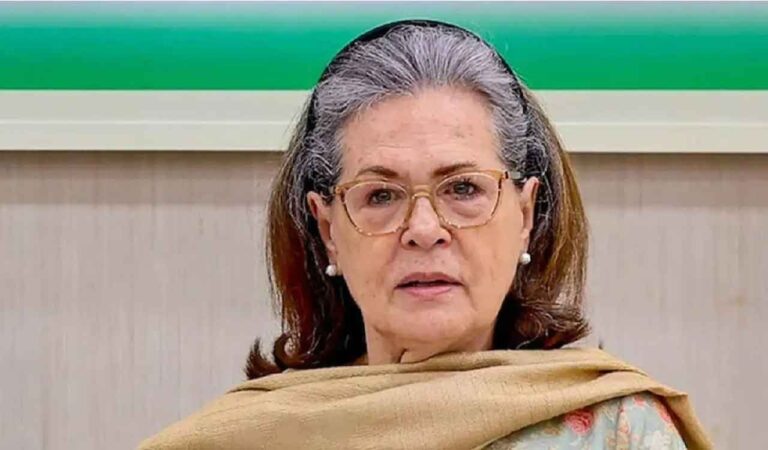
New Delhi: “I felt as if a knife had been plunged right into my heart,” Sonia Gandhi writes, recalling the moment Rajiv Gandhi told her that he had been asked to take oath as Prime Minister on the day his mother and then Prime Minister Indira Gandhi was assassinated.
When she pleaded with him not to accept the post, fearing it would put his life at risk, Rajiv replied, “They will kill me anyway.” This and several other defining moments are recounted in Sonia Gandhi’s upcoming memoir, Belonging: A Journey of Love, published by HarperCollins India and scheduled to be released on November 10.
In an edited extract from the book published by British daily The Guardian, Sonia Gandhi recounts the events of October 31, 1984, when then Prime Minister Indira Gandhi was assassinated by her bodyguards at her residence at 1, Safdarjung Road.
“I return to my room as my mother-in-law leaves for her office in the building adjacent to our home. I am about to start my bath when I hear a series of explosions, as of firecrackers, but different. I freeze.
“Someone comes pounding frantically on my bathroom door. It is Ongmu, the children’s nanny, crying hysterically. I fling open the door, my heart thumping. She is gesticulating wildly, speechlessly, towards the garden,” Sonia Gandhi writes.
“I run along the path leading to Akbar Road. I see the white Ambassador car slowly moving towards the same path. I hesitate. I stop, heart in my mouth. Dread, panic, fear. I feel suffocated. I can’t breathe. I am about to collapse. No, no, I can’t. I have to walk to the car. I see her being carried into it. I understand; I scream,” she writes, according to the extract.
“I’m in the car now, crouching on the floor, facing her. Blood, blood on her sari, blood on her chest. Her large eyes are wide open; her face wears a surprised expression. She doesn’t move. I attempt to speak to her, to call out, ‘Mummy, Mummy’, but no word comes out. I try again; she doesn’t reply,” Sonia Gandhi recounts.
She says Indira Gandhi’s aides were in the front of the car, screaming, while heavy traffic slowed their journey.
The car had no siren and encountered one red light after another, she recalls.
“Then the hospital. The gate isn’t opening. Chaos. We are stopped; someone looks through the window in a questioning attitude. They let us in. We reach the emergency department, teeming with people. We are stopped again, not allowed in; we have to wait for our turn. Someone calls out to the driver, signals him to move forward. They identify us; she is placed on a trolley. We are led somewhere, an operation theatre? They ask me to follow. I’m taken to a room nearby. No, no, I want to stay by her, I insist. I want to know. I have to see. They don’t reply; they are immersed in their emergency procedures,” she writes.
“I feel confused, lost; I don’t recognise anyone there. I’m shivering under my dressing gown. I feel scared, my mind is racing. Where is Rajiv? I try to remember. I can’t, I can’t. The children, yes, they’re in school; they must be brought home. Oh God, no, no. Let them be safe, let Rajiv be safe. Whom do I tell, whom do I speak to?” she says.
Sonia Gandhi recalls that several hours passed as more people arrived and gathered around her. She signalled a question to a doctor, who shook his head.
“I understand, yes, I understand. I break into sobs, uncontrollably. Someone tries to calm me. I feel numb, cold. At two in the afternoon of 31 October 1984, Indira Gandhi was declared dead. I was driven home to collect some clothes for her body to be changed into. On the way, a group of men tried to stop our car, banging on its windows. They were angry, shouting something I couldn’t understand,” she writes, according to the extract.
Sonia Gandhi also recalls that, on reaching home, her children, Rahul and Priyanka, rushed into her arms in tears.
“When they had been abruptly picked up from school by black-uniformed commandos, they sensed a catastrophe. Once home, they saw some of the staff sobbing. They asked question after question. ‘Where’s Mama?’ ‘Why have we been brought home?’ ‘Where’s Papa?’ ‘What’s happened?’ ‘Where’s Dadi?’ ‘You aren’t telling us the truth!’” she writes.
Her friends Nina and Sterre had been with the children, trying to calm them down, but were unsure what to tell them, according to the book.
“I wanted to sit with them and hug them, to break the news to them gently, but I was unable to; I had to go back; Rajiv was coming to the hospital,” she writes.
Sonia Gandhi recalls that Rajiv was in West Bengal attending a political rally when his cavalcade was stopped by a police patrol. He was told that a message had arrived from Delhi asking him to return urgently because a serious accident had taken place.
Rajiv was driven to the helipad, from where he flew to Calcutta and then to Delhi. According to the book, he heard on a BBC bulletin that Indira Gandhi had been wounded and was in a critical condition.
“Nobody told him directly that his mother was no more, but he understood,” Sonia Gandhi writes.
Rajiv Gandhi landed in Delhi at 3.30 pm and was driven straight to the hospital, where he walked in alongside other people.
“I remember longing to be left alone with him for a moment at least. We held each other, and as he spoke to me, it sunk in that he was saying something I didn’t want to hear. ‘I have been asked; they want me to be sworn in as prime minister.’
“I felt as if a knife had been plunged right into my heart. I felt a pounding in my chest, a rage welling up deep inside me. I was about to explode. I attempted to hold it in.
“‘You have been asked to? How dare they ask? How dare they? Who are they? Why you, why does it have to be you? Why did you allow them to ask you? No, it cannot be; this time it’s not going to be!’ Seized by utter pain and anguish, soaked in perspiration, I felt like throwing up. I wanted to scream, to ask for help. ‘Someone please help me put an end to this’,” Sonia Gandhi writes in her memoir.
She says she burst into tears and pleaded with Rajiv Gandhi, with folded hands, not to accept the post.
“‘No, no, you can’t think of it. You have to stop them, you must refuse, you must say no, for the children’s sake, for yourself. You can’t do this to us. They will kill you; they will kill you, too!’ I cried out. He replied, ‘They will kill me anyway’,” she writes.
The memoir recounts her marriage to Rajiv Gandhi and her introduction to her mother-in-law, former Prime Minister Indira Gandhi. It also describes her efforts to adjust to life in India, including learning Hindi, wearing saris and adapting to Indian food and culture.
The book covers major tragedies that affected the Gandhi family, including Sanjay Gandhi’s death in a plane crash in 1980, Indira Gandhi’s assassination in 1984 and Rajiv Gandhi’s assassination in 1991.
This content is published by Telangana Today and has not been created or edited by Hello Headlines. View original