Kali Puja 2026: Why Is Maa Kali Worshipped At Midnight On Amavasya? Know The Mythological Significance
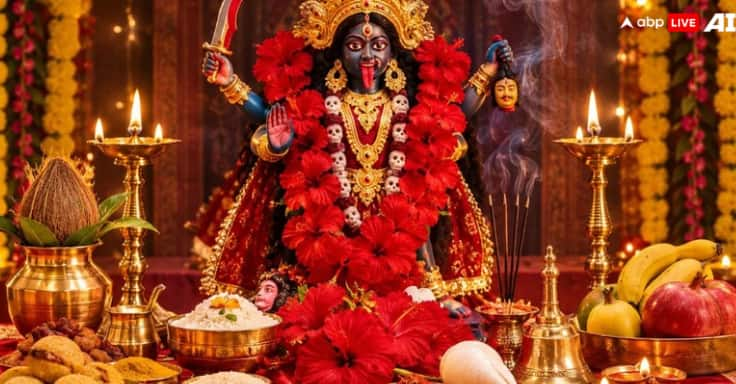
The festival is associated with the belief that Goddess Kali's divine energy protects the universe from negative forces and restores the balance between good and evil. The darkness of Amavasya is also considered symbolic, representing the power to overcome ignorance, fear and negativity through faith and devotion.
Why Is Kartik Amavasya Important For Goddess Kali?
Amavasya is the lunar phase when the moon is not visible in the night sky. In Shakta traditions, this darkness is associated with the mysterious and powerful nature of Goddess Kali.
The name Kali is traditionally linked to the Sanskrit word 'Kala', which means time. She represents the eternal force of time that governs creation, preservation, and destruction. Her dark complexion is also interpreted as a symbol of the infinite, representing the cosmic energy that encompasses everything.
For devotees, worshipping Maa Kali on Kartik Amavasya is an opportunity to seek protection from negative energies, overcome fears and gain inner strength.
The night is also known as Dipannita Amavasya, when homes and temples are illuminated with diyas. The contrast between the darkness of the new moon and the light of countless lamps represents the victory of light over darkness and knowledge over ignorance.
ALSO READ | Dhanteras 2026: Know The Auspicious Puja Timings And Shopping Items For All 12 Zodiac Signs
What Is The Mythological Story Behind Goddess Kali's Fierce Manifestation?
One of the most significant mythological stories associated with Goddess Kali appears in the Devi Mahatmya, which is part of the Markandeya Purana.
According to the legend, the gods were engaged in a fierce battle against powerful demons who threatened the balance of the universe. Among them was a demon named Raktabija, who possessed a special boon. Every drop of his blood that fell on the ground would give rise to another demon with the same strength and power.
As a result, whenever the gods attacked Raktabija, more demons emerged from his blood, making it increasingly difficult to defeat him.
Seeing the situation, Goddess Durga manifested Goddess Kali to help destroy the demon. During the battle, Kali spread her tongue across the battlefield and began drinking Raktabija's blood before it could touch the ground. This prevented new demons from emerging.
With the help of Goddess Kali, Raktabija was eventually defeated, restoring peace and protecting the universe from the demonic forces.
This story highlights Goddess Kali's association with the destruction of evil and her role as a powerful protector of cosmic order.
Why Is Goddess Kali Worshipped At Midnight?
One of the most distinctive aspects of Kali Puja is that the main rituals are performed during Nishita Kaal, the midnight period on Kartik Amavasya.
The tradition is closely associated with Bengal's Shakta and Tantric practices, in which night-time worship holds particular importance. Midnight is considered a spiritually significant period for worshipping Goddess Kali.
According to certain traditional accounts, Goddess Kali appeared on Earth at midnight during Amavasya to destroy demons and protect the universe. The Brihaddharma Purana also contains a narrative connecting her arrival during the midnight Amavasya period with the destruction of the Asuras.
This belief is one of the reasons midnight holds special importance during Kali Puja.
During this time, devotees offer prayers, chant mantras and perform special rituals to seek the goddess's blessings, protection and strength.
ALSO READ | Choti Diwali 2026 Wishes: Messages To Share With Your Family And Friends On This Auspicious Day
Why Does Goddess Kali Stand On Lord Shiva?
One of the most recognisable depictions of Goddess Kali shows her standing with one foot on Lord Shiva's chest. She is often portrayed with her tongue extended and a sword in her hand.
According to a popular mythological belief, after defeating the demons, Goddess Kali became overwhelmed by her fierce energy. Her destructive dance became so powerful that it threatened to disturb the balance of the universe.
Concerned about the situation, the gods approached Lord Shiva for help. To calm the goddess, Shiva lay down in her path.
While dancing, Goddess Kali unknowingly stepped on his chest. The moment she realised that she had stepped on her husband, she extended her tongue in surprise and stopped her furious movement.
This depiction also carries a deeper spiritual meaning. Goddess Kali represents Shakti, or divine feminine energy, while Lord Shiva represents pure consciousness. Their union symbolises the relationship between energy and consciousness in Hindu philosophy.
What Does The Darkness Of Amavasya Symbolise In Kali Worship?
The darkness of Amavasya has a special symbolic meaning in the worship of Goddess Kali. Her dark appearance is not associated with evil but represents the infinite and the cosmic energy that exists beyond ordinary human understanding.
Goddess Kali is believed to help devotees confront their deepest fears, overcome ignorance and move away from destructive tendencies.
Her sword symbolises the destruction of ignorance, while her protective hand gestures represent fearlessness and reassurance.
Worshipping her on the darkest night of the lunar month conveys the message that darkness and difficult circumstances are temporary. It reminds devotees to face challenges with courage, strength and faith.
How Is Kali Puja Celebrated In West Bengal?
Kali Puja is celebrated with great devotion across West Bengal, where Kartik Amavasya is considered one of the most important occasions for worshipping Maa Kali.
Temples and community pandals are decorated with lights, and devotees gather to participate in special midnight rituals. The celebrations also include traditional offerings, devotional music and prayers.
Some of the important traditions associated with Kali Puja include:
-
Midnight worship: Priests perform the main Kali Puja rituals during Nishita Kaal, seeking the goddess's blessings and protection.
-
Red hibiscus flowers: Devotees offer red hibiscus flowers, which hold special significance in the worship of Maa Kali.
-
Lighting diyas: Earthen lamps are lit in homes and temples to illuminate the Amavasya night.
-
Mantra chanting: Devotees recite Kali mantras and offer prayers for strength, courage and protection.
-
Bhog offerings: Fruits, sweets, khichuri and other traditional foods are offered to the goddess according to local customs.
-
Shyama Sangeet: Devotional songs dedicated to the Divine Mother are sung in homes and temples as part of the celebrations.
What Is The Spiritual Message Of Worshipping Maa Kali On Amavasya?
The worship of Goddess Kali on Amavasya carries a message of courage, transformation and the victory of good over evil. Her mythology reminds devotees of the importance of standing against injustice, overcoming ignorance and protecting what is right.
Despite her fierce appearance, Maa Kali is worshipped as a compassionate mother who protects her devotees and guides them through difficult phases of life.
For devotees, Kali Puja is not just about rituals and offerings but also about seeking inner strength, removing fear and developing faith. The celebration on the darkest night of Kartik Amavasya symbolises the belief that even in the most challenging circumstances, hope, courage and divine protection can guide the way.
[Disclaimer: The information provided here is based solely on beliefs and information. It's important to note that ABPLive.com does not endorse any beliefs or information. Consult a relevant expert before acting on any information or information.]
This content is published by ABP Live - Lifestyle and has not been created or edited by Hello Headlines. View original