From Carnatic Music To Garage Rock: British-Tamil Guitarist And Songwriter Kapil Seshasayee's Desi-Futurist Musical Journey
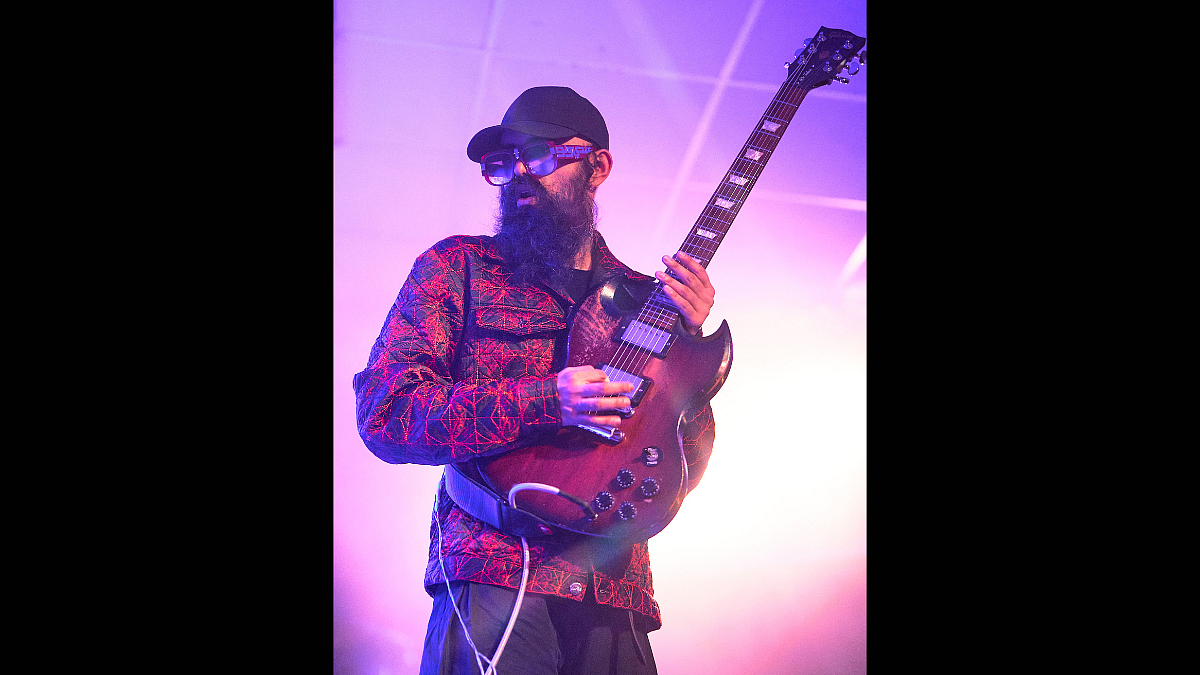
Though he was born in Ramnad, Tamil Nadu, British-Tamil guitarist and songwriter Kapil Seshasayee had his first concerts in India barely two months ago. After performing at New Delhi’s Piano Man, he appeared at the Soundscapes of India showcase festival organised by the Indian Performing Right Society (IPRS) at the capital’s Dr Ambedkar International Centre.
“My family shifted to the UK when I was a baby. I was exposed to Carnatic music because my cousins, the Ragam Sisters, are prolific performers back in India. In the UK, I learnt Carnatic music on my own, using YouTube as my guru, and played my own music at shows there. But I never got a chance to play in India. This tour corrected that,” he says.
Blending Carnatic elements with garage rock, rhythm n’ blues and British electronic soundscapes, Seshasayee describes his music as desi-futurist. He explains, “It means we stick to our south Asian roots, but also think of what elements we can improve upon from our own culture to ensure a better future.” Since he has also been hugely influenced by the work of Dr B.R. Ambedkar, he was delighted to perform at a venue named in his honour. On his two albums A Sacred Bore and Laal, and some other singles, he has tackled issues of casteism and social injustice based on these principles.
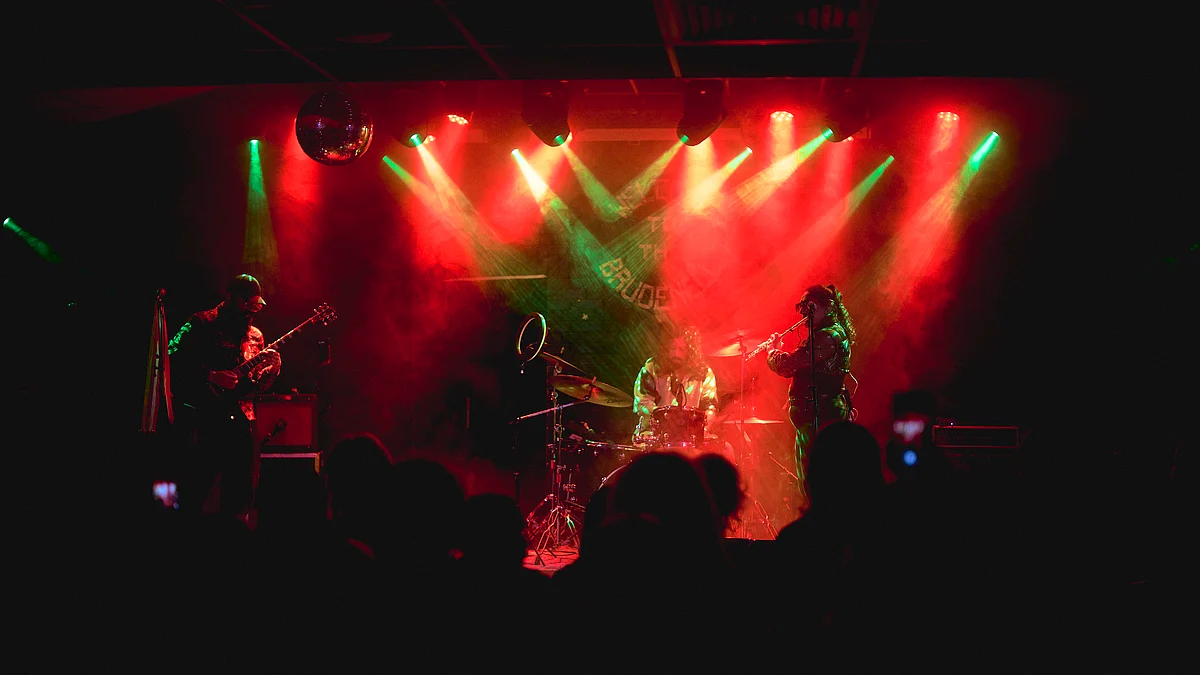
At his Delhi shows, Seshasayee was accompanied on drums by Edwin Maclachlan. His wife Diljeet Kaur Bhachu, who plays flute and does backing vocals, could not make it on this tour. His Piano Man show opened with The Ballad of Bant Singh, which is about a Punjabi protest singer, and used bhangra-folk elements. At the Ambedkar Centre, he played the songs Lewd Cabal, The Pink Mirror, Educate Agitate Organise and Whose Bright Idea Was This?
Growing up in Glasgow, Seshasayee listened to western forms. However, when he came to India, he would hang out with his cousins, and liked what they sang. He recalls, “When I returned, I couldn’t find a teacher of Carnatic music. So I watched videos on YouTube and tried to play that music on my guitar. I had been playing guitar for a while, but in the western style as I listened to a lot of nu metal and garage rock. I had to work on how to adapt in a different, south Indian style.”
His biggest influences were mandolin maestro U. Srinivas, violinist L. Subramaniam and saxophone player Kadri Gopalnath. He adds, “I also listened to vocalist T. M. Krishna. Besides his singing, I liked the views he expressed on various issues.”
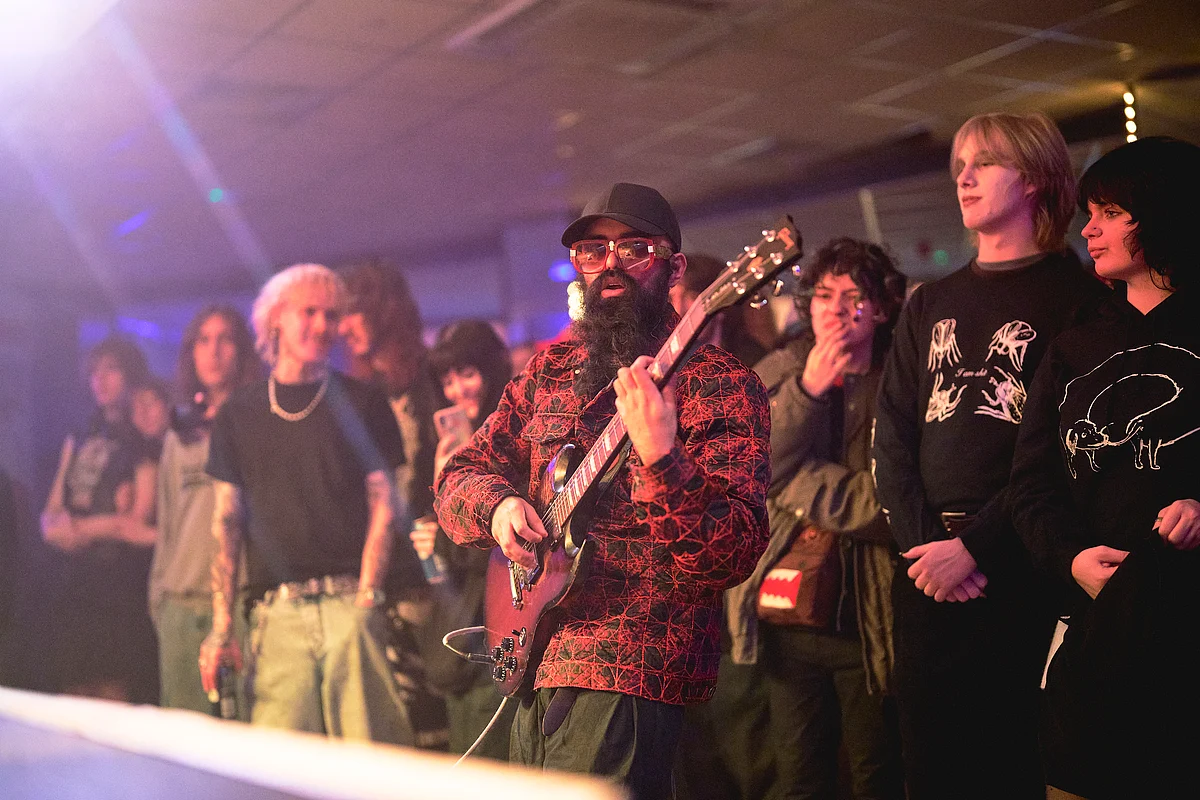
Simultaneously, he began listening to north African band Tinariwen and music put out on Peter Gabriel’s Real World label. Among guitarists, he was inspired by Derek Trucks, John Martyn and Victor Villarreal. “Derek in particular has had a major impact on me, as he has studied Indian music and adapted it to his guitar,” he says.
With an amalgam of influences, Kapil dismantles and reconstructs musical languages to create something unmistakably his own. He says, “For south Asian musicians growing up in the UK or the US, this comes naturally. We are aware of our roots and want to pursue our own music, and yet, we have grown up on rock or electronic music or drum n’ bass. So it’s a smooth blend.”
Seshasayee’s first album A Sacred Bore was released in 2018. Here, he looked at the Indian caste system, both in India and within the global Indian diaspora, using an art-rock sound. On Laal, released in 2022, he’s looked at nationalism, censorship, queer representation and cultural power, using elements of post-grunge, hyperpop, synth-pop and electronica. The Carnatic influences can be heard distinctly on recent tracks like Educate Agitate Organise, Where Is Your Sword?, Scimitar and Acro-Silky.
“I have three approaches to composing. Either I start with a tune or a raga, and create a melody around it irrespective of the words, or I choose a particular genre, and use that style, Finally, I may wat to tell a story with a certain subject in mind. Culturally, if I am resonating with a particular kind of music or subject, it reflects in my final song,” he says.
Besides regular club appearances, Seshasayee has performed in festivals like South By South West in the US, and Latitude Festival and Celtic Connections in the UK. “My first concert in India was at the age of 37, but now that I have begun, I am looking to return for more shows. I think youngsters in Tamil Nadu will like my kind of music, but I also want to play in Mumbai and Pune,” he says. Maybe 2027 will give him more opportunities.
This content is published by Free Press Journal and has not been created or edited by Hello Headlines. View original