'WFH, Avoid Outdoor Walks And Jogging': Doctors Issue Warning As Delhi-NCR AQI Remains 'Very Poor' After Diwali
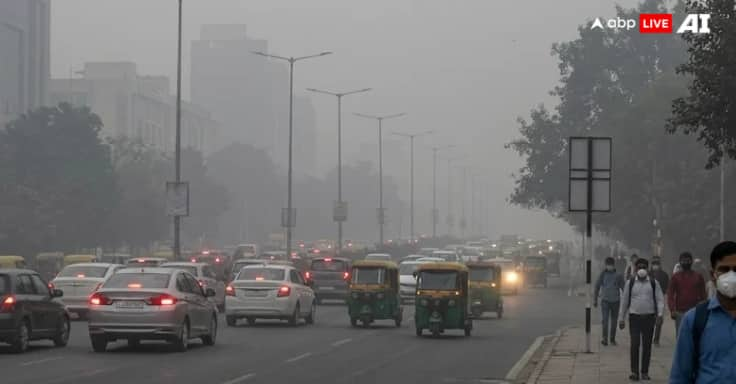
Delhi-NCR continues to battle poor air quality following Diwali, with pollution levels remaining in the 'very poor' category despite a marginal improvement in some areas. Delhi recorded an Air Quality Index of 304 at 8 am on November 10, while Gurugram registered 321 at 7 am. The situation remains concerning as Delhi's average AQI stood at 376 on Diwali (November 8), marking its highest festival-day reading since 2021.
As of Tuesday, November 10, Delhi recorded an AQI of 293 at 11 am, falling in the 'poor' category. Gurugram (321), Noida (313) and Faridabad (310) remained in the 'very poor' category, while Ghaziabad (260) and Greater Noida (228) recorded 'poor' air quality.
Amid the deteriorating air quality, doctors have advised people to avoid unnecessary outdoor activities, work from home where possible and exercise indoors.
'WFH, Avoid Outdoor Walks And Jogging'
Dr Randeep Guleria, Chairman of the Institute of Internal Medicine, Respiratory and Sleep Medicine at Medanta, said pollution levels had risen again after Diwali. He attributed the deterioration in air quality to firecrackers, increased travel as people visited relatives and distributed gifts, and vehicular emissions. He advised people to avoid stepping outdoors when fog, smog and poor AQI levels persist.
Dr Guleria also stressed that people with chronic respiratory or heart conditions should take their prescribed medication regularly. Those experiencing breathing difficulties, persistent coughing, chest tightness, drowsiness or lethargy should consult a doctor rather than ignore these symptoms.
VIDEO | Gurugram: Dr Randeep Guleria, Chairman of the Institute of Internal Medicine, Respiratory and Sleep Medicine at Medanta, on pollution levels after Diwali, says, "Pollution levels have increased again after Diwali. They were already high before Diwali, and bursting firecrackers, increased travel to meet relatives and distribute gifts, and vehicular emissions have further contributed to the rise. If there is fog, smog and poor AQI, people should avoid going outdoors. Work from home if possible and avoid outdoor walks and jogging. Exercise indoors where air quality is good. People with chronic respiratory or heart conditions should take their medicines regularly. Those experiencing breathing difficulties, cough, chest tightness, drowsiness or lethargy should consult their doctor." (Full video available on PTI Videos - https://t.co/bIyFWTfmBd)
— Press Trust of India (@PTI_News) November 9, 2026
Doctors Flag Symptoms In Young Adults
Concerns are also growing over the impact of severe air pollution on people without any underlying health conditions. Dr S Chatterjee, Senior Consultant in the Department of Internal Medicine at Apollo Hospitals, Delhi, said even healthy individuals, including young people in the 20-50 age group, were reporting symptoms associated with poor air quality.
Dr Chatterjee highlighted that exposure to extremely high pollution levels could trigger symptoms even in otherwise healthy people within four to six hours. He warned that the health effects would not necessarily end after the initial exposure and could continue over the following days, making the coming period particularly important for healthcare services.
He advised people to avoid unnecessary outdoor activities, including shopping and other errands, and strongly discouraged exercising outdoors when pollution levels remain high.
#WATCH | Delhi: On air pollution, Dr S Chatterjee, Senior Consultant in the Department of Internal Medicine at Apollo Hospitals, says, "Healthy people with no underlying illnesses are complaining of symptoms. Young people in the 20–50 age group are also experiencing these problems, and that is what worries me. We always expect people with lung or cardiac diseases to experience such symptoms when the AQI is this high. However, even healthy individuals are reporting symptoms. People are certainly coming to hospitals. Many are calling us to report what they are experiencing, and we are guiding them accordingly. Some of them are also coming to hospitals for treatment. What is more important is that this does not end here. It is essentially just the beginning. When you are exposed to such high levels of AQI or such severe pollution, symptoms can begin to appear even in otherwise healthy individuals within four to six hours. But the effects do not stop there. They will continue. Therefore, the next few days are going to be very important for the healthcare system...Avoid going out unnecessarily, whether for shopping or other activities. You should also avoid exercising outdoors when pollution levels are high..."
— ANI (@ANI) November 9, 2026
ALSO READ | Burning While Urinating? 7 Early Signs Of UTI And Kidney Infection You Should Never Ignore
How Rising AQI Levels Affect Your Body
India's Central Pollution Control Board (CPCB) classifies AQI into six categories: good, satisfactory, moderate, poor, very poor and severe. During pollution episodes, fine particulate matter such as PM2.5 and PM10 can penetrate deep into the lungs and trigger inflammation. Some people may experience throat irritation, burning eyes, coughing and breathing discomfort; prolonged exposure can increase the risk of serious health complications.
-
AQI 100-200: Sensitive individuals, particularly children, older adults and people with existing illnesses, may experience breathing discomfort, throat irritation and worsening respiratory symptoms.
-
AQI 200-300: Prolonged exposure can increase inflammation and oxidative stress, triggering coughing, chest tightness and worsening asthma or COPD symptoms.
-
AQI 300-400: Extended exposure can aggravate respiratory illnesses and put additional strain on the heart and lungs.
-
AQI 401-500: Even healthy individuals may experience respiratory problems, while people with existing heart or lung conditions face a higher risk of serious complications.
ALSO READ | 137 Cancer Medicines Become Cheaper: How Drug Prices Are Determined In India
Air Pollution Can Affect More Than The Lungs
According to Dr Nikhil Rajvanshi, Consultant Paediatric Pulmonologist, Allergy and Sleep Specialist at Rainbow Children's Hospital, Delhi, air pollution can affect almost every organ in the body.
Fine particles can travel deep into the lungs and, in some cases, enter the bloodstream, increasing inflammation and oxidative stress. Long-term exposure has been associated with reduced lung function, respiratory infections, heart disease and stroke.
Children, older adults, pregnant women and people with pre-existing heart or respiratory conditions are particularly vulnerable. Those working outdoors, including traffic police personnel, construction workers and delivery workers, may also face greater exposure.
How To Protect Yourself From Toxic Air
Doctors recommend avoiding unnecessary outdoor activities and exercising indoors when pollution levels are high. People should consider wearing a properly fitted N95 mask when stepping outside during severe pollution episodes.
Those with chronic respiratory or heart conditions should take their prescribed medicines regularly. Persistent coughing, wheezing, breathlessness or chest tightness should not be ignored, and medical advice should be sought if these symptoms develop.
[Disclaimer: The information provided in the article is intended for general informational purposes only. It is not a substitute for professional medical advice, diagnosis, or treatment. Always seek the advice of your physician or other qualified healthcare provider with any questions you may have regarding a medical condition.]
This content is published by ABP Live - Lifestyle and has not been created or edited by Hello Headlines. View original