Riffat Buch’s Passing Rekindles Memories of 1960s Kashmir
Kashmir, Observer, Jammu, Srinagar, Latest Kashmir News, Kashmir News, Kashmir Latest News
By Syed Nissar H. Gilani
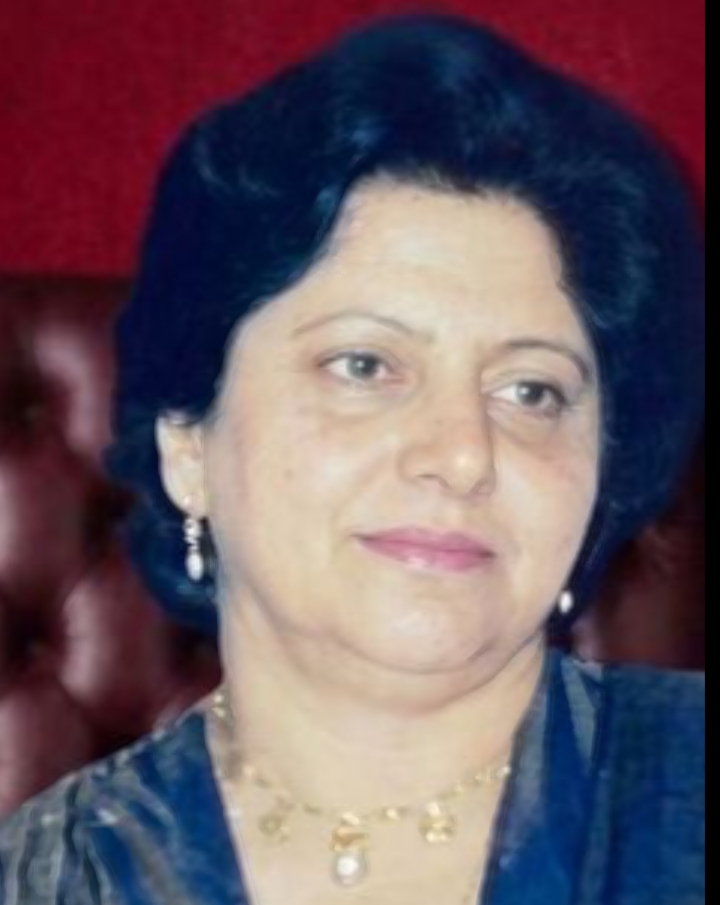
The news of Professor Riffat Buch’s passing in the United States brought back memories of a generation of Kashmiris whose friendships, intellectual pursuits and public contributions defined an important period in our lives.
Her death has saddened me deeply, partly because I knew her as a contemporary from our college years, and partly because her life was connected to a remarkable family whose members contributed to Kashmir in education, administration, engineering, literature and public service.
When someone from that generation passes away, memories of people and places return together. I find myself thinking of Srinagar between 1966 and 1969, when inter-college debates brought some of the brightest young minds of the valley into the same rooms.
Those were formative years for many of us, defined by two neighbouring institutions, S.P. College and Government College for Women on M.A. Road.
The colleges were led by two distinguished principals, Professor Saifuddin and Professor Miss Mohammadi Ahamed Shah, whose leadership encouraged young students to develop their intellectual abilities.
Debating competitions became an important part of college life, bringing students together in spirited contests that reached well beyond their respective campuses.
Riffat was among the talented young women who made those occasions memorable.
Her debating team included Indu Bal, sister of the internationally renowned fashion designer Rohit Bal, and several other gifted students.
Our contests took us to venues such as Tagore Hall, Oberoi Palace Hotel, now The Grand Palace, and Government Medical College Srinagar.
Those gatherings brought together young people who enjoyed testing their arguments, listening to opposing views and discovering the intellectual strengths of their contemporaries.
I represented S.P. College alongside the late Agha Shahid, the son of the celebrated educationist Dr. Agha Ashraf Ali.
We frequently found ourselves debating against the accomplished students of Government College for Women.
Shahid possessed an exceptional intellect, and his ability to express an argument was already evident during those years.
He would go on to become one of Kashmir’s most celebrated poets. His collection The Country Without a Post Office, published in 1997, and his final masterpiece, Rooms Are Never Finished, which became a finalist for the National Book Award, introduced readers around the world to Kashmir’s pain, beauty and history.
Remembering Shahid today also brings back the young student with whom I shared those debating platforms.
Riffat came from a family whose contributions reached far beyond Kashmir.
Her father, the late M. Amin Buch, was a distinguished scholar, writer and newspaper editor. Her wider family included people who occupied important positions in international diplomacy, state administration and professional life.
Her uncle, M. Yousuf Buch, retired as Deputy Secretary General of the United Nations and served as an adviser to the late Pakistani Prime Minister Zulfikar Ali Bhutto.
Another uncle, Ghulam Naqashband Buch, served as Principal Chief Conservator of Forests in Jammu and Kashmir.
Her brother, Misbah Buch, was an accomplished engineer who spent many years working in Saudi Arabia. He is particularly remembered for his contribution to the design of Hotel Jahangir in Srinagar, the city’s first multi-storied building, an achievement that earned considerable appreciation from the engineering fraternity.
Riffat’s personal life also included years of considerable hardship.
Her husband, the late Engineer Yaqoob Qureshi, battled kidney failure and underwent dialysis for fourteen years. His ability to live through such a prolonged illness with grace and courage remains part of the family’s memory. He passed away some time before Riffat.
My association with the Buch family also brings back memories of another dear friend and class fellow, the late Mushtaq Ali Buch. He died of bladder cancer on November 11, 2007, just months after returning to Kashmir following sixteen years of service in Saudi Arabia.
Mushtaq was a gifted cricketer, writer and commentator. His pleasing personality made him popular among friends and acquaintances, but I remember him above all as a genuinely good human being.
His father, Mohammad Ali Buch, was a law graduate with a postgraduate degree in history from Aligarh Muslim University. He served as a capable revenue officer, while Mushtaq’s three younger brothers also distinguished themselves in their respective professions.
His uncle, Engineer M. Yousuf Buch, retired as a Superintending Engineer. Mushtaq is survived by his wife and two children, Imran and Maria, who are settled in Italy.
The passing of Riffat, Mushtaq and Agha Shahid has brought home the passage of time and the changes in our generation. I also remember Dr. M. Shaffi Wanchoo, who represented Government Medical College Srinagar in those inter-college debates, along with numerous other friends and contemporaries whose contributions and companionship enriched our youth.
Our generation shared an educational culture in which public speaking, reading, writing and intellectual competition occupied an important place. The young men and women who met at those colleges went on to pursue very different careers, but their early friendships connected them through a common experience of learning and discovery.
I feel a particular sadness when I think of Riffat because her passing brings together so many memories of people who once occupied an important place in my life. Her family’s history also recalls a period when Kashmiri professionals and intellectuals made their presence felt in institutions at home and internationally.
- The author is a former civil servant of the administrative service and a recipient of several national and international awards. He can be reached at nisargilani57748@gmail.com.
The post Riffat Buch’s Passing Rekindles Memories of 1960s Kashmir appeared first on Kashmir Observer.
This content is published by Kashmir Observer and has not been created or edited by Hello Headlines. View original