NPCI Unveils New MDR-Funded Scheme To Promote UPI Among Small Merchants
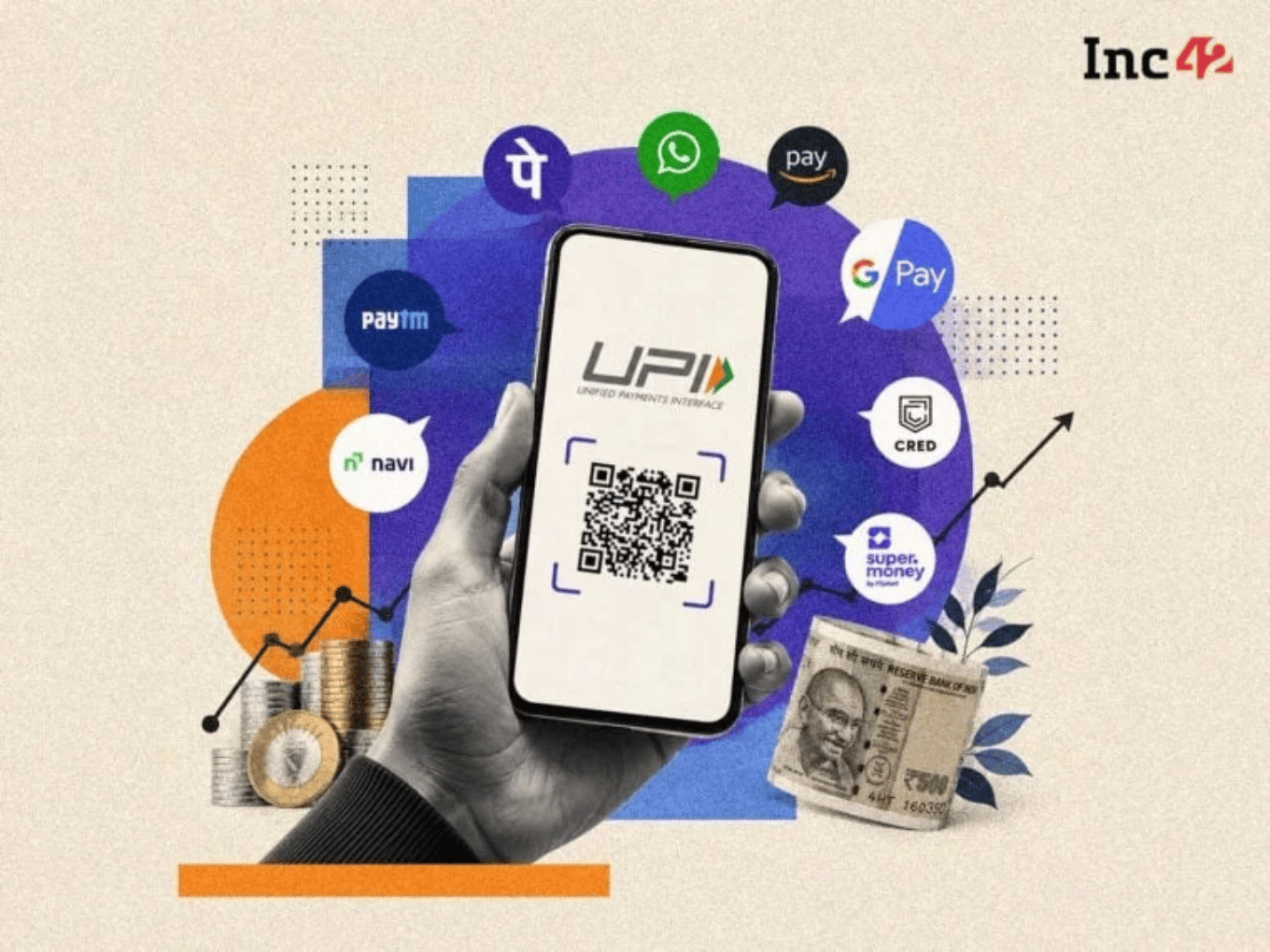
The National Payments Corporation of India (NPCI) has introduced a new scheme to expand UPI acceptance among small merchants. Under the new initiative, the payments body will offer incentives to banks for deploying QR codes and soundboxes to further drive transaction growth.
The scheme will be funded through a portion of the merchant discount rate (MDR) earned by banks and other UPI ecosystem participants.
In a circular dated November 11, NPCI announced the launch of the ‘UPI Vyapaar Saksham Scheme’, which aims to address the limited availability of digital payment acceptance infrastructure among small merchants, particularly in smaller cities and towns.
The scheme will run for a period of three years from the implementation of UPI MDR, which is yet to be notified.
The initiative will focus on merchants in Tier III to Tier VI cities, northeastern states, Jammu and Kashmir, and Ladakh. Small merchants covered under notified central government schemes, including PM SVANidhi and PM Vishwakarma, will also be eligible.
NPCI defines small merchants as businesses with an annual turnover of up to ₹40 Lakh in the preceding financial year.
The fund will be created from MDR collections rather than a separate government allocation. Each issuing bank, acquiring bank, payer payment service provider (PSP) and UPI application provider participating in UPI will contribute 5% of its MDR share to the fund.
The contribution will exclude MDR earned from categories that are not eligible for the scheme.
The fund will be divided into three components, with the largest allocation going towards increasing transaction volumes among existing merchants.
Under the first component, which accounts for 30% of the fund, acquiring banks will receive ₹300 for every physical QR code and ₹750 for every soundbox deployed at an eligible new small merchant. To qualify, a merchant will have to record at least 25 eligible transactions in any two months of a quarter, with a minimum transaction value of ₹5,000 per month.
For context, the scheme defines eligible transactions as successfully settled UPI payments of up to ₹2,000 at small merchants. It excludes transactions that are subsequently reversed, refunded or cancelled, as well as artificial transactions created by splitting payments to remain below the ₹2,000 threshold.
The second component will receive 50% of the fund and reward acquiring banks for growing UPI transaction volumes among existing and newly onboarded small merchants.
Banks will need to demonstrate at least 5% QoQ growth in eligible transaction volumes to qualify for incentives. They will receive 0.03% of the aggregate value of eligible transactions, with merchants in the targeted geographies receiving an additional 50% incentive.
The remaining 20% will be allocated towards incremental growth in targeted geographies. Under this component, acquiring banks will receive an incentive of 0.2% of the incremental value of eligible transactions compared with the previous quarter, over and above the incentive under the second component.
NPCI has also set out ambitious deployment targets. The scheme is expected to facilitate 6 Lakh to 1 Cr new physical QR code deployments and 5 Lakh to 10 Lakh new soundbox installations annually. It also aims to drive 30% to 50% annual growth in transaction volumes among existing small merchants.
UPI’s MDR Transition
This comes as the Centre is all set to re-introduce MDR on select “high-value” UPI transactions after nearly six years of a zero-MDR regime.
In September 2026, the government notified amendments to the Payment and Settlement Systems Act, 2007, paving the way for MDR on select merchant transactions. Subsequently, NPCI introduced a framework under which person-to-merchant (P2M) UPI transactions above ₹2,000 would attract an MDR of 0.4%, capped at ₹300 for transactions of ₹75,000 and above.
Transactions of up to ₹2,000 and peer-to-peer (P2P) payments have been kept outside the MDR framework. Small merchants receiving up to ₹1 Lakh per month through UPI QR codes under the P2M-to-P2P merchant (P2PM) category were also exempted from MDR.
The government said the move was intended to create a sustainable revenue stream for banks and payment companies while supporting the infrastructure required to operate UPI at scale. The MDR collected is distributed among ecosystem participants rather than retained by the government.
The proposed MDR framework faced pushback from retailers, with a possible deferment of its rollout to January next year. Later, the imposition was pushed beyond Diwali. Four days after Diwali, NPCI is yet to come out with a date for the implementation for this.
Whenever MDR comes into place, the new NPCI scheme would effectively channel a portion of the MDR revenue back into expanding UPI acceptance among this merchant segment.
That said, NPCI will administer the fund, validate incentive claims and oversee settlements. Acquiring banks will submit claims quarterly, with NPCI required to process incentive payments within 30 days of claim submission, subject to validation.
The scheme also mandates that acquiring banks report merchant locations, unique merchant identifiers and details of deployed QR codes and soundboxes to enable transaction-level monitoring.
The underlying policy shift is significant: while the MDR framework creates a revenue stream for UPI ecosystem participants, the new scheme attempts to use a portion of that revenue to address the infrastructure gap that has kept digital payment acceptance concentrated among larger merchants and in urban markets.
The post NPCI Unveils New MDR-Funded Scheme To Promote UPI Among Small Merchants appeared first on Inc42 Media.
This content is published by Inc42 and has not been created or edited by Hello Headlines. View original