Maharashtra's Lonar Crater Lake Earns Spot Among World's Top 100 Geological Heritage Sites, Highlighting Its Unique Meteorite Impact History
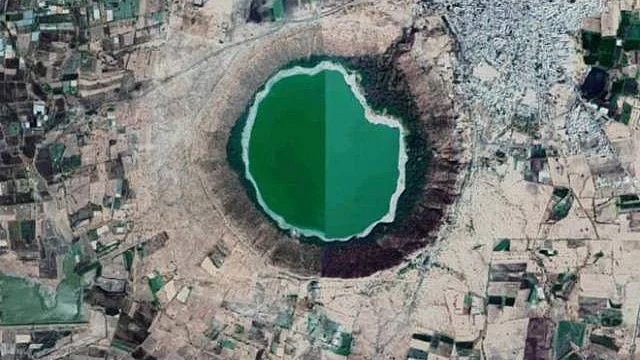
Buldhana, Nov 13: Maharashtra has added another feather to its cap, with the world-famous Lonar Crater Lake in Buldhana district earning a place on the prestigious list of the ‘Third 100 IUGS Geological Heritage Sites’. The Union Ministry of Mines has officially announced the recognition, making Lonar the second site in India to receive this global distinction.
The International Union of Geological Sciences (IUGS) identifies and recognises some of the world's most significant geological sites for their scientific importance and unique geological features.
Lonar Receives International Geological Recognition
Lonar received preliminary approval for inclusion during the 82nd meeting of the IUGS Executive Committee held in Bogota, Colombia, in January 2026. Its inclusion was formally announced at the IUGS Geoheritage Event 2026, recently held in Algarve, Portugal.
Lonar Lake Impact Crater Earns Global Geological Heritage Recognition.The Lonar Lake Impact Crater in Buldhana District, Maharashtra, has been recognised among the Third 100 IUGS Geological Heritage Sites, announced at the IUGS Geoheritage Event 2026 in Portugal.Formed approximately 12,000 years ago, this remarkable meteorite impact crater, developed within the basaltic terrain of the Deccan Traps, stands as an exceptional geological landmark of global scientific significance. Its distinctive geological features provide valuable insights into hypervelocity impact processes and Earth's geological evolution.This prestigious recognition, achieved by the Geological Survey of India , marks a significant milestone in bringing India's unique geological heritage to global prominence and reinforces GSI's continued commitment to geoheritage conservation and scientific advancement.#GeologicalSurveyOfIndia #LonarLake #IUGS #Geoheritage #GeologicalHeritage #EarthScience #Maharashtra #Geoscience
— Geological Survey of India (@GeologyIndia) November 12, 2026
Earlier, Meghalaya's Mawmluh Cave became the first Indian site to feature in the inaugural list announced in 2022.
Unique Geological Features Of Lonar Lake
Lonar Lake was formed around 50,000 years ago when a meteorite struck the basalt rock formations in the region. It is considered the world's only major hypervelocity impact crater formed in basalt, containing saline and alkaline water. The lake has already been recognised as a Ramsar site and a National Geological Monument.
From Juhu Beach To Mumbai's Waterfronts, How Chhath Puja Evolved From A Lesser-Known Festival Into A Grand CelebrationRecognition Expected To Boost Local Tourism
The international recognition is expected to boost tourism and economic activity in Buldhana district. It is likely to attract more domestic and international tourists, researchers and geologists, creating employment opportunities for local youth in hospitality, transport and tourist guide services.
The geological characteristics of Lonar's rocks and soil, which have drawn comparisons with lunar material, also make the site significant for scientific research. Researchers associated with space agencies, including NASA and ISRO, may find further opportunities to study its unique geological features.
Also Watch:
Conservation And Research Efforts Gain Momentum
The recognition is also expected to strengthen efforts to conserve the lake, prevent pollution and promote scientific research. It could further pave the way for efforts to secure UNESCO World Heritage status for the site.
"This is a historic milestone for Buldhana, Maharashtra and Indian Earth Sciences. Global recognition from IUGS validates Lonar’s unmatched scientific value and will give a much-needed boost to geo-tourism, international research, and the urgent conservation of this fragile ecosystem," Geology lecturer Akash Karande said.
This content is published by Free Press Journal and has not been created or edited by Hello Headlines. View original