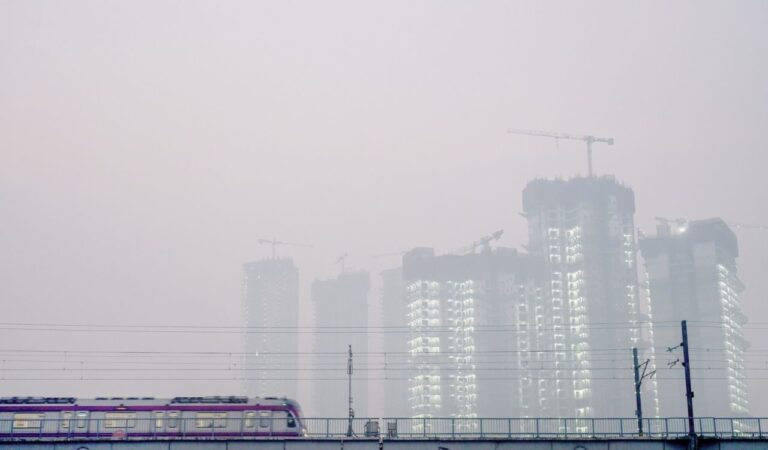
Delhi Air Quality Improves Slightly, But Remains 'Very Poor'; Several Stations Cross 400 AQI
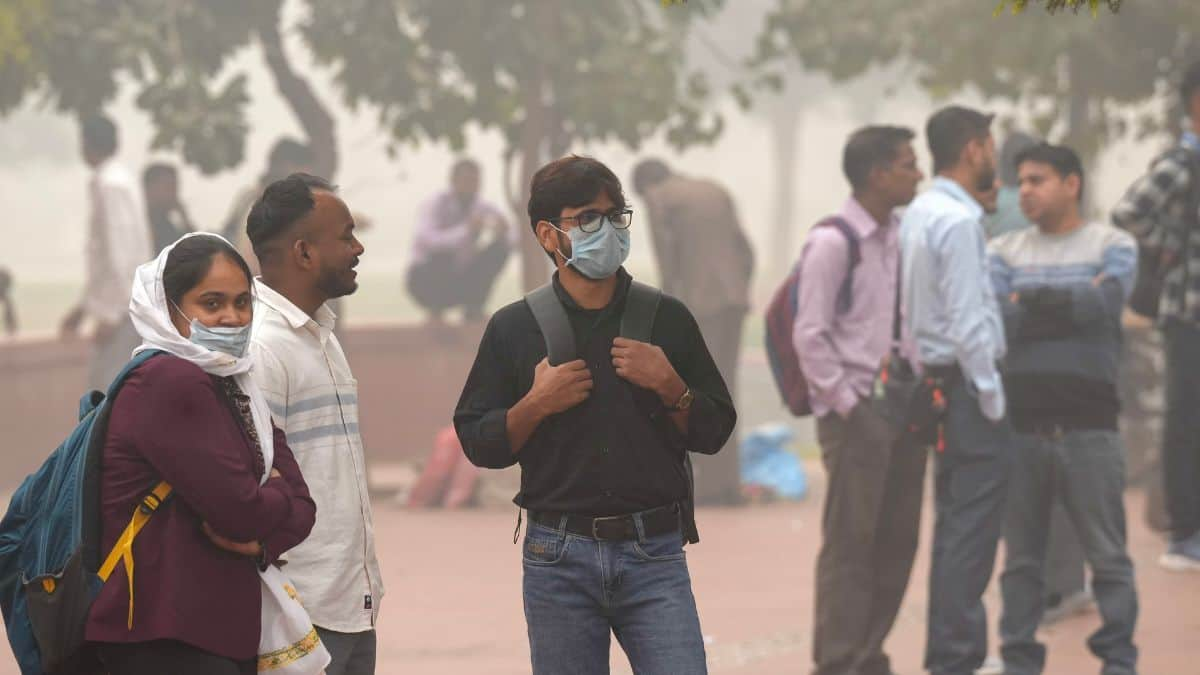
Delhi witnessed a slight improvement in its air quality on Saturday morning, a day after the average AQI plunged into the severe category for the first time this season. The Air Quality Index stood at 348 at 7:05 am in the "very poor" category, according to the Central Pollution Control Board's (CPCB) Sameer app, which provides hourly updates on air quality. On Friday, the national capital had recorded an average AQI of 403.
However, several parts of the city continued to remain affected by severe pollution, recording an AQI above 400. According to data from pollution monitoring stations, Burari Crossing recorded an AQI of 412. Bawana registered 389, while Anand Vihar reported 381, placing both areas in the very poor category.
Several Areas Record AQI Above 400
Several monitoring stations reported readings above 400. DTU Delhi recorded an AQI of 403, IIT Delhi 419, ITO Delhi 415, NIH Narela 429, North Campus 421, and Pusa 415.
Other localities also reported very poor air quality, with Alipur recording an AQI of 369, Aya Nagar 359, Burari 358, Ashok Vihar 343 and Badarpur 314.
In comparison, the Cantonment area recorded a relatively lower AQI of 147, falling in the moderate category.
Data showed that all 59 air quality monitoring stations across Delhi were operational. With readings crossing the 300 mark in several areas, concerns have grown over the health impact of the worsening pollution.
Capital Records Season's First 'Severe' Air Quality Day
Data from individual monitoring stations on Friday showed that IIT Delhi recorded the worst air quality at 488, followed by Chandni Chowk at 479 and Delhi University's North Campus at 478.
Burari Crossing recorded an AQI of 456, while ITO and Jawaharlal Nehru University (JNU) reported readings of 451 each.
Of the 58 monitoring stations that reported data at 8 am, 33 recorded AQI levels in the severe category, while 24 were in the very poor category. Only one station reported moderate air quality.
The thick blanket of smog also reduced visibility in several parts of the national capital.
According to the CPCB, AQI readings between 301 and 400 fall in the 'very poor' category, while readings between 401 and 500 are classified as 'severe'.
This content is published by ABP Live - Cities and has not been created or edited by Hello Headlines. View original