How flexible workspaces are changing the way companies think about offices
The COVID-19 pandemic changed how companies think about offices. After employees spent months working from home, businesses had to reconsider what would bring people back to the workplace and how to make that time productive.
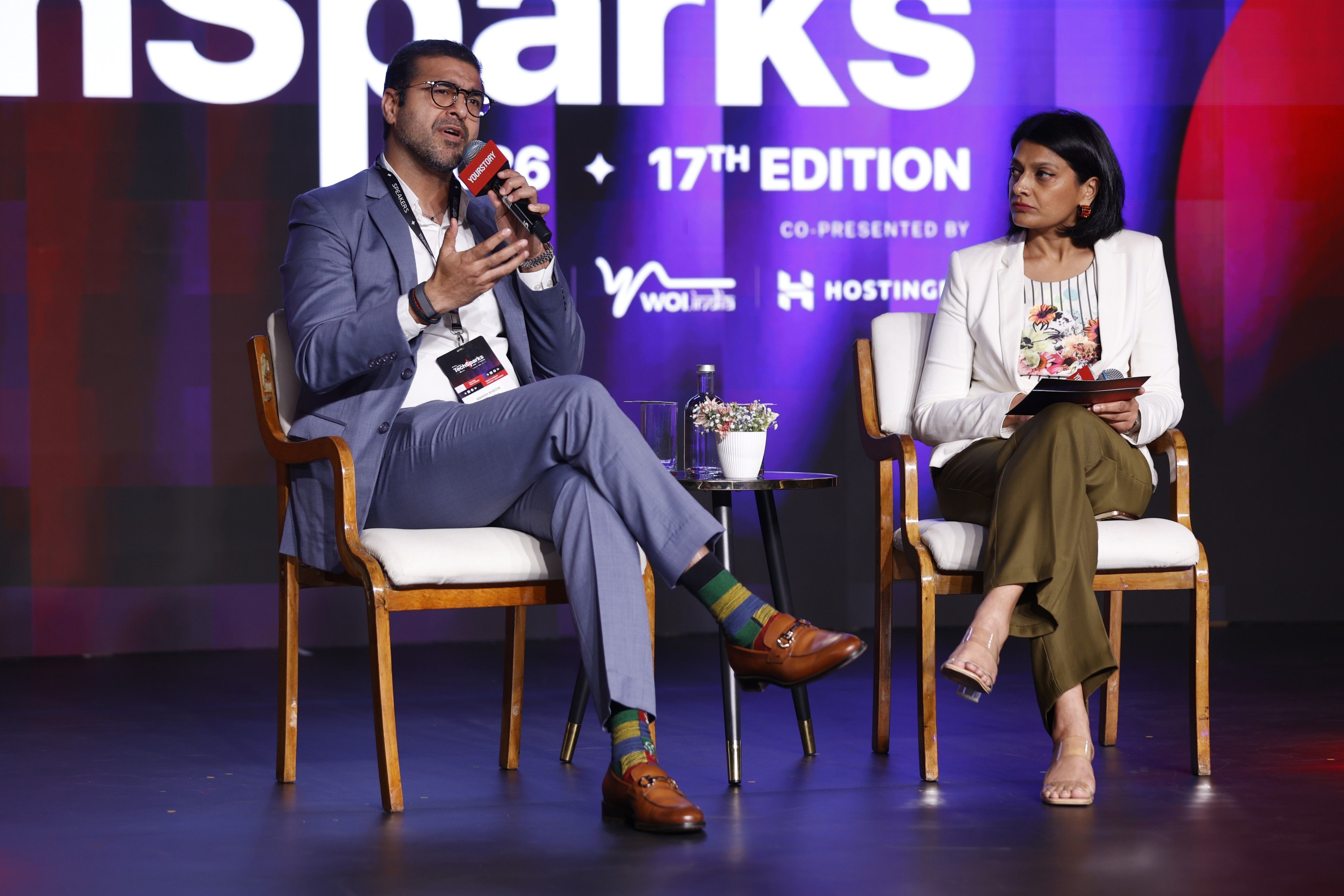
At TechSparks 2026, Manish Khedia, Regional Managing Director at The Executive Centre (TEC), joined Shivani Muthanna, Senior Director – Strategic Content & Video at YourStory, for a fireside chat titled ‘The enterprise office 2.0: Space, strategy, experience redefined’.
The discussion covered how flexible workspaces, hybrid working arrangements, and employee expectations are changing the way businesses plan their offices.
From square footage to collaboration
For years, companies made office decisions based largely on location, square footage, the number of workstations, and the type of building. The pandemic changed those priorities, first by forcing employees to work from home and then by making companies reconsider how to bring them back.
According to Khedia, the challenge now is to create offices that employees want to visit, where they can work productively, collaborate, and have access to the facilities they need.
“I think all the companies are looking at how they can engage their employees to be more productive, not by giving them more work, but by creating an environment where they can collaborate,” he said.
As a result, businesses are looking beyond a premium address when choosing office space. They are considering the surrounding infrastructure, including technology parks, food courts, daycare facilities, and other amenities that make daily work more convenient.
Inside the office, the focus is shifting towards collaboration and employee experience. Companies are moving away from traditional hierarchical layouts toward spaces where people can exchange ideas, work , and think differently.
Khedia said businesses are increasingly treating offices as communities that support employees, rather than simply as fixed assets or status symbols.
Bringing offices closer to employees
Location remains important, particularly in large cities such as Bengaluru and Mumbai, where employees may spend two to three hours commuting each day. The time, cost, and effort involved are among the reasons companies are exploring hybrid working arrangements and the hub-and-spoke model.
Instead of operating from one central office, businesses can set up workspaces in different locations, allowing employees to work closer to home.
Khedia said the aim is to make time spent in the office more productive while reducing the burden of commuting. Employees have more time for themselves, while companies can provide spaces where teams can collaborate.
The shift is not limited to metropolitan cities. Khedia pointed to Ahmedabad, Kochi, and Coimbatore as emerging business hubs, supported by growing talent pools and improving infrastructure.
India’s expanding Global Capability Centre (GCC) ecosystem is also influencing office requirements. Companies are considering not only where talent is available but also whether a location has the infrastructure employees need to work effectively.
Khedia highlighted the quality of India’s commercial real estate developments and the amenities available in premium office buildings across the country.
For companies expanding into new markets, the growing network of business locations provides more options to access talent without requiring employees to relocate to major cities.
Why companies are choosing flexible offices
Business uncertainty is also changing how companies plan their real estate requirements.
Traditional office leases often require companies to commit to space for five to 10 years, based on projections of future growth. But as businesses become more agile, such long-term commitments can be difficult to make.
“If any multinationals come to India, they would first have to invest in real estate, thinking of a five-year horizon. Now, flexible office spaces have cut down on those uncertainties. They have ensured the companies can think for the next one or two years,” Khedia said.
Flexible workspaces allow businesses to start with smaller offices, expand, or reduce their space as required, and pay for what they use. This can help them manage real estate costs and allocate more resources to hiring and other business priorities.
Office design is changing as well. Traditional cabins and cubicles are making way for more open layouts that encourage interaction between teams. Companies are also incorporating greenery and biophilic design to make workplaces more comfortable and inviting.
Flexible workspace providers and landlords
Khedia said flexible workspace providers are increasingly working with traditional landlords rather than competing with them. Such partnerships can help property owners attract more tenants by offering businesses different ways to occupy office space.
“The flex office space is a true partner to the landlord. They're not changing the landscape, they're complementing the landlord to create a space which will invite more and more tenants to that building,” he said.
He pointed to the growth of the sector in India. When he began his career, flexible offices accounted for about 1% of overall real estate leasing. By the last financial quarter, that share had reached 23%, he said.
He also noted that flexible workspace absorption in India had increased from around half a million square feet to more than 17–18 million square feet.
Providers such as TEC now offer more than desks and meeting rooms. Businesses can access offices tailored to their requirements, including secure private units within a shared infrastructure.
This allows companies to maintain privacy while benefiting from flexible arrangements and opportunities to network with other businesses in the same building.
For companies entering a new market or expanding their operations, the model also reduces the need to set up and manage every aspect of an office independently.
Enterprise 2.0: Beyond the desk
Khedia believes the next phase of office development will focus more closely on employees' everyday needs.
This could include access to healthcare, childcare, food and other facilities within or near office buildings. Such amenities can make workplaces more convenient while helping businesses attract and retain talent.
For Khedia, Enterprise 2.0 is about moving beyond conventional office layouts to create workplaces that support employees throughout the working day.
As companies reconsider their real estate needs, flexibility, collaboration, and employee experience are becoming important factors in deciding what an office should offer.
This content is published by YourStory and has not been created or edited by Hello Headlines. View original