States Must Enforce Noise Pollution Rules
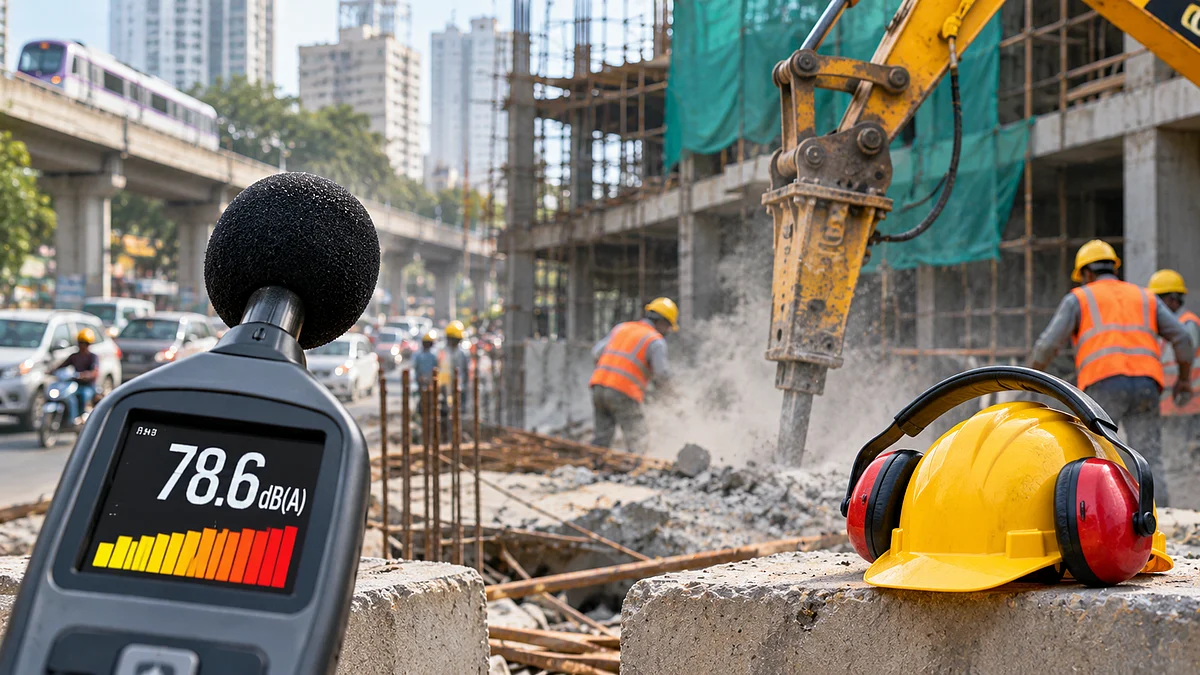
High ambient noise is a global issue, but Indian cities stand on a depressingly weak footing when it comes to acting against noise pollution. It is welcome, therefore, that the Bombay High Court has taken up the matter on a petition seeking enforcement of the 55 decibel limit—dB(A)—for daytime noise at construction sites in Mumbai and called for strict compliance by the authorities. It is useful to remember that urban noise levels recorded by researchers point to an uncomfortable 70 dB(A) on average, going up to 80 dB(A) or higher with incessant vehicular honking. At this exposure level, there are known harmful effects on the heart, causing stress and sleep disturbance. Workplace noise at similar levels is common, affecting workers. Construction, as a major component of the national economy in cities, uses noisy machinery at worksites that is often antiquated or badly maintained. Project managers ignore the law on noise and do not create insulation mechanisms. The prescribed noise level at night, of a maximum of 45 dB(A), is ignored by big construction projects like Metro Rail. Pertinently, the court has pointed out that while the law is clear, there is little enforcement and warned that it would view mere “paper compliance” by the authorities and the construction companies seriously. All city administrations, particularly the major metropolitan areas, would do well to take this order as a fresh nudge to act on noise pollution, whether from vehicular traffic, construction or unlawful use of loudspeakers.
It should worry all citizens that chronic exposure to ambient noise, combined with the use of headphones at loud volumes, may be creating serious hearing deficits, especially among youth. Occupational noise-induced hearing loss among workers is seen as a significant public health challenge, especially in sectors such as mining, saw milling, metalworking, grinding, and ginning. One study in an industrial unit, with an occupational noise range of 89 to 106 dB(A), found hearing impairment in 86% of the workers. Moreover, cities may also be inadequately measuring the problem: many groups with high exposure, such as transport crews, traffic police, and road-facing shops, are unaware of the effects of chronic noise exposure. Some countries, such as Germany, have strict rules on noise, with restrictions even on homeowners for various activities, such as the use of vacuum cleaners and mixer grinders, based on the time of day. It is time India viewed noise as a public health problem rather than a mere nuisance. At the scale of a city, the Bombay HC order treats noise reduction as a social determinant of health, which the construction industry should abide by in all cities. Worksites could be surrounded by acoustic barriers, machinery should have updated mufflers, and rickety equipment needs to be eliminated. Without enforcement, the law on noise is meaningless.
This content is published by Free Press Journal and has not been created or edited by Hello Headlines. View original