'Major Public Order Crisis Averted': Why Delhi Police Denied CJP Jantar Mantar Protest Permission
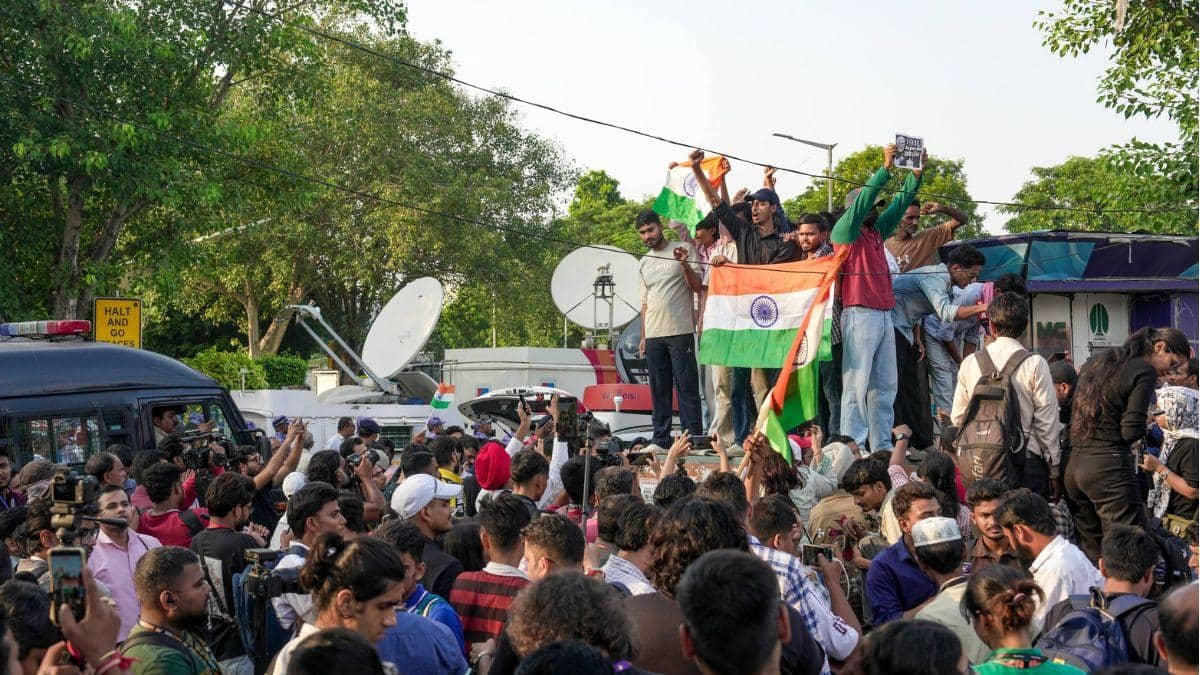
Delhi Police Commissioner Anurag Kumar has told the Supreme Court that permission for the Cockroach Janta Party (CJP) to hold a protest at Delhi's Jantar Mantar on October 10 was denied due to its alleged failure to honour previous undertakings on peaceful demonstrations and intelligence inputs warning of a possible serious public order situation.
In an affidavit filed before the Supreme Court on Tuesday, Kumar said the police had received intelligence suggesting that the proposed gathering could lead to a dangerous situation and threaten public order in the national capital.
“A major public order situation was averted (on Oct 10) by timely, proportionate and lawful measures taken by Delhi Police,” the commissioner said.
He added that preventive action was necessary to stop people from becoming part of an unlawful assembly and potentially committing cognisable offences during the gathering.
Delhi Police Cites CJP's Previous Protests, Public Order Concerns
Kumar urged the Supreme Court to consider the sensitivity of the matter and the circumstances that prompted the police to take preventive measures.
“No police administration can permit breach of public order in the national capital, particularly when a call is given by an organisation with a recent history of mob violence, destruction of public and private property, and incidents resulting in injuries to several individuals and the subsequent protests (by Congress) on Oct 6, 7, 8,” he said.
The commissioner maintained that the police had to act in view of the alleged history of violence and the possibility of further unrest. He said the decision was aimed at preventing a breakdown of public order rather than restricting the right to peaceful assembly.
Protesters Were Not Arrested Or Detained, Commissioner Says
Addressing the police action on October 10, Kumar said those removed from Jantar Mantar, including political leaders, were neither arrested nor detained.
According to the affidavit, the protesters were taken to makeshift centres or kept in the rooms of station house officers at police stations. They were also provided with refreshments, he said.
The commissioner asked the Supreme Court to take a holistic view of the police response, taking into account the potential security concerns and the preventive steps taken to address them.
Delhi Police Explains Restrictions On Metro Stations
Kumar also detailed the restrictions imposed on Delhi Metro services ahead of the proposed protest. He said regulatory measures were introduced at 57 Metro stations on October 9 to manage the situation.
However, following the Supreme Court's order, the police reviewed the restrictions and reduced the number of regulated stations to 45 out of the network's 303 stations.
Describing law and order management as a highly sensitive aspect of policing, Kumar said authorities had to strike a balance between the right of some citizens to protest and the rights of others to go about their daily lives peacefully.
This content is published by ABP Live - India and has not been created or edited by Hello Headlines. View original