Sarvam’s move to host Chinese AI models triggers debate
Sarvam AI’s decision to host Chinese-developed artificial intelligence models on its India-based infrastructure has reopened questions about what it means to build sovereign AI.
With its newly-launched Token Factory offering access to models from DeepSeek, Moonshot AI and Z.ai, alongside its own models and Google’s Gemma, the Bengaluru-based company is positioning itself as an AI developer and an inference provider.
The move has attracted criticism from those who believe a company backed by public resources should prioritise original Indian research, as well as support from those who see a commercial opportunity in hosting international models locally.
Announcing the service, Sarvam said, “We host our own models, and the full range of best-in-class open-weight models, in India.” It added that enterprises would have more models to choose from and “an AI stack they can own without lock-ins”.
Token Factory is an inference platform, which provides the computing infrastructure required to run trained AI models and generate responses. Instead of purchasing expensive hardware and managing individual models themselves, developers can access several models through a single application programming interface.
Sarvam said its customised software and infrastructure allow it to compete on speed, reliability and cost.
The debate
The criticism centres on the distinction between hosting AI and developing it. Sanchit Monga, chief executive of Runanywhere AI, a Y Combinator-backed AI infrastructure company, questioned whether the launch reflected the ambitions associated with Sarvam’s selection under the government’s IndiaAI Mission. He wrote, “I wanted Sarvam to be the lab that ships frontier research out of India. After that much capital and subsidized compute, this is not it.”
Similar concerns were expressed by technology commentator Shakthi, who argued that hosting predominantly Chinese models was not what the country’s sovereign AI ambitions should amount to.
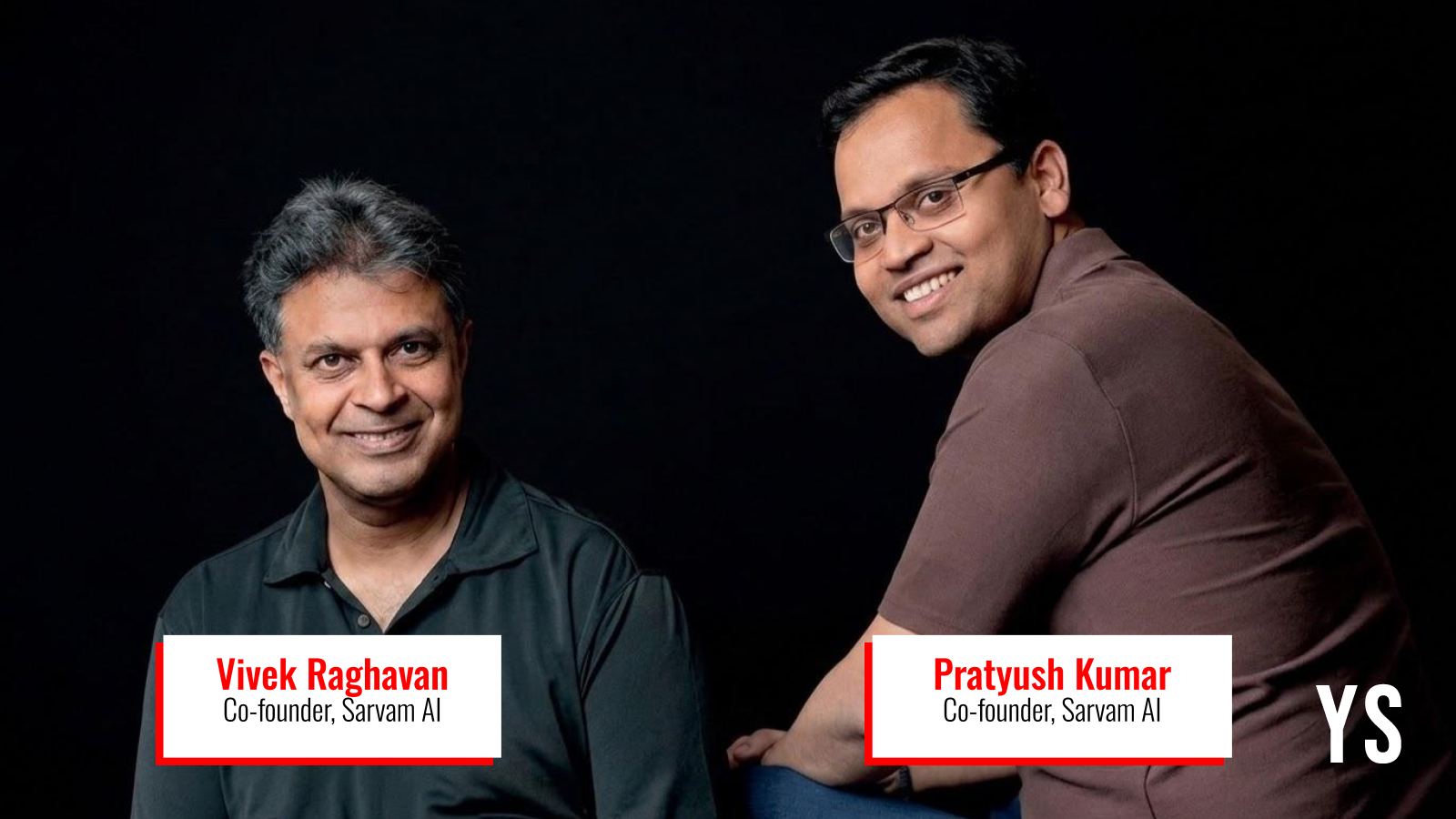
The debate became particularly interesting after Sarvam co-founder Vivek Raghavan’s remarks at the Bengaluru Tech Summit on November 17.
Warning against India’s dependence on foreign AI systems, he said, “A lot of people are proud to say that India is the largest user of ChatGPT. But that is not a good thing. We are exporting data and importing intelligence.”
Although he was not directly addressing Token Factory, his comments underline the strategic concerns surrounding dependence on foreign-developed models.
There are, however, strong commercial arguments for Sarvam’s approach. Hemant Mohapatra, a partner at Lightspeed India and an investor in Sarvam, defended the launch, pointing out that international inference providers are already making money by hosting foreign models in India. He argued that there was considerable demand for such services, particularly as computing capacity becomes increasingly difficult to secure in some markets.
Technology entrepreneur Nikhil Pahwa also defended the company’s need to develop a sustainable business. “They’re a business, and they have to work in shareholder interest. Nationalism is a pitch that got them the GPUs. They’re not expected to deliver anything beyond their contract,” he wrote.
Nischal Jain, co-founder of Egma AI, offered a more nuanced assessment. While acknowledging that companies must generate revenue, he argued that Sarvam had acquired a particular significance in India’s technology ecosystem. “Sarvam was supposed to be India’s answer to the US & China. When we don’t see their frontier labs do these kinda things, it looks demotivating in an already tough situation. Everyone's gotta make money and I empathise with both ends of arguments,” he wrote.
Questions have also emerged around the platform’s competitiveness. Atharva Ingle, an AI engineer at competing inference provider JarvisLabs, said his company had compared the performance of three models across the two platforms. “We’re on par with or faster than Sarvam across speed and latency metrics, while offering lower pricing,” he claimed.
Reduce AI dependence
The wider context is India’s attempt to reduce dependence on overseas AI technology.
The IndiaAI Mission, approved in March 2024 with an outlay of approximately Rs 10,372 crore, is intended to strengthen domestic computing infrastructure, research and foundational model development.
Sarvam was selected in 2025 for indigenous model development and received subsidised access to 4,096 Nvidia H100 GPUs. The reported subsidy was Rs 98.68 crore. The company also raised over $300 million at a reported valuation of $1.5 billion.
Ultimately, hosting foreign models on Indian infrastructure and developing indigenous models are different achievements, although they need not be mutually exclusive. Local hosting can improve data residency, access and computing efficiency, while a successful inference business could generate revenue to support further research.
The more important test will be whether Sarvam can translate its public support and commercial expansion into original technology and competitive Indian models.
This content is published by YourStory and has not been created or edited by Hello Headlines. View original