'Pakistanis Deserve Better': India Tears Into Pakistan Military At UN, Accuses Army Of Looting Mineral Wealth And Fuelling Political Turmoil | Watch
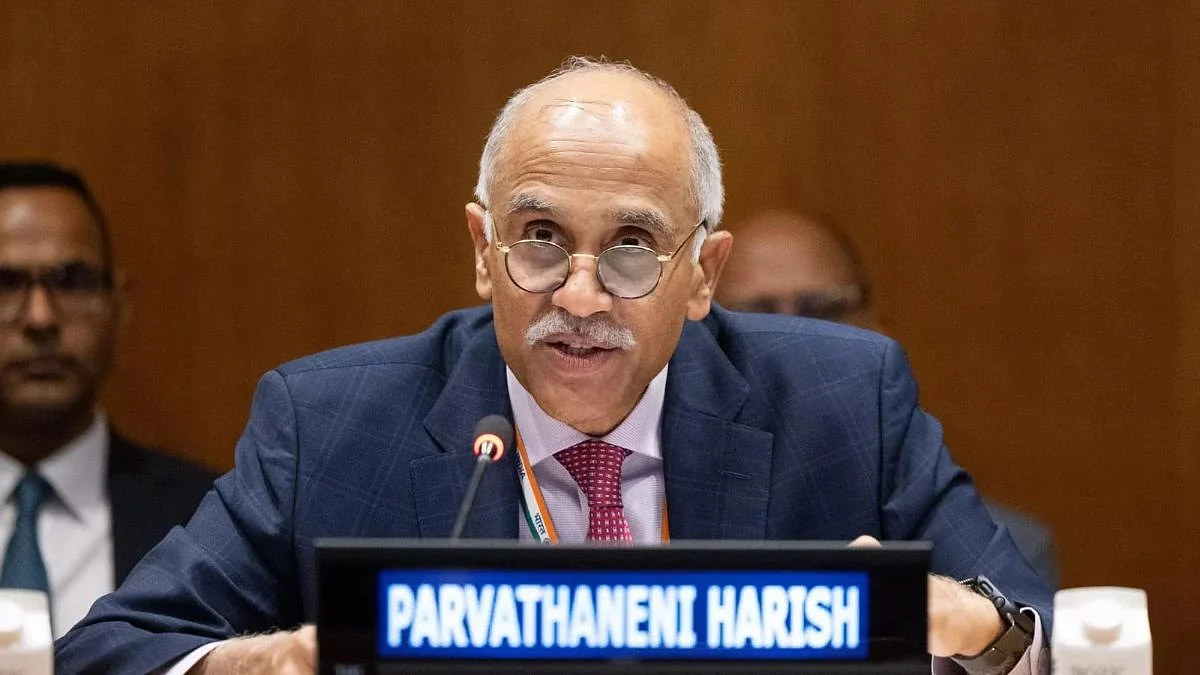
New York: India tore into Pakistan at a United Nations Security Council Arria-formula meeting, directly accusing the Pakistani military of looting the country’s natural resources for personal gain and triggering domestic political turmoil to keep control over them.
Pakistan "Army Chief was seen last September, displaying a wooden box filled with mineral stones to foreign leaders, a clear indication of their Army’s role in (natural resource) exploitation"
— Sidhant Sibal (@sidhant) November 18, 2026
India's envoy to UN @AmbHarishP at UN's Arria formula meet pic.twitter.com/HIl6907k6E
Speaking at the session convened by Liberia on natural resources and conflict, India’s Permanent Representative to the UN, Ambassador Parvathaneni Harish, hit back after the Pakistani delegation brought up the Indus Waters Treaty. Ambassador Harish made it clear that New Delhi had no plans to discuss bilateral disputes during the meeting, but refused to let Islamabad’s remarks go unanswered.
'Risk Of Brain Haemorrhage & Cardiac Arrest' Imran Khan Raises Alarm Over Health In Pakistan Jail"Mr. Chair, it was not our intention to bring other issues into this forum, but my delegation is compelled to respond to the comment made by the delegation of Pakistan that has chosen to misuse today's discussion to peddle its propaganda. Our position on the Indus Waters Treaty remains clear and consistent and has been articulated at multiple fora," he said.
Zeroing in on the Pakistani military establishment, Ambassador Harish pointed to a specific incident involving Pakistan’s Chief of Army Staff Asim Munir to illustrate who actually controls and profits from the country's mineral wealth. He linked the military’s direct involvement in resource extraction to recent political crackdowns inside Pakistan, including the removal of an elected provincial government.
Pakistan-Based Agent Orchestrated Railway Track Blast In Rajasthan; 2 Arrested"Their Army Chief was seen last September displaying a wooden box filled with mineral stones to foreign leaders, a clear indication of their army's role in this exploitation, which is also believed to be behind the recent dismissal of a provincial government in Pakistan and imposition of a state of emergency there."
Last year at the White House, Pakistan's Prime Minister Shehbaz Sharif and Army Chief Asim Munir were photographed gifting rare earth minerals to the US President. The image captured Munir gesturing toward an open wooden case filled with the minerals as Donald Trump observed inside the Oval Office, while Sharif stood nearby smiling faintly.
Calling the military Pakistan’s actual decision-makers, the Indian envoy argued that the country's top brass prioritises its own enrichment and cross-border hostility over the welfare of ordinary Pakistanis, a strategy he noted is now backfiring on Islamabad.
Bangladesh On Edge! Bomb Blasts Rock Dhaka, Muhammad Yunus's Ancestral Home Set Ablaze Amid Political Turmoil"Pakistanis would be served well if its real rulers, its military, used the country's natural resources for the benefit of their population rather than self-aggrandisement. They would also be served better if the Pakistani army stops fomenting conflict for its neighbours, which is actually boomerang-ing back to bite their own country."
Beyond the sharp exchange with Pakistan, Ambassador Harish laid out India’s core position on how natural resources should be governed globally.
Thanking Liberia for hosting the discussion, he noted that "Liberia's own journey from conflict to recovery lends particular weight to this exchange." He explained that while resources are meant to drive national growth, illegal mining and smuggling often end up funding armed groups and dragging out wars.
Instead of creating new international rules, Ambassador Harish argued that countries should rely on existing, voluntary frameworks that successfully block illegal trade without hurting legitimate businesses. He pointed to the Kimberley Process, an international certification scheme that India chairs in 2026, as proof that cooperation between governments, businesses, and civil society works.
Trump Heads To China After 'Wonderful' Philippines Visit, Trilateral Meeting With Xi Jinping And Putin In Focus"Our experience is that cooperation works best when it is voluntary, consensus-based, and nationally led in an environment of friendship and goodwill. The Kimberley Process is an instructive example. By bringing together governments, industry, and civil society, it has curbed the trade in conflict diamonds while keeping legitimate trade open. As chair of the Kimberley Process in 2026, India is committed to strengthening its effectiveness and inclusiveness. Existing and tested mechanisms deserve to be fully utilised, and wherever feasible replicated, before new frameworks are contemplated," he said.
Drawing a sharp contrast with heavy-handed military control over resource-rich areas, Ambassador Harish emphasised that lasting peace only happens when local citizens directly profit from the wealth extracted from their land. He cited India’s own mining laws as a working model where companies are legally required to fund local community development.
Finally, Ambassador Harish reminded the forum that the UN Security Council should stick strictly to matters of international peace and security, leaving broader economic and development policies to other UN bodies.
"As these discussions evolve, we should preserve the distinct mandates of the principal organs of the United Nations. The Security Council's responsibility is the maintenance of international peace and security. Broader questions of sustainable development and resource governance belong to the General Assembly, the ECOSOC, and other relevant bodies. The Peacebuilding Commission, given its inclusive composition, can support nationally owned efforts in this area. India stands ready to share its experience and to work with all partners towards practical, consensus-based approaches that enable natural resources to drive sustainable development and lasting peace," he argued.
Level up your brain the fun way. Play daily games and quizzes on FPJ Smart!
(Except for the headline, this article has not been edited by FPJ's editorial team and is auto-generated from an agency feed.)
This content is published by Free Press Journal and has not been created or edited by Hello Headlines. View original