How Dhruv Sayani built Ccigmaa Lifestyles into a five-brand personal care business
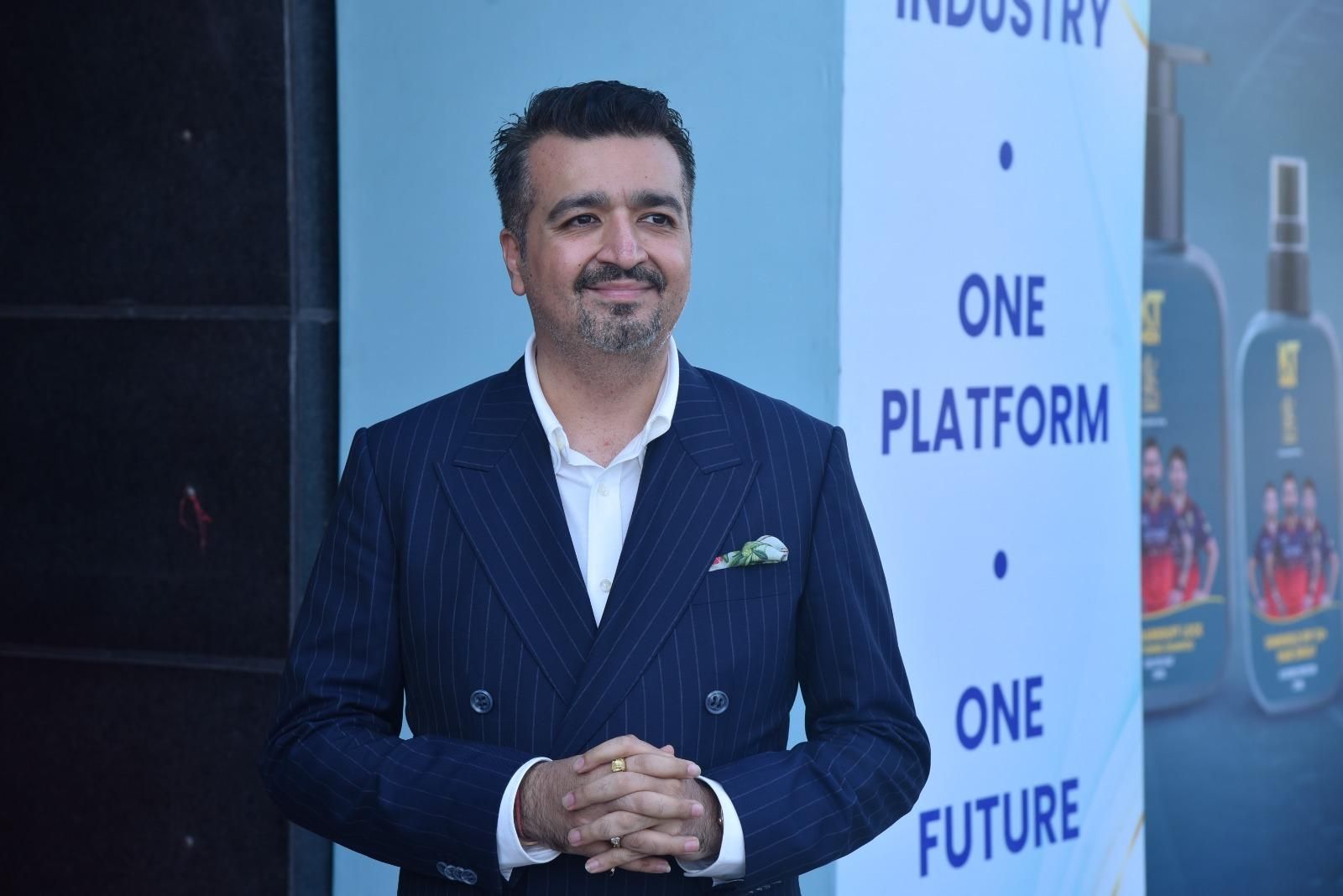
Hair and water composition can change significantly every 100 kilometres across India, affecting how haircare products perform. It was this observation, made while researching premature greying in his 20s, that led Dhruv Sayani to build Ccigmaa Lifestyles, a Mumbai-based personal care company.
Sayani found that keratin, the protein that makes up most of human hair, responds differently to these regional variations, something he believed conventional haircare formulations did not adequately address.
In 2018, he launched KT Professional, a salon-focused haircare brand developed specifically for stylists. Since then, Ccigmaa Lifestyles has expanded its portfolio with three more brands, KT Men, KT Kids and KT Derma, each focused on specific personal care needs.
The company, founded in 2018, aims to inspire “millions of minds” through Indian-made personal care products, according to Sayani.
Build credibility before distribution
Proving the regional-formulation premise required evidence a lab alone could not generate.
Rather than build retail distribution first and let salons discover the brand afterward, Ccigmaa Lifestyles went the other way around, giving hairstylists across Indian cities access to formulations, and letting their feedback, not a marketing brief, decide what shipped outside the production.
KT Professional was launched with Rs 30 lakh of the founder’s personal savings in 2018, exactly that route. Nearly a decade later, the company works with more than 27,000 salons across 86 cities, a distribution footprint built one stylist and salon relationship at a time rather than through a single national launch mode.
Turn specialization into a growth engine
Once KT Professional’s salon-first model was validated, the more conventional path was to push that single brand harder, deeper into more cities, more product lines, more advertising.
Sayani chose a different growth mechanism instead: apply the same underlying logic, that a mass-market, one-size-fits-all product underserves a large share of its actual buyers, to categories beyond haircare.
That decision produced KT Men and KT Kids as standalone brands rather than product extensions, a materially harder path since each requires its own credibility, its own distribution relationships, and its own reason to exist, rather than borrowing KT Professional's. It is also, by most available market evidence, the better-timed one.
Redseer projects India’s beauty and personal care market reaching $40 billion by 2030, positioning India as the fourth largest such market globally, with Gen Z and Alpha consumers becoming the largest beauty-spending cohort in that growth. A market moving toward younger, more specific buyers rewards brands built around a defined need far more than it rewards a single brand trying to serve everyone.
Position KT Men around performance, not vanity
Sayani says most Indian grooming brands have built their positioning around attraction or plain cosmetic vanity rather than performance, a framing he believed increasingly out of step with younger, fitness-oriented male consumers.
KT Men was built to compete on the second premise instead of the first, launching at an accessible Rs 399 entry point before extending into a higher Rs 699 to Rs 999 band through its G.O.A.T Edition range, a licensing partnership with the Argentina Football Association built around Lionel Messi, Julian Alvarez and Enzo Fernandez.
The brand has since disclosed a Rs 36 Crore marketing investment behind that range, against a Rs 200 crore revenue target over 18 to 24 months, sitting on top of KT Men’s original Rs 100 crore first-year ambition. Whether that specific target lands on schedule matters less to the decision itself than the positioning bet underneath it, that performance, not image, was the underused argument in Indian men's grooming.
Design for two customers at once
Children’s personal care carries a structural complication most categories do not: the person buying the product and the person using it are rarely evaluating it the same way.
A parent checks an ingredient list and asks whether a formulation is genuinely mild enough for a child's skin. A child has no interest in either question and decides on nothing more sophisticated than whether the experience of using it was enjoyable.
Rather than let KT Professional’s existing haircare range absorb a children's line as a smaller variant, Ccigmaa built KT Kids as its own brand, formulated specifically for children rather than adapted from adult products, and has run two entertainment-licensing partnerships in 15 months, first with SpongeBob SquarePants, then with Peppa Pig, timed separately rather than bundled, each aimed at a distinct age band.
The decision to treat that dual-audience problem as its own category, rather than a footnote inside an existing one, is the same underlying instinct that produced KT Men, applied to a harder version of the same question.
The company created five brands with one method to connect them: identify a specific need a generalist product is failing to serve, validate the idea against real, direct feedback before scaling it, and build a dedicated brand around it rather than stretch an existing one to cover it.
Ccigmaa's next test is whether that method holds as a repeatable business engine rather than a run of good individual calls, since a Rs 40 billion market moving toward specificity will reward the companies that can keep making this decision correctly, not just the ones that made it once.
(Disclaimer: The views and opinions expressed in this article are those of the author and do not necessarily reflect the views of YourStory.)
This content is published by YourStory and has not been created or edited by Hello Headlines. View original