Former PMs, Ex-Army Chief: Who Are Netanyahu's Top Rivals As Israel Votes In First Polls Since Oct 7 Attack?
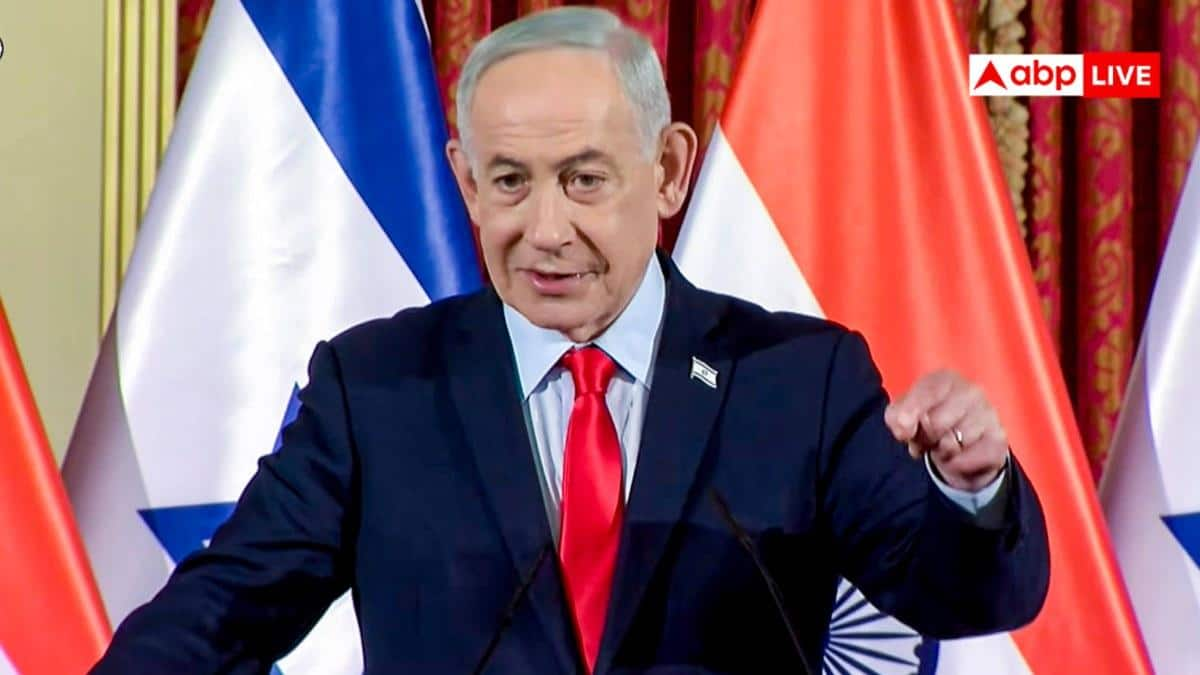
Israeli Prime Minister Benjamin Netanyahu faces a battle to retain power in Tuesday's parliamentary election, with voters weighing his leadership following the October 7, 2023, Hamas-led attacks, subsequent wars in Gaza and with Iran, and growing international isolation.
Netanyahu, Israel's longest-serving prime minister, has spent about 19 years in office across different terms. Although his Likud party and its right-wing allies face a challenge from rival political groupings, Israel's fragmented electoral system could leave him with a path to forming the next government even if his party does not secure a clear majority.
Opinion polls have indicated a close contest between Netanyahu's Likud-led camp and a rival alliance led by former military chief Gadi Eisenkot. Other prominent challengers include former prime minister Naftali Bennett, former defence minister Avigdor Lieberman and former general Yair Golan.
Netanyahu has campaigned on his wartime leadership and his relationship with US President Donald Trump, who has endorsed him. On Sunday, Netanyahu said Trump was prepared to act again to "finally" remove the Iranian threat, but only if Netanyahu remained in power.
Here is a look at the main candidates, their political positions and the groups that could influence the outcome.
Israel Elections: Benjamin Netanyahu And The Fight To Retain Power
Netanyahu, 77, has dominated Israeli politics for years, serving as prime minister for much of the period since 2009 after an earlier stint in the 1990s. Supporters view him as a strong leader capable of defending Israel in a hostile region, while critics blame his government for security failures and deepening domestic divisions.
The October 7, 2023, Hamas-led attack dealt a major blow to his government's security credentials. Israel's subsequent military campaigns in Gaza and Lebanon, along with its strikes on Iran, have made security and the conduct of the wars central issues in the election.
Netanyahu is also facing legal challenges. The International Criminal Court has issued a warrant for his arrest over alleged war crimes in Gaza, allegations he rejects. He is separately standing trial in Israel on corruption charges, which he denies.
Opinion polls have indicated a decline in support for his Likud party since the October 7 attack. His government's policies on religion and the state have also drawn opposition from sections of Israeli society.
Despite these challenges, Netanyahu remains a central figure in the contest. He has said he wants to form a "broad national" government if he wins. If coalition negotiations produce a deadlock, he could remain caretaker prime minister while efforts to form a government continue.
Gadi Eisenkot: Former Military Chief Leading Rival Camp
Gadi Eisenkot, 66, is a former chief of staff of the Israel Defense Forces and a security hawk who leads the centrist Yashar party. His party's name translates from Hebrew as "straight" or "honest".
Eisenkot has sought to present himself as a political outsider, drawing on his military background and personal sacrifices. He lost a son in combat in Gaza, a loss that has shaped his public profile during the war.
His appeal spans sections of the political right and centre, providing an alternative to Netanyahu's long tenure in office. The contest between the Likud-led camp and the rival grouping led by Eisenkot is a central feature of the election.
Ex-PM Naftali Bennett And Yair Lapid Join Forces
Former prime minister Naftali Bennett, 54, is a right-wing politician, former commando and high-tech millionaire who previously served as an aide to Netanyahu. He has joined forces with former prime minister Yair Lapid in a new party called Together.
The alliance has focused on national reconciliation and restoring stability after years of political turmoil and conflict. Bennett and Lapid previously joined forces with other parties to form a government that removed Netanyahu from power in 2021.
Their partnership brings together politicians from different ends of the political spectrum, united by their opposition to Netanyahu's continued leadership.
Avigdor Lieberman And Yair Golan Among Other Challengers
Avigdor Lieberman, 68, is a former defence minister who was once a close ally of Netanyahu. He later became one of the prime minister's sharpest critics, resigning from his government in 2018 after accusing him of being too soft on Palestinian militants in Gaza.
Lieberman leads Israel Our Home, a party that draws much of its support from Israel's former Soviet immigrant community. His political positions are even more hawkish than Netanyahu's on some security issues.
Yair Golan, 64, a former general, leads the Democrats, a party formed from the remnants of Israel's historic Labour movement and the smaller left-wing Meretz party. Golan received attention for helping rescue people from one of the sites attacked by Hamas on October 7, 2023.
The two politicians offer different alternatives to Netanyahu, with Lieberman occupying the nationalist right and Golan representing the left.
Far-Right Allies Could Be Crucial For Netanyahu
Netanyahu may once again depend on far-right politicians Bezalel Smotrich, 46, and Itamar Ben-Gvir, 50, to assemble a governing coalition.
Smotrich, the finance minister, has championed the expansion of Israeli settlements in the occupied West Bank and expressed the hope that this would "bury" the idea of a Palestinian state.
Ben-Gvir, the national security minister, was convicted of racist incitement against Arabs in 2007. He has advocated capital punishment for convicted Palestinian militants, tougher prison conditions for Palestinians held in Israeli jails and expanded access to firearms for Israelis.
Both politicians have supported the expulsion of Palestinians from the Gaza Strip and the resettlement of the territory by Israelis. Their positions have drawn international scrutiny, and both have faced sanctions from some Western countries over accusations of inciting violence against Palestinians.
Ben-Gvir's Jewish Power party has also registered support in opinion polls, making the far-right bloc a potentially important factor in coalition negotiations.
Ultra-Orthodox Parties Remain Important Coalition Players
Netanyahu has relied for years on two ultra-Orthodox Jewish parties, United Torah Judaism and Shas, to sustain his governments.
Their demands for exemptions from compulsory military service for most members of their communities have become a major point of contention, particularly during wartime. Their communities' relatively low participation in the workforce and reliance on state benefits have also fuelled public debate.
The question of military-service exemptions has added to tensions over religion, state policy and the distribution of national responsibilities, issues that could influence coalition talks after the election.
Arab Parties And Smaller Groups Could Hold The Balance
Parties that do not clearly align with either major camp could influence which side is able to form a government. These include Raam and the Joint List, which represent sections of Israel's Arab minority, comprising about 20% of the country's population.
Other groups include the new right-wing People of Israel party and the centre-right Reservists party. Their support levels have fluctuated in opinion polls, leaving their potential role in post-election negotiations uncertain.
Israel elects its parliament through proportional representation, with seats allocated to candidates on party lists according to the votes received by each party. This system often requires parties to negotiate coalition agreements to form a government.
The election comes after one of Israel's most turbulent periods since its establishment in 1948, shaped by the October 7 attacks, the subsequent war in Gaza, military operations in Lebanon and strikes on Iran, as well as persistent divisions over Netanyahu's government and its policies.
This content is published by ABP Live - World and has not been created or edited by Hello Headlines. View original