Reforms Must Translate into Ease of Doing Business to Spur Investment and Jobs
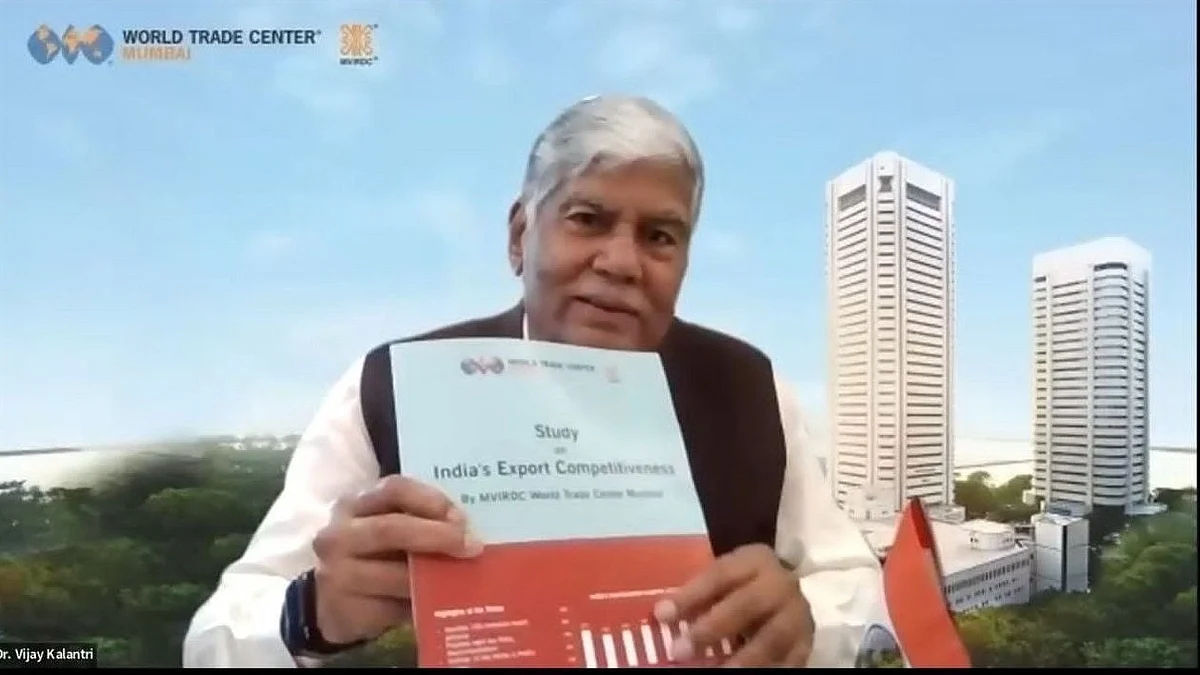
“Prime Minister Narendra Modi has undertaken significant economic and structural reforms over the past 12 years, laying a strong foundation for India's journey towards Viksit Bharat 2047. His recent call to Indian industry to increase investment and generate employment is timely and important as private investment has remained tepid in spite of many reforms. However, the true success of reforms lies in their implementation in letter and spirit. While several regulations have been simplified or removed, regulatory processes and administrative practices continue to create difficulties for businesses. There is a need to address persistent red tape and ensure that policy reforms translate into tangible improvements in the ease of doing business,” said Dr. Vijay Kalantri, Chairman, MVIRDC World Trade Center Mumbai and President, All India Association of Industries (AIAI), responding to the Prime Minister's appeal to industry.
Highlighting the importance of competition in promoting investment and innovation, Dr. Kalantri expressed concern over the growing concentration of economic activity in certain sectors. He noted that monopolistic and duopolistic market structures could restrict opportunities for smaller enterprises, discourage new entrants and limit the benefits of economic growth. A competitive and inclusive industrial ecosystem, supported by fair market access and a level playing field, would be essential to encourage entrepreneurship, strengthen MSMEs and attract wider private investment.
Dr. Kalantri emphasised that reducing procedural delays, improving regulatory coordination and eliminating unnecessary compliance burdens would encourage businesses, particularly MSMEs, to undertake fresh investments and expand their operations. “Regulations may have been rationalised, but regulatory structures and procedural complexities remain. Greater attention must now be given to simplifying implementation, reducing friction between businesses and regulatory authorities, and creating a predictable and transparent business environment,” he added.
Referring to the Prime Minister's call for greater corporate investment, Dr. Kalantri noted that several large companies have maintained healthy profitability and strengthened their financial positions even during periods of economic uncertainty. He observed that while retaining earnings and maintaining financial resilience are important business considerations, greater deployment of corporate resources towards productive investment could support industrial expansion, employment generation and long-term economic growth.
He further emphasised that increased private investment would create a positive multiplier effect across the economy through higher production, greater employment, stronger consumption and increased government revenues. Expansion of business activity would also broaden the tax base and generate additional tax collections, providing the Government with greater fiscal capacity to invest in infrastructure, education, skill development and other development priorities.
Dr. Kalantri called for constructive introspection by both the Government and industry to identify the factors holding back investment and accelerate India's economic transformation. “The Government has an important role in ensuring that reforms are implemented effectively, administrative bottlenecks are removed and fair competition is encouraged. Equally, industry must respond by undertaking commercially viable investments, expanding manufacturing capacities and generating meaningful employment. The responsibility for achieving Viksit Bharat 2047 rests on both sides, and sustained cooperation between policymakers and businesses will be essential to realise India's full economic potential,” he concluded.
This content is published by Free Press Journal and has not been created or edited by Hello Headlines. View original