BJP-SAD Renew Alliance For 2027 Punjab Polls: Can Parties Revive Political Fortunes After 2020 Split?
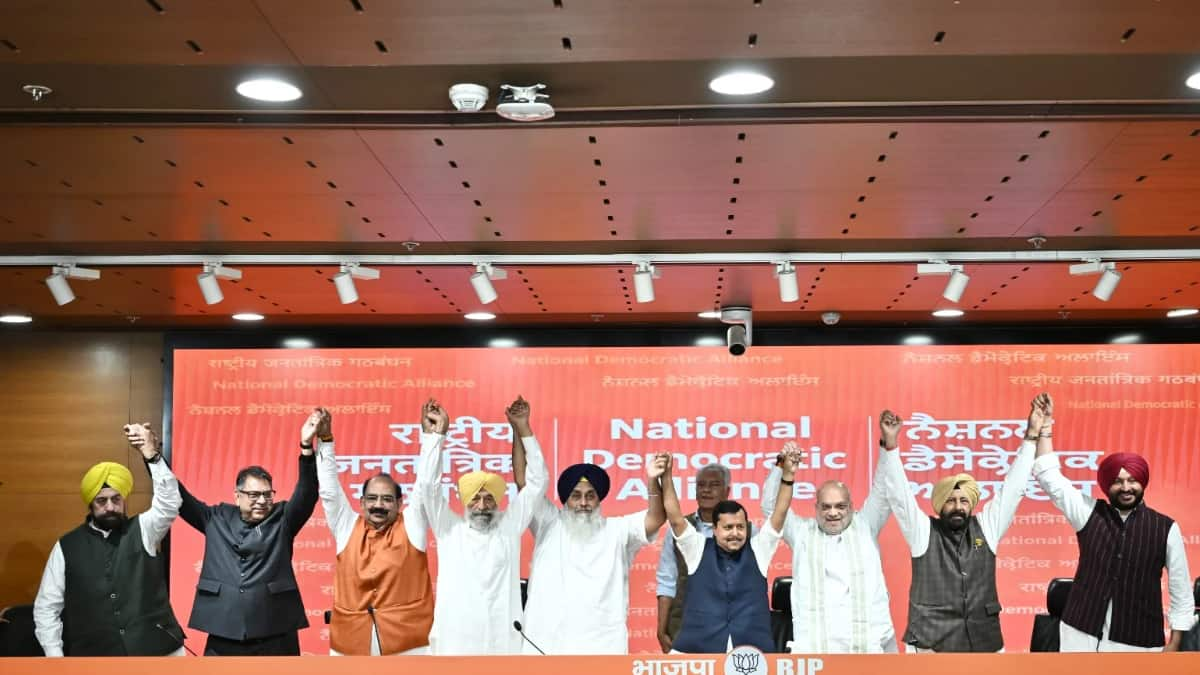
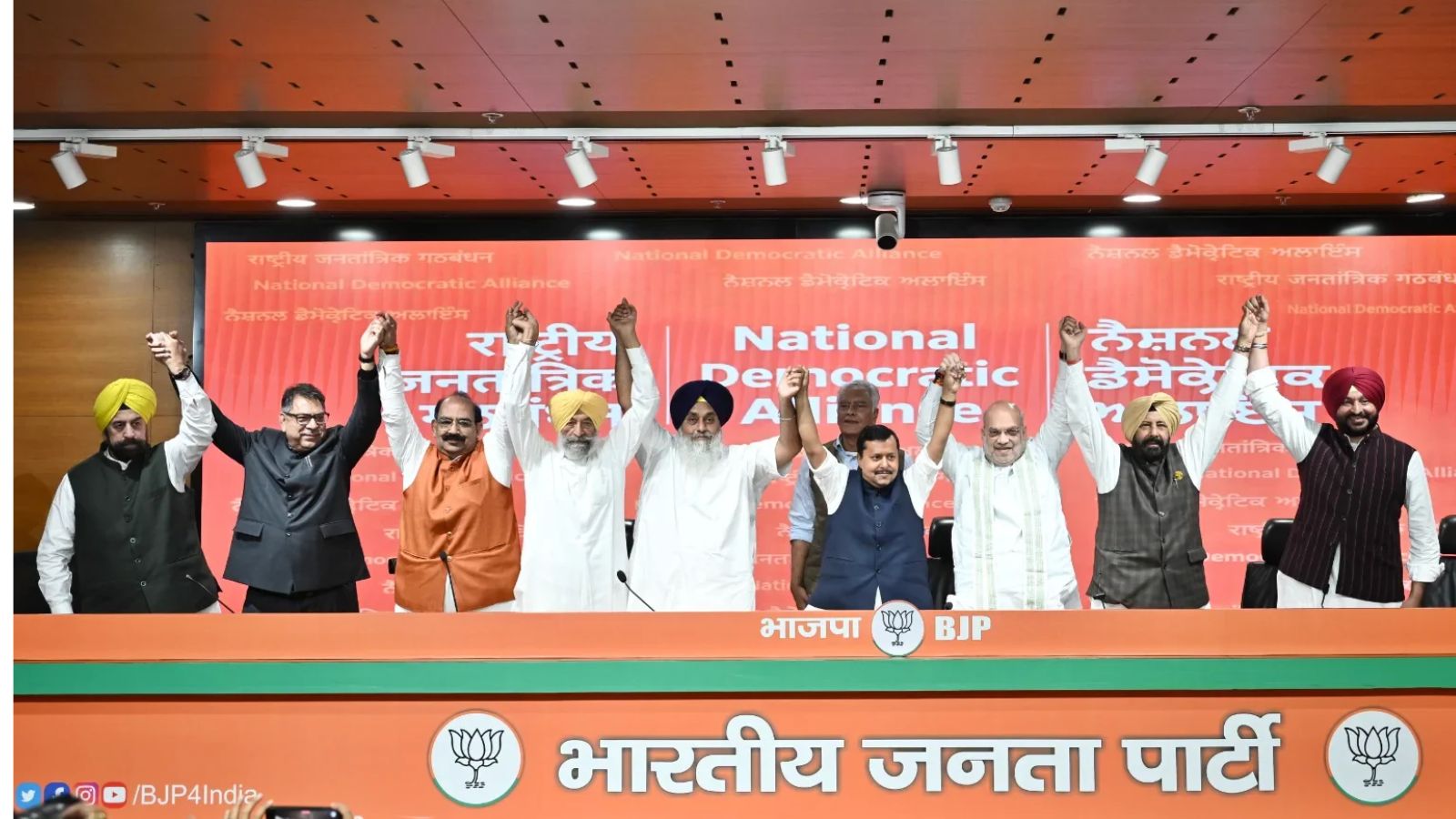
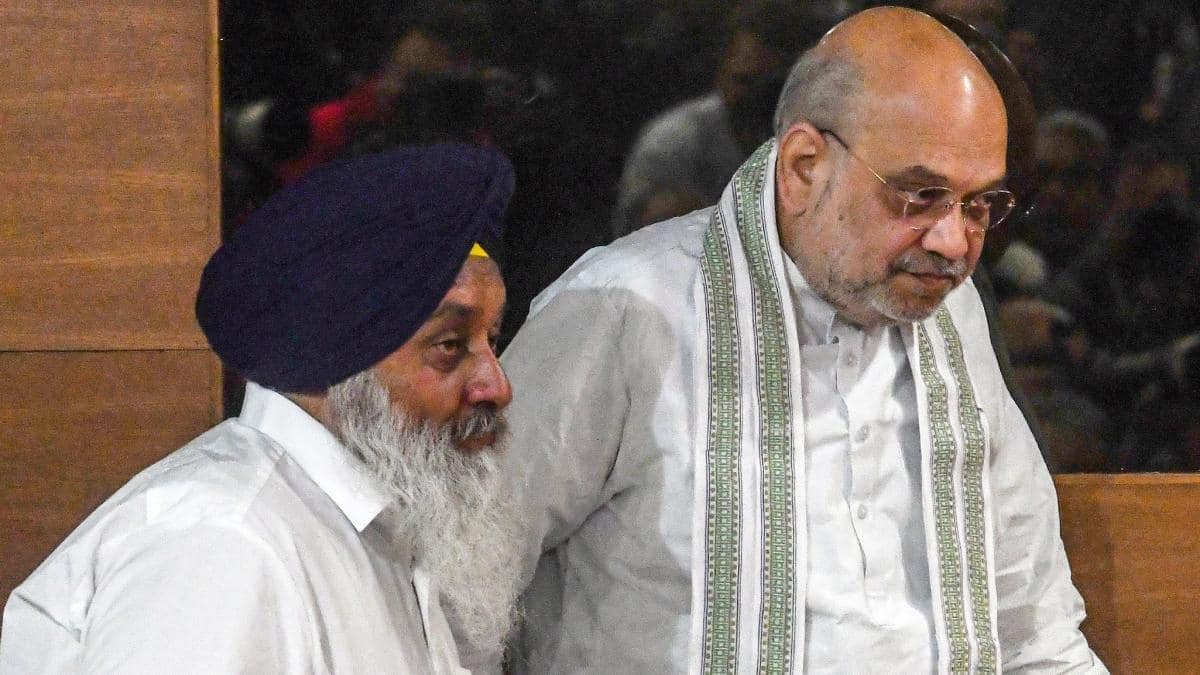
The Bharatiya Janata Party (BJP) and the Shiromani Akali Dal (SAD) have reunited after nearly six years, setting the stage for a fresh political contest ahead of the 2027 Punjab Assembly elections. The two parties formally announced their alliance on Tuesday, coinciding with the 556th birth anniversary of Guru Nanak Dev Ji.
The reunion comes at a time when the Aam Aadmi Party (AAP) is in power in Punjab, with the Congress occupying the principal opposition space. While the partnership could help both former allies rebuild their electoral strength, questions over seat-sharing, the farmers' agitation and leadership could complicate their plans.
Why Did BJP And SAD Split In 2020?
The BJP and SAD shared a political partnership for nearly 24 years, from 1996 until September 2020. Their alliance delivered a significant victory in the 1997 Assembly elections and subsequently brought them to power in Punjab in 2007 and 2012.
However, their relationship broke down over the Centre's three agricultural laws, which triggered widespread protests by farmers, particularly in Punjab.
The SAD opposed the legislation, with Harsimrat Kaur Badal resigning from the Union Cabinet in September 2020. The party subsequently withdrew from the NDA, ending its longstanding association with the BJP.
Although the Centre repealed all three farm laws in November 2021, the political differences between the former allies continued. They contested the 2022 Punjab Assembly elections independently.
How Did BJP And SAD Perform Without Each Other?
The 2022 election results exposed the electoral difficulties faced by both parties after their separation. The AAP secured a sweeping mandate, winning 92 of the 117 Assembly seats.
Parties
2017 Seats
2022 Seats
Aam Aadmi Party 20 92 Congress 77 18 Shiromani Akali Dal 15 3 BJP 3 2ALSO READ: ‘Punjab And Punjabis First’: PM Modi Welcomes Akali Dal’s Return To NDA
The SAD's vote share fell from 25.24% in 2017 to 18.38% in 2022. The BJP, meanwhile, recorded 6.6% in 2022, compared with 5.39% in the previous election.
The results left both parties with limited representation in the Assembly. Their reunion could help consolidate their respective support bases, although combining vote shares does not automatically translate into electoral victories.
What Can BJP Gain From The Alliance?
The BJP's traditional support base in Punjab has largely been concentrated in urban and industrial constituencies. The SAD, on the other hand, has historically enjoyed greater influence among rural voters, farmers and sections of the Sikh electorate.
This difference in their political strengths offers the BJP an opportunity to expand beyond its established urban presence.
Punjab has 117 Assembly constituencies, with a substantial share located in rural areas. The state's rural electorate could therefore play a decisive role in determining the outcome of the next election.
An alliance with the SAD could give the BJP access to established grassroots networks and voters in constituencies where its organisational presence has traditionally been weaker.
For the BJP, the partnership also offers an opportunity to strengthen its position in a state where it has struggled to emerge as a major electoral force independently.
What Does SAD Stand To Gain?
For the Akali Dal, the immediate challenge is recovering the political ground it lost in recent elections. The party won just three seats in 2022 and currently has two MLAs in the Punjab Assembly. It has also faced internal differences and the emergence of competing Akali political formations.
The presence of Amritpal Singh's Akali Dal (Waris Punjab De) has added another dimension to the state's traditional Akali politics.
Rejoining hands with the BJP could provide the SAD access to a wider national political network, organisational resources and additional electoral support. It could also help the party strengthen its position ahead of the Assembly elections.
However, the reunion carries political risks. The SAD had walked out of the NDA during the farmers' agitation, positioning itself against the BJP-led Centre over the agricultural laws.
Its decision to reunite with the same party could invite questions from farmers and sections of its traditional support base who backed its stand in 2020.
Seat-Sharing And CM Face Could Become Major Flashpoints
One of the biggest challenges for the reunited alliance will be deciding how many constituencies each party contests.
Under their previous arrangement, the SAD contested 94 seats, while the BJP fielded candidates in 23 constituencies.
However, the BJP is reportedly seeking a larger share this time. According to a November 22 report in The New Indian Express, the BJP wants to contest around 55 seats, while the SAD is reportedly comfortable allocating approximately 45.
The difference could lead to difficult negotiations, particularly as both parties attempt to protect their established constituencies and accommodate local leaders.
The chief ministerial face is another unresolved issue. The SAD would prefer its leader to be projected as the alliance's CM candidate, while the BJP's position on the demand remains unclear.
How Have Congress And AAP Reacted?
The alliance announcement has already drawn criticism from the Congress. Party general secretary and Punjab in-charge Sachin Pilot described the reunion as "pure opportunism" during his visit to Amritsar on November 23.
He questioned whether the issues that had caused the separation in 2020 had been resolved, particularly the disagreement over the farm laws and the farmers' agitation.
Punjab Chief Minister Bhagwant Mann, meanwhile, sought to downplay the alliance's electoral significance, maintaining that it would not make much difference to the state's politics.
Both the ruling AAP and the Congress will now have to factor the reunited alliance into their strategies for 2027. The AAP government will also face scrutiny over its five-year performance, while the Congress is working to strengthen its organisation across the state.
BSP, Amritpal Singh's Party Could Add Another Dimension
The political contest in Punjab could become more complicated with other parties exploring possible partnerships.
According to reports, the Bahujan Samaj Party (BSP) is considering an alliance with the Amritpal Singh-led Akali Dal (Waris Punjab De).
If such an arrangement materialises, it could introduce another electoral combination and influence the calculations of the BJP-SAD alliance and other political players.
Can BJP-SAD Reunion Change Punjab's Electoral Equation?
The BJP-SAD partnership could significantly alter the political arithmetic ahead of the 2027 Assembly elections. The BJP is looking to expand its rural footprint, while the Akali Dal hopes to rebuild its traditional support base through the renewed arrangement.
However, the alliance's electoral prospects will depend on more than the combined vote shares of its partners.
The legacy of the farmers' agitation, differences over seat allocation, internal factionalism, local-level coordination and the question of leadership will all influence how effectively the two parties work together.
This content is published by ABP Live - Elections and has not been created or edited by Hello Headlines. View original