The Dark Side Of Fairness Creams
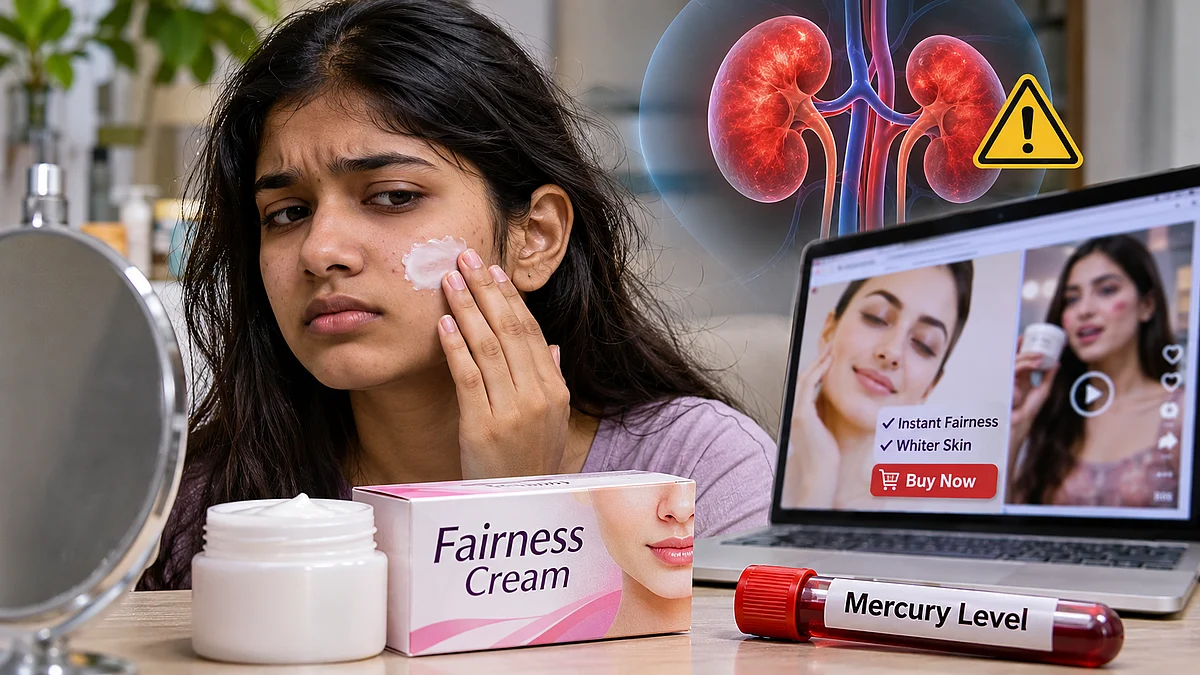
The case of a 17-year-old girl suffering serious kidney injury after using fairness creams bought online is a clear instance of regulatory failure, involving unscrupulous manufacturers of unapproved cosmetics. It was entirely avoidable, because the problem of harmful fake creams being promoted by social media influencers and sold on the internet was recognised quite some time ago and investigated by the state government. Over the past couple of years, several doctors and the health minister in the previous LDF government have highlighted the danger of using untested fairness creams and other cosmetics after many were found to contain dangerous levels of mercury. But social media appears to have ignored the insidious nature of these products and allowed influencers to hawk them freely. The immediate consequence of using such skin creams is mercury poisoning and loss of the filtration function of the kidneys. Tests have shown that the kidneys of the victims start leaking a large amount of protein, leading to damage to the vital organ and the gradual accumulation of toxic substances in the blood. A folk singer in north Keralam came out with his own story soon after the girl’s plight became known and spoke of oedema and puffiness around the eyes within a month and a half of using fairness creams. Remarkably, although many of the cases are from north Keralam, the authorities appear to have had limited success in narrowing down all the sources of the problem; 33 manufacturers were prosecuted last year, and a toll-free number was announced to report cases.
Getting the measure of the toxic creams crisis requires a multi-pronged approach in which the primary responsibility lies with the government. Online algorithms function identically for the intelligence machinery and the gullible buyer alike, and it should not be difficult for the health department to scan these forums and pursue those advertising these creams. Surprisingly, progressive Keralam appears to be receptive to a beauty bias favouring fair skin, which is exploited by influencers through slick campaigns. But social media cannot afford to be tone-deaf to the public health issue, allowing its algorithms to promote toxic creams produced by shady firms and door-delivered to unsuspecting teens. Since the sale of these products is directly linked to online campaigns, the victims could also consider legal recourse. A recent precedent in the West was KGM vs. Meta Platforms, where a jury awarded compensatory and punitive damages to a woman in the US who said algorithms and platform design contributed to, inter alia, depression, anxiety, and self-harm. The record of the platforms on pornography and drug peddling shows that it is possible to filter out specific content based on legal requirements and their potential for harm. The time has now come to apply these curbs to spurious health advice and products and promote health warnings.
This content is published by Free Press Journal and has not been created or edited by Hello Headlines. View original