Editorial: SAD-BJP alliance—a remarriage of convenience
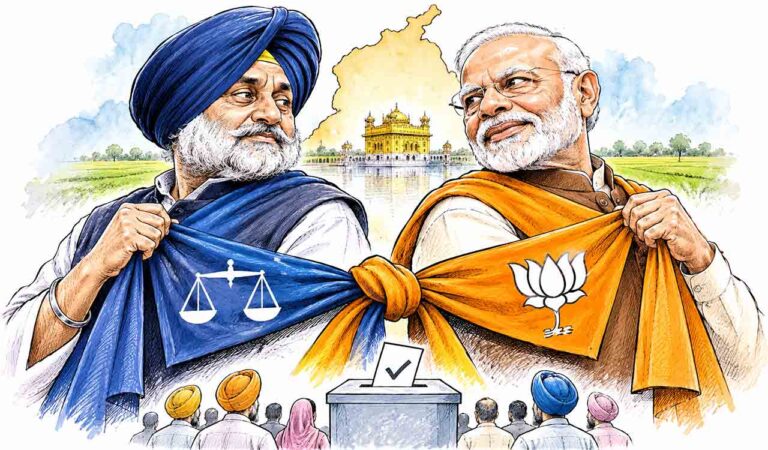
Nearly six years after parting ways, the Shiromani Akali Dal (SAD) and the Bharatiya Janata Party (BJP) have reunited ahead of the Punjab Assembly elections. Out of power for a decade, the coming together of the two parties can best be described as a remarriage of convenience between erstwhile political partners. The revival of the alliance, though not entirely unexpected, could have wider implications for the political landscape of the sensitive border State. On paper, the alliance makes political sense: urban Hindu votes for the BJP and rural Sikh support for the Akali Dal. This formula worked well in the past. However, the ground reality has changed considerably since then. Despite growing public disillusionment, particularly in view of the high expectations that accompanied its sweeping mandate of 92 seats in the 117-member Assembly in 2022, the Aam Aadmi Party (AAP) remains a formidable challenger. There is now a growing recognition within both camps that reviving the alliance may be the only way for them to remain relevant in the State’s politics. Three decades ago, the two parties first joined hands, projecting Hindu-Sikh unity in the post-militancy era. The relationship endured until 2020, when the Akalis exited the NDA in protest against the farm laws. The renewed alliance now offers potential benefits to the SAD as well, including possible inclusion of Harsimrat Kaur Badal in the Union Cabinet. She had resigned as a Union minister in 2020 in opposition to the contentious farm laws.
The menace of drugs remains one of the most pressing social issues in Punjab and continues to dominate electoral discourse. During a recent visit to the State, Union Home Minister Amit Shah set a 2029 deadline to eliminate the problem. Another challenge is competitive populism, reflected in the politics of freebies, which has placed a severe strain on the State’s finances. Virtually all political parties share responsibility for perpetuating this culture. Punjab faces a host of interconnected challenges, including drug abuse, agrarian distress, the gangster menace and mounting economic pressures. The real test for the SAD-BJP combine will be convincing voters that it represents the best path forward for Punjab. To do so, both parties must first exorcise the ghosts of their past. The SAD continues to bear the burden of the sacrilege incidents and the widespread protests that convulsed the State in 2015 when it was in power. The BJP, for its part, alienated large sections of Punjab’s farming community through the farm laws, which triggered a year-long agitation on the borders of Delhi. Bowing to sustained pressure from protesting farmers, Prime Minister Narendra Modi announced the repeal of the laws in November 2021. Yet the policy reversal failed to yield electoral dividends for the BJP. Three months later, the party won only two seats in the 2022 Assembly elections, while the Akalis secured just three, their worst-ever performance.
This content is published by Telangana Today and has not been created or edited by Hello Headlines. View original