Bullion Rally Loses Steam, Naveen Mathur Explains Why Investors Must Look Beyond Returns
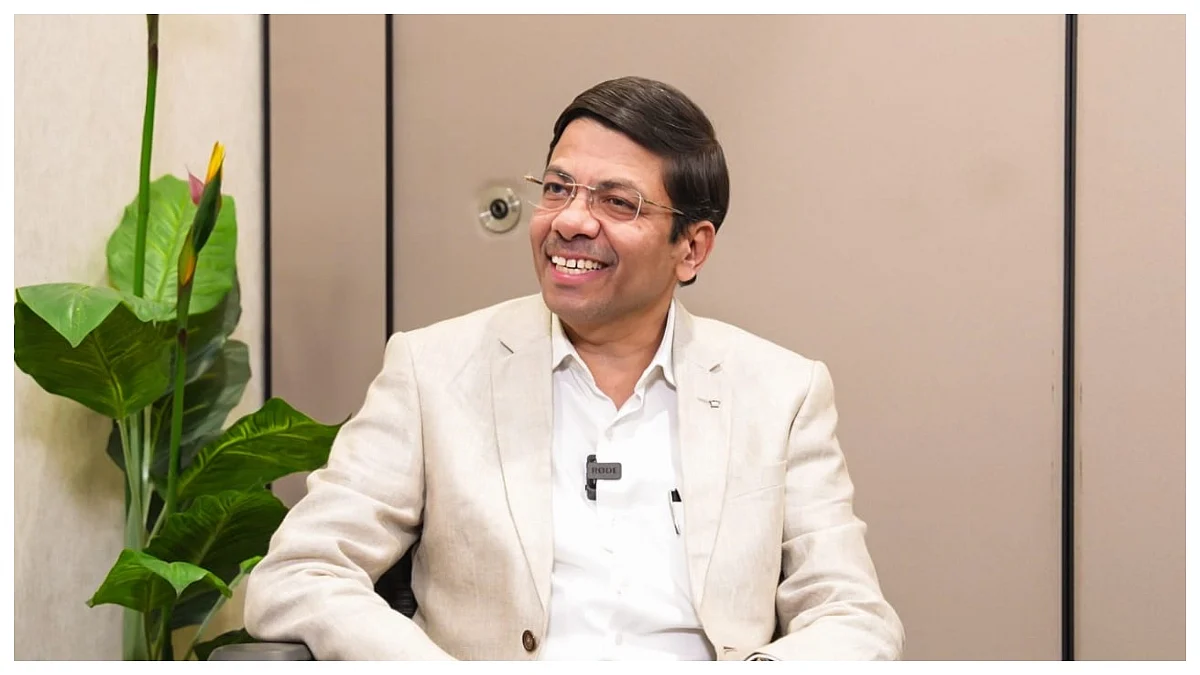
Gold and silver have plunged from record highs, leaving investors grappling with mounting losses and uncertainty. As global economic headwinds reshape the bullion market, Naveen Mathur, Director – Commodities, Currencies and GIFT City, Anand Rathi, in an exclusive conversation with Manoj Yadav & Sheryll D’Souza of The Free Press Journal, unpacks the price correction, market outlook and importance of strategic asset allocation.
What exactly is happening in the global precious metals market? Why have gold and silver witnessed such a sharp correction?
Commodities were the talk of the town at the beginning of 2026. Gold touched nearly $5,600 per ounce, while silver reached an unprecedented $121. Copper also scaled record highs.
However, elevated crude oil prices following the Middle East crisis significantly altered inflation expectations and central banks' monetary policy stance.
Central banks, particularly the US Federal Reserve, were initially inclined towards interest rate cuts. Rising inflationary pressures subsequently triggered a hawkish shift, strengthening the dollar and putting pressure on dollar-denominated commodities.
Gold and silver were also trading beyond levels justified by conventional demand and supply fundamentals. The fear of missing out (FOMO) contributed significantly to the rally.
Has the recent volatility in AI and technology stocks contributed to the decline in precious metals?
Absolutely. The enthusiasm surrounding AI, data centres, electric vehicles and solar energy had significantly influenced commodity prices, particularly silver.
However, the correction in technology stocks has triggered margin calls. Investors facing losses in equities are liquidating profitable positions in gold, silver and other commodities to meet financial obligations.
AI Could Displace 24 Million Knowledge-Worker Jobs Worldwide In 5 Years As Businesses Increasingly Turn To AutomationNevertheless, physical demand, positive exchange-traded fund (ETF) inflows and continued gold purchases by central banks remain supportive factors for bullion.
Gold is traditionally considered an inflation hedge. Why is it declining despite rising inflationary concerns?
Gold remains a natural hedge against inflation and an important portfolio diversifier. However, financial markets have increasingly become news-driven, with conventional economic fundamentals temporarily taking a back seat.
Higher interest rate expectations, rising bond yields and a stronger dollar have overshadowed gold's traditional appeal as an inflation hedge.
Investors must understand that gold's primary purpose is portfolio protection rather than consistently generating superior returns.
What should investors who purchased gold near ₹1.80 lakh and are now sitting on substantial losses do?
Investors should stop focusing exclusively on returns. Expecting gold to immediately revisit its previous record highs may not be realistic.
However, I do not anticipate domestic gold prices falling to ₹60,000 under prevailing circumstances.
The global economic environment has become extremely unpredictable. Another financial or geopolitical crisis could emerge unexpectedly, and gold exposure could help cushion portfolio losses.
RBI Brings Home 60 Tonnes Of Gold, India Now Holds 84% Of Its Bullion Reserves DomesticallyInvestors must distinguish between speculative trading and long-term asset allocation.
What percentage of an investment portfolio should ideally be allocated to gold and silver?
Around 10-15% of an investable portfolio could be allocated to bullion, depending on individual risk profiles.
The allocation between gold and silver is equally important. Investors with a higher risk appetite could consider greater silver exposure, while conservative investors may prefer an 80:20 allocation towards gold and silver, respectively.
Personally, I have been investing systematically in gold ETFs since August 2008. ETFs offer convenient exposure without physical storage-related concerns.
Is this the right time for investors who missed the previous bullion rally to enter the market?
Investors should avoid trying to time the market. The important question is whether your portfolio has sufficient protection when equity markets experience a downturn.
Global financial markets remain interconnected, and unexpected developments can significantly alter investment sentiment.
Systematic investment and disciplined asset allocation are more important than identifying the perfect entry point.
How significantly do currency fluctuations influence domestic gold prices?
India is heavily dependent on gold imports, which are denominated in US dollars. Consequently, international bullion prices and the rupee-dollar exchange rate determine domestic gold prices.
A stronger rupee reduces the landed cost of imported gold. When international gold prices decline simultaneously, Indian consumers benefit from both factors.
Lower domestic prices are also encouraging renewed physical buying.
What is your outlook for gold and silver prices? Which metal offers relatively greater stability?
International gold prices could find support around $3,300 per ounce, while domestic prices could consolidate between ₹1.15 lakh and ₹1.30 lakh per 10 grams.
Gold Eyes $5,200 & Silver $75 By 2027-End, Will Bullion Overcome Early Headwinds?Silver could trade between $40 and $50 per ounce under normal market conditions, although downside risks towards $35-$37 remain. Domestic silver prices could hover around ₹1.40 lakh-₹1.45 lakh per kg.
Silver remains considerably more volatile because industrial applications account for nearly 60% of its consumption.
Ultimately, investors must prioritise asset allocation, diversification and risk mitigation. Returns should remain a secondary consideration when building long-term bullion exposure.
Level up your brain the fun way. Play daily games and quizzes on FPJ Smart!
This content is published by Free Press Journal and has not been created or edited by Hello Headlines. View original