Meta to sell international travel data eSIMs inside WhatsApp
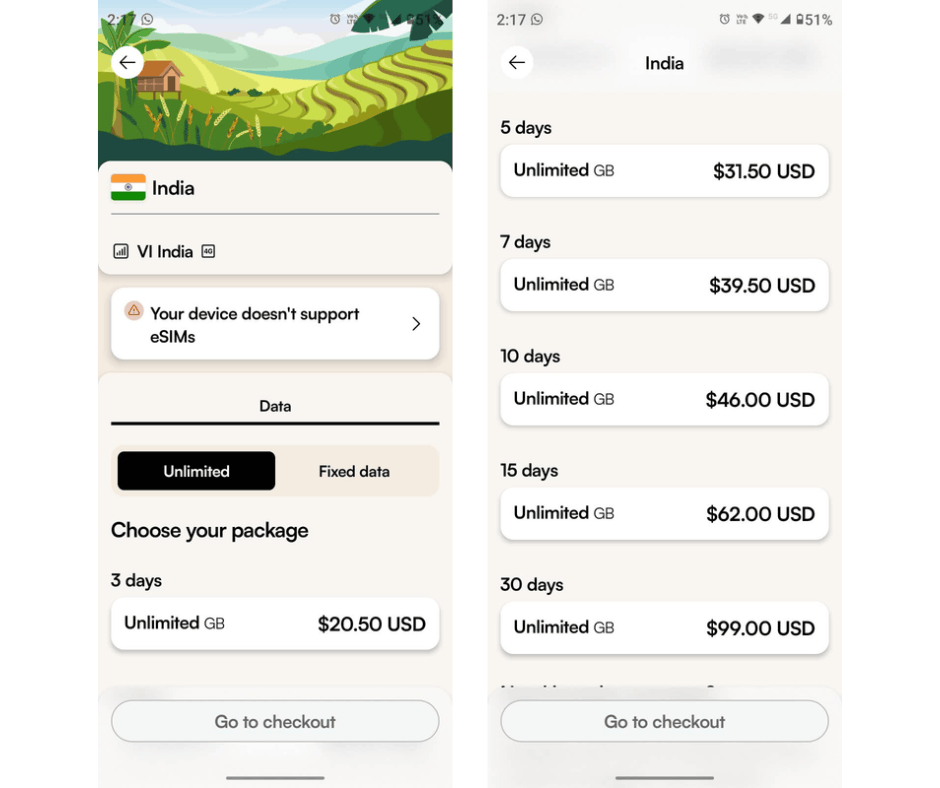
WhatsApp is exploring ways to let users buy and install a data eSIM for international travel without leaving the app, the company said in a blog post on November 26. The feature will roll out “in select countries soon”.
To offer this additional telecom service, Meta has partnered with:
- Reliance Jio (India)
- Verizon (US)
- Smart Axiata (Cambodia)
- Smart Communications (UK)
- Other eSIM providers and telecom operators
The company did not specify which countries would be included in the initial rollout, how much the plans would cost, or when they would become available. WhatsApp’s head, Kunal Shah, said the company was “starting our early explorations” into eSIMs in a post on X.
What if WhatsApp could work anywhere you go in the world without any struggle. Starting our early explorations around eSIMs so that you can continue sending those stickers without any interruptions. WAnderlust.
— Kunal Shah (@kunalb11) November 26, 2026
Inviting partners everywhere to join us in this important mission.
How it may work:
“… when you land, you can keep using WhatsApp on your same phone number as you normally would without having to find the closest airport kiosk to buy a local SIM card, hunt for a cafe with Wi-Fi or rack up roaming charges.” – WhatsApp
What the rules say about selling a foreign eSIM in India
Foreign SIM cards are regulated by the Department of Telecommunications (DoT) under its revised terms and conditions issued in January 2022. These terms govern the issuance and renewal of no-objection certificates (NOCs) for the sale and rental of international roaming SIM cards and global calling cards issued by foreign telecom operators.
The DoT’s terms require sellers to verify buyers using copies of their passports, valid visas, and proof of identity and address, or through a digital Know Your Customer (KYC) process prescribed by the department. If a traveller does not require a visa for the destination, the seller must collect a valid travel ticket and an undertaking specifying the countries the buyer intends to visit.
The other conditions include:
- The SIM can only be used outside India. The policy does not permit these foreign SIM cards to be used within the country.
- Every eSIM sale must be reported to the government. The eSIM operator must submit monthly reports to security agencies containing complete details of the SIM cards sold or rented, their validity periods, and the purchasers’ addresses.
- The NOC is valid for three years. The DoT can suspend it before its expiry in the interest of national security or in cases of improper conduct.
- The NOC holder must operate a grievance redressal mechanism on par with those offered by Indian companies.
As of December 2024, 29 entities held NOCs, according to the Telecom Regulatory Authority of India’s (TRAI) July 2025 consultation paper on foreign SIMs in export-bound machines.
In January 2024, the DoT directed Google to remove Airalo and Holafly from the Play Store. Apple subsequently removed the apps from its App Store, as MediaNama reported. However, at the time of writing, both Airalo and Holafly were available on the Google Play Store, while only Airalo was available on the Apple App Store.
TRAI recommendations on international SIMs and eSIMs
In February 2025, TRAI recommended introducing an authorisation framework for the sale and rental of international roaming SIM cards and global calling cards issued by foreign telecom operators. It proposed a validity period of ten years for the authorisation. The DoT accepted the recommendation in principle.
Separately, in December 2025, TRAI recommended a dedicated International Machine-to-Machine (M2M) SIM Service Authorisation under Section 3(1)(a) of the Telecommunications Act, 2023. The framework would cover foreign SIM cards and eSIMs embedded in machines manufactured for export. TRAI proposed a processing fee of Rs 5,000, with no entry fee or minimum net-worth requirement.
What could happen when DOT’s SIM binding goes live
On November 28, 2025, the DoT directed eight messaging platforms, including WhatsApp, to keep every account linked to its registered SIM card. The direction also requires platforms to stop providing services to users if their registered SIM is removed, replaced or deactivated.
The direction was issued under the Telecommunications (Telecom Cyber Security) Rules, 2024, which introduced the category of a telecommunication identifier user entity (TIUE) for services that use mobile numbers to identify users.
The initial 90-day compliance period ended on February 26, 2026, but none of the platforms had implemented the requirement by then. The DoT subsequently extended the deadline to December 31, 2026. The requirement is scheduled to become operational from January 1, 2027. Meta confirmed in April 2026 that it was testing SIM binding among regular Indian users.
A messaging app has three ways to comply with SIM binding, according to Parag Kar, an independent telecom consultant, who outlined these methods at a MediaNama roundtable in November 2026:
- The messaging app can ask the device’s operating system (OS), such as Android or iOS, whether the registered SIM card is present in the device.
- The app can query the telecom operator through CAMARA, the GSMA’s interface for network services, to check whether the SIM is active.
- The app can send a standard SMS-based one-time password (OTP) to the user’s mobile number or use silent SIM/device binding over the telecom network to verify the number directly on the device, similar to the methods used by banking and Unified Payments Interface (UPI) apps.
The first method can establish whether a SIM card is present in the device, but not whether it is active. The second and third methods can verify the SIM’s status and activity.
In November 2026, an industry source told MediaNama that the DoT had issued a clarification stating that messaging apps would have to check for the presence of a SIM card every 24 hours.
However, an Indian telecom operator may not be able to identify the Indian SIM as active on its network if a user travels abroad and relies on a data eSIM provided by an operator such as Verizon or Smart Axiata without an active international roaming plan on their Indian SIM. In such a situation, a CAMARA-based lookup may not be able to verify the Indian SIM’s activity. The same limitation could affect SMS-based OTP verification.
If messaging platforms implement SIM binding through either of these methods, users may have to keep their Indian SIM active on an international roaming plan while using a foreign data eSIM abroad.
Also read
- Explained: How does the Indian government look at foreign SIM/eSIM regulation?
- Explained: TRAI recommends a separate regulation framework for foreign SIM and eSIM cards
The post Meta to sell international travel data eSIMs inside WhatsApp appeared first on MEDIANAMA.
This content is published by MediaNama and has not been created or edited by Hello Headlines. View original