Former RAW Chief A S Dulat On Kashmir, Espionage And His Debut Novel ‘Our Kind Of Games’
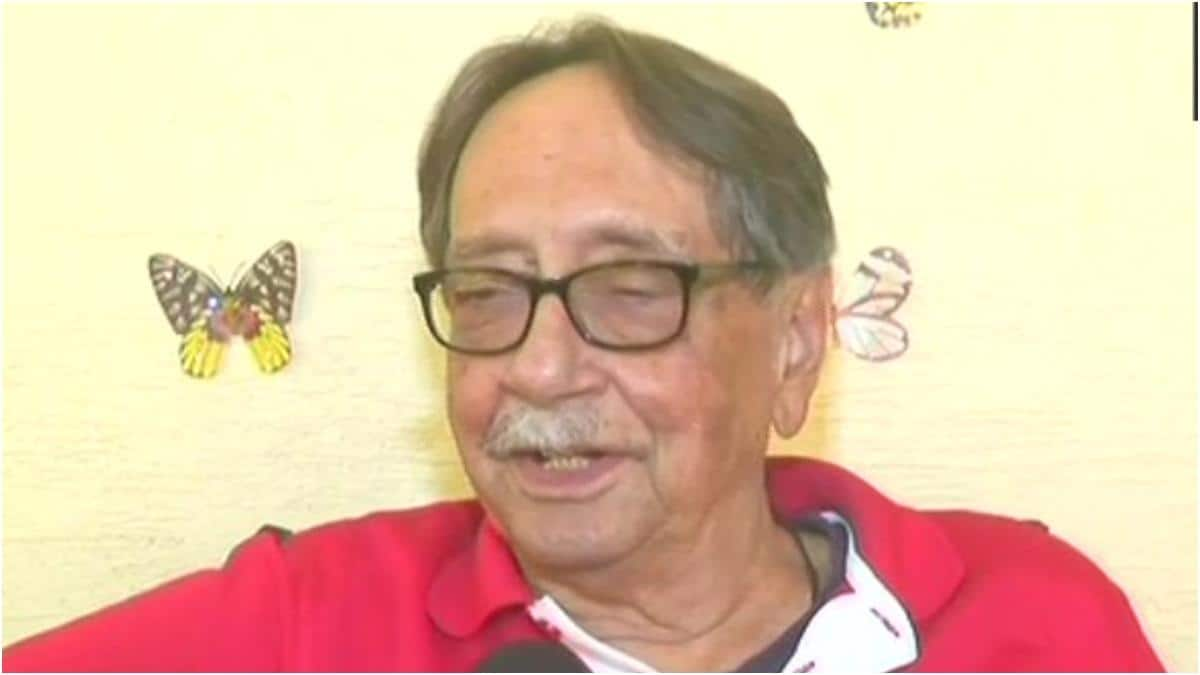
New Delhi: “This story is entirely imagined, because I lived it from beginning to end.” And so former RAW chief A S Dulat draws in readers to his debut spy thriller which he says does away from the James Bond kind of protagonist to a more grounded real life hero.
Kashmir is the real star of “Our Kind of Games”. At its centre is Ranjit Soni, the Intelligence Bureau chief in Srinagar in the early 1990s -- the very post Dulat held during what he calls those “terrible days” of militancy and the Kashmiri Pandit exodus.
But Dulat isn't playing Bollywood's spy games. No flying cars, hyper jingoism, bodies piling up every few pages, adrenaline-fuelled chases or jaw-dropping twists.
Instead, the narrative slows the pulse, trading suspense for reflection and easy answers for ambiguity. Real espionage, he suggests, is a slower game.
“Movie makers move fast. If you're writing reality, then you have to slow it down. Reality is slow. Like I always say, there are very few James Bonds around,” Dulat told PTI in an interview.
He says "70 per cent of the book" is fiction. And fiction, he asserts, was a challenge for him precisely because it demanded invention.
“What you know, you know. In fiction, you need to create things... Yes, people who've worked in Kashmir will recognise some of the characters. Some of the characters are real, and quite a few have been created. Now, who's who, you have to guess,” said the 86-year-old, ever the spook who conceals more than he reveals.
The author of "Kashmir: The Vajpayee Years" spent four years writing his latest book - his first venture into fiction. That is more than double he typically took to write his non-fiction books.
The foreword of "Our Kind of Games" is written by former Jammu and Kashmir chief minister Farooq Abdullah, the primary subject of his earlier work, "The Chief Minister And The Spy: An Unlikely Friendship"
Given his time in Kashmir, there are no surprises in the choice of protagonist or setting in “Our Kind of Games”.
The antagonists are many, or perhaps none at all, depending on one’s perspective and the vantage from which the story is viewed.
Protagonist Soni's brief in the tumultuous period of early 1990s is simple: gather intelligence, cultivate informants and report to Delhi on what the “boys” (the militants) are up to.
His network is eclectic, including a jovial middle-aged man who spills secrets over Old Monk, a reformed militant commander promising peace, and Rehana, his secret lover and refuge amid the chaos.
But as the book reads: "Working with Ranjit Soni was lethal. Being useful to him was fatal. Trusting him was suicide."
Soni’s informants begin to die, one by one. Each loss chips away at his faith in the mission, leaving him to confront a bitter possibility: that instead of helping solve Kashmir's problem, he may be fuelling it.
“The game had been playing him. That was Kashmir's final lesson... You thought you were the player. You were always the played,” reads the book's final chapter, as Soni realises the lesson too late.
"Our Kind of Games" is his first novel, and sixth book focusing on the region. The list includes "The Spy Chronicles: RAW, ISI and the Illusion of Peace", "Kashmir: The Vajpayee Years" and "A Life in the Shadows: A Memoir".
Asked why he chose Kashmir, Dulat laughs and says he has remained “struck with Kashmir” for nearly four decades.
Popularly known as “Mr Kashmir”, Dulat served in the Valley for just two years, in 1989-90. He thought he had left Kashmir behind when he was transferred in 1990 but the ace intelligence officer got that one spectacularly wrong.
“I was there in that winter of ‘89-‘90, which was a terrible time... When I was transferred out in March ‘90, I was very happy to leave. I said, 'Good, I'm getting the hell out of here. This is a terrible place'.”
But clearly Kashmir wasn't done with him.
“When I came back, when one of my chiefs said, you're the most contemporary of our Kashmiri officers. So, you've got to keep watching Kashmir.”
“So, then Kashmir never got out of me. And it's been, I've been watching it now, even after I retired, I've been watching it for close to 40 years now. And I watch it every day. If there's anything written on Kashmir, I read it,” he said.
In the book, a pensive shikarawala describes Kashmir as a stark paradox both “beautiful and broken” and “paradise and prison”.
So what’s his view?
"I would describe it as two Kashmirs. There's a visible Kashmir, which looks good. And there's an invisible Kashmir, which we don't care to or don't bother about. I always try to talk to youngsters in Kashmir, and three years ago when I was talking to them, they told me, 'Humari koi sunwayi nahi hai'.
"And I feel that when the Kashmiri goes silent, that's the most dangerous part. And they have, by large, gone silent. Not many Kashmiris talk now," he added.
To close, Dulat admits he fell in love with his book "more as a reader" than as a writer, and wouldn't mind a film adaptation.
But a “Dhurandhar” style spectacle isn't quite his idea of cinema.
“What fascinated me was Akshaye Khanna. But the movie, quite a lot of it, was propaganda. I couldn't watch the whole of first part only,” said Dulat of the blockbuster Ranveer Singh starrers “Dhurandhar” and “Dhurandhar 2”.
His idea of spy fiction is closer to John le Carré, the celebrated author of "The Spy Who Came in from the Cold" and "Tinker Tailor Soldier Spy".
"Our Kind of Games", priced at Rs 599 and published by Hachette India, is currently available for purchase across online and offline stores.
(This report has been published as part of the auto-generated syndicate wire feed. Apart from the headline, no editing has been done in the copy by ABP Live.)
This content is published by ABP Live - India and has not been created or edited by Hello Headlines. View original