Israel Election: Arab Parties Set For Record Knesset Seats, Could Become Kingmakers
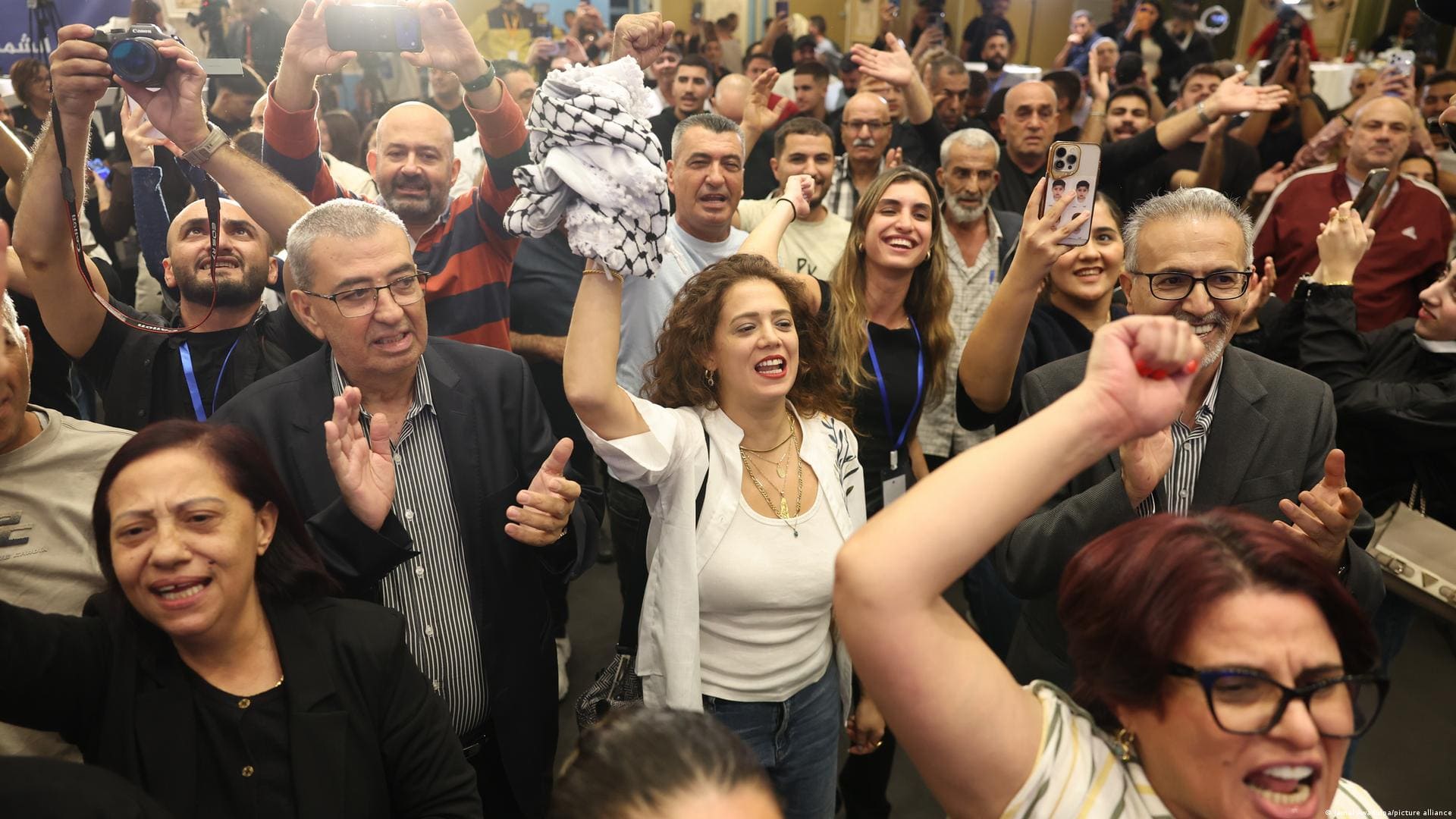
Arab parties in Israel appear set to secure a record number of seats in parliament after strong turnout in Tuesday's election, potentially giving them a crucial role in determining the country's next government.
Vote tallies indicate that the two main Arab parties could win around 19 seats in the Knesset, nearly doubling their current representation. The outcome could give them leverage in coalition negotiations as political blocs consider their options for forming a government.
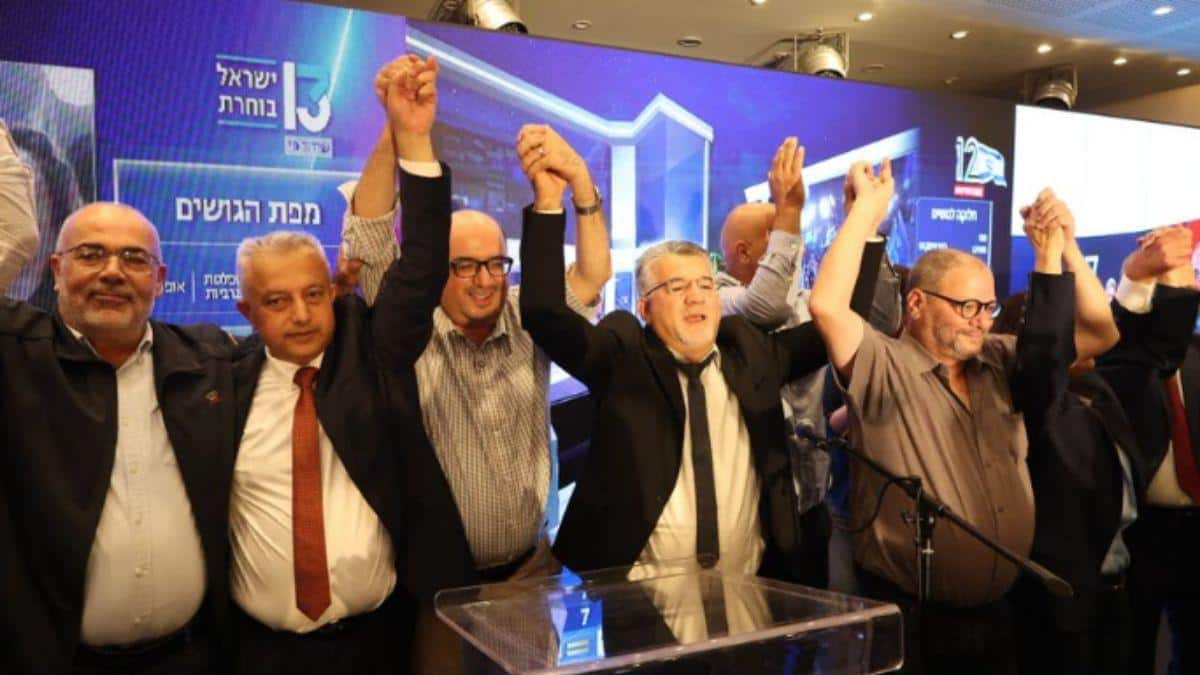
The two parties are the Joint List, led by Yousef Jabareen, and Ra'am, headed by Mansour Abbas. While both represent Arab citizens of Israel, their approaches to political cooperation differ, particularly over whether to join a government or support one from outside.
Joint List May Back Opposition Government From Outside
Jabareen said the Joint List would use its projected 12 seats to help remove Prime Minister Benjamin Netanyahu's government and seek a change in Israel's political direction.
“We have our demands to protect our community, to advance the rights of our community and to promote equality for our community,” Jabareen said from his home in the Arab town of Umm al-Fahm.
However, Jabareen ruled out joining a government led by Gadi Eisenkot, citing the latter's support for Israel's military campaign in Gaza and its occupation of southern Lebanon. He left open the possibility of the Joint List supporting an Eisenkot-led bloc from outside, potentially helping a minority government survive confidence votes.
Mansour Abbas Open To Joining Eisenkot-Led Government
Ra'am leader Mansour Abbas has pursued a more pragmatic approach to coalition politics, seeking to make his party a viable partner in government. As part of that effort, Ra'am included a Jewish former police official on its candidate list, while Abbas has indicated that he would be willing to join an Eisenkot-led administration.
Speaking to Israeli television after voting ended on Tuesday night, Abbas expressed confidence that an agreement could be reached despite political differences.
“I believe we can overcome the difficulties ... and I think that most voters for the (Eisenkot) bloc do want to see (a) govt with the Ra'am party,” he said.
Abbas also said senior figures in Eisenkot's bloc had discussed a possible deal with him before the election. He added that approaches had come from beyond the opposition, including from a senior figure on the right.
“Everyone is talking to us, not just the change bloc. A few days ago, a very, very senior member of the right approached me,” Abbas said.
Netanyahu's Likud Rules Out Talks With Arab Parties
Despite Abbas's efforts to position Ra'am as a potential coalition partner, Eisenkot ruled out forming a government with any Arab party during the election campaign. He cited what he described as a lack of shared values, including recognition of Israel as a Jewish and democratic state.
Netanyahu's Likud party also rejected the prospect of negotiations with Arab parties over government formation. Party spokesman Guy Levy dismissed the possibility at Likud's headquarters in Jerusalem.
“Not a chance,” Levy said. “It's not even a question that should be asked.”
The positions taken by both political camps could complicate efforts to translate the Arab parties' projected gains into formal participation in government, even if their parliamentary strength gives them a role in confidence votes or other legislative decisions.
Who Is Mansour Abbas?
Mansour Abbas, 52, is an Arab-Israeli politician, dentist and leader of Ra'am. First elected to the Knesset in 2019, he has sought to reshape Arab political participation by prioritising domestic issues and practical gains for Arab citizens.
Rather than making engagement with Israeli governments conditional on progress in the wider Israeli-Palestinian conflict, Abbas has focused on issues such as crime in Arab communities, socioeconomic inequality, infrastructure and municipal funding.
He also briefly served as part of an Israeli governing coalition between 2021 and 2022, demonstrating his willingness to work with parties outside the traditional Arab political bloc.
What Is The Joint List?
The Joint List is an alliance of Arab-majority political parties in Israel, established in 2015 to unite the votes of Arab citizens. Its constituent parties have included Ahmed Tibi's Ta'al and Hadash, alongside other groups representing different political traditions.
The alliance has brought together secular, nationalist and left-leaning currents within Arab politics. Its agenda includes civil equality, tackling crime in Arab communities and ending the occupation.
The Joint List has also supported governments from outside rather than joining them, an approach that Jabareen has indicated could again shape its response to the election results.
Arab Citizens Play A Significant Role In Israeli Society
Arab citizens of Israel, who may identify as Arab Israelis or Palestinian citizens of Israel, account for about 20% of the country's population, or roughly 2.1 million people.
Their representation extends across several professions, including healthcare. Data from Israel's Ministry of Health and the Taub Center for Social Policy Studies indicate that Arab citizens account for more than 20% of physicians, nearly a quarter of nurses and almost half of licensed pharmacists.
Two Arab citizens have also served as Supreme Court judges. Arab engineers, academics, writers and athletes hold prominent roles in public life, even as questions of political representation and equality remain central to debates about their place in Israeli society.
The projected parliamentary gains could therefore have implications beyond coalition arithmetic, bringing renewed attention to the political demands of Arab citizens and the extent to which Israel's major political blocs are prepared to engage with their representatives.
This content is published by ABP Live - World and has not been created or edited by Hello Headlines. View original