AI that speaks, codes and takes action: Inside Google Cloud’s Gemini masterclass
Imagine handing AI 80,000 files and getting back a presentation with charts, images and a clear narrative. Or asking it to build a detailed 3D scene using code, without dedicated rendering software. These are examples of AI moving beyond answering prompts to taking on complex tasks.
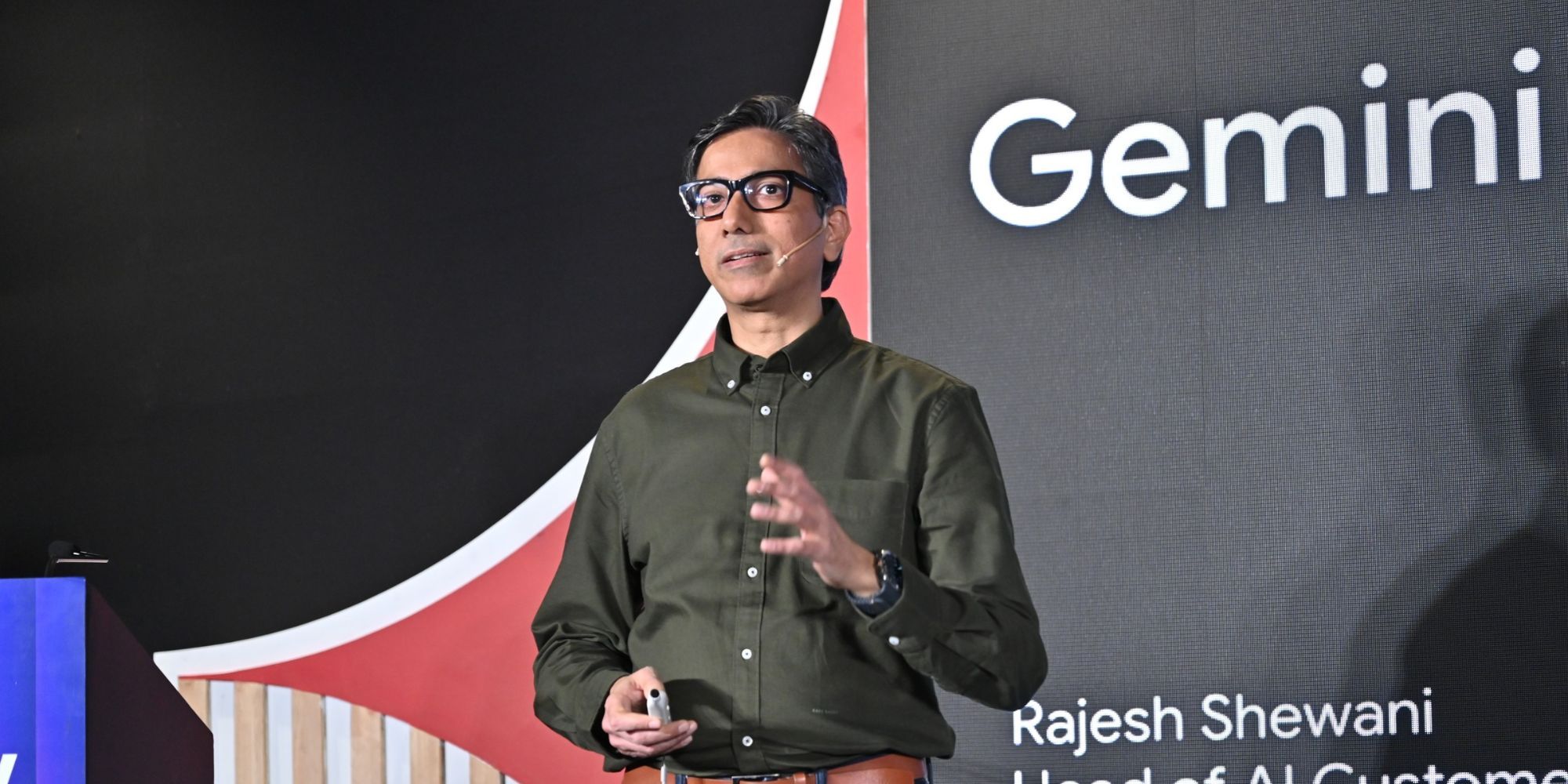
At TechSparks 2026, Rajesh Shivani, Head of AI Customer Engineering for Digital Natives, Startups and ITES at Google Cloud, demonstrated how Gemini is being used across voice AI, autonomous agents and software development.
His masterclass explored how businesses can move from using AI for answers to delegating work to it.
From chatbots to autonomous coworkers
AI tools initially gained traction through chat interfaces that answered questions. The next stage is agentic AI, where systems can plan tasks, access information, and use tools to act on a user’s behalf.
“An agent is nothing now but a model plus a harness,” Rajesh said, describing the infrastructure around a model that manages memory, context, permissions and task execution.
Building useful agents requires four elements: a goal, clear instructions, relevant knowledge and tools to act on that knowledge. A company’s internal data is particularly important because general-purpose models may not have access to its specific processes or customer information.
Shivani also discussed Google’s Open Knowledge Format (OKF), which aims to give organisations a structured way to make information accessible to AI agents.
Voice AI takes on real-world tasks
Voice was one of the key demonstrations. A system developed for Singapore-based Grab helped passengers and drivers coordinate airport pickups despite language barriers. The demo highlighted how voice AI could support interactions across more than 85 languages.
Another example showed AI dubbing an English video into Marathi and Malayalam while matching lip movements and facial expressions. Such capabilities could help businesses produce multilingual training material, marketing videos and customer communications with fewer production steps.
“Voice is becoming the new user interface,” Rajesh Shivani stated, pointing to the growing role of voice-based interactions for customers and employees.
He also showcased a virtual banking assistant created for Citibank’s retail banking experience. In the demonstration, the AI avatar explained options for a maturing certificate of deposit and submitted a renewal after the customer selected a 12-month term.
AI that builds, checks and creates
Beyond voice, Shivani highlighted Google’s tools for coding and cybersecurity. Antigravity helps developers build applications, while CodeMender can identify code vulnerabilities, generate patches and test them in a sandbox.
In one demonstration, Gemini analysed 80,000 files from NASA’s open archives, including Mars weather readings and helicopter telemetry, and produced a presentation using a supplied template and design guidelines.
Another demo showed a model generating a detailed 3D library scene using Python and NumPy, without dedicated rendering software or external assets.
For businesses weighing the cost of AI adoption, Shivani stressed that the most powerful model is not always necessary. “You don’t need to have a frontier model for everything,” he said, explaining why simpler tasks can use faster, lower-cost models.
Preparing businesses for AI agents
As agents take on more work, businesses will need to rethink how their systems handle permissions, security, costs and automated activity. Shivani urged organisations to consider a future in which agents, not just people, interact with their systems.
Developers, he suggested, could increasingly become managers of agents rather than handling every step themselves.
The challenge is no longer simply choosing a capable AI model. It is giving agents the right knowledge and tools, while ensuring they can complete tasks reliably and safely.
This content is published by YourStory and has not been created or edited by Hello Headlines. View original