Human lifespan could reach 120 years by 2075, says former IICT Director
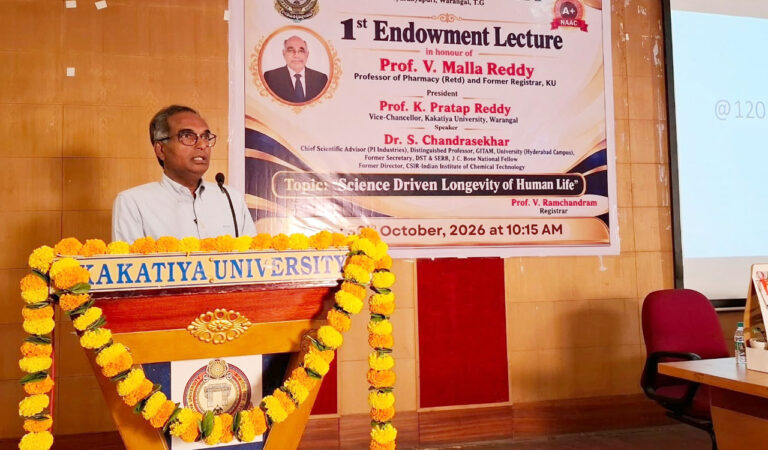
Hanamkonda: Indian Institute of Chemical Technology (IICT), Hyderabad, former Director Dr Srivari Chandrasekhar expressed optimism that, with continued progress in science and technology, the human lifespan could potentially reach 120 years by 2075.
He noted that while the average life expectancy in India was around 40 years at the time of Independence, it had now surpassed 70 years. This improvement in human longevity was due to advancements in medicine, science and technology.
Dr Chandrasekhar delivered the address at the inaugural endowment lecture on the topic ‘At 120 years in 2075 through science and technology’, organised in honour of former KU Registrar and retired Professor V Malla Reddy.
The Industrial Revolution made human life comfortable, but it also led to adverse effects such as global warming. The use of fossil fuels and rising carbon emissions were major challenges facing the world, while dietary habits and agricultural practices negatively impacted the environment, he noted.
Describing plastic as a grave threat to the planet, he suggested promoting the process of ‘depolymerisation’ to convert plastic waste back into useful raw materials. There was a need to expand the ‘waste to wealth’ approach and adopt alternative energy sources.
Regarding the medical field, Dr Chandrasekhar stated that diagnostic and treatment methods had advanced significantly. He also expressed optimism about further progress in areas such as organ transplantation and stem cell banking.
While humans aspire to longevity, they must also take responsibility for the future of the planet. Science should contribute not only to human welfare but also to the well-being of nature and the environment through coordinated efforts across all scientific disciplines and interdisciplinary research, he added.
KU Vice-Chancellor Prof K Pratap Reddy commended the contributions made by Prof Malla Reddy to the development of the College of Pharmacy and the university. Registrar Professor V Ramachandram revealed that, in celebration of the Pharmacy College’s Golden Jubilee, gold medals and four endowment lectures had been established with the support of the college’s alumni.
This content is published by Telangana Today and has not been created or edited by Hello Headlines. View original