Mumbai Parliament Of Religions Calls For Acceptance Beyond Tolerance, Greater Inclusivity And Interfaith Cooperation
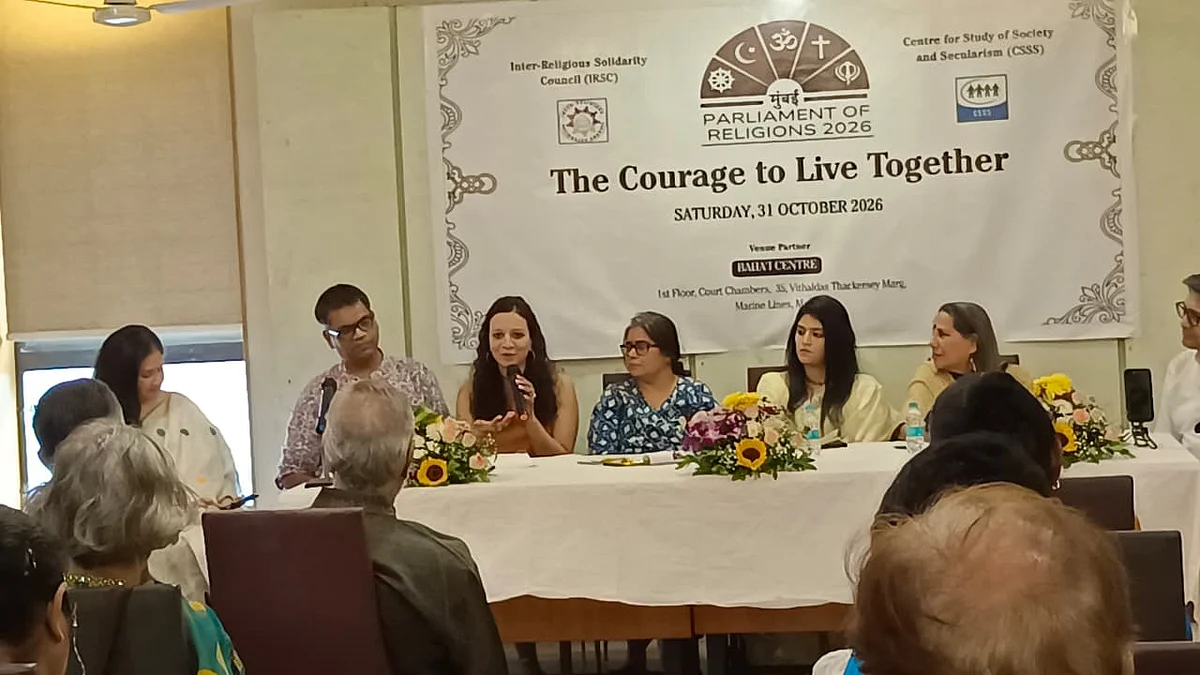
Mumbai: Religious leaders, members of civil society, citizens, and scholars met on Saturday at the Mumbai Parliament of Religions 2026 to explore how the meeting's theme 'The Courage to Live Together' can be explored for communities to work together to strengthen coexistence, dignity and social justice.
Mumbai Conference Examines Religious Polarisation And Social Mistrust
The meeting, convened by the Inter-Religious Solidarity Council (IRSC) in association with the Centre for Study of Society and Secularism (CSSS), at the Bahá’í Centre, Marine Lines, examined the growing challenges of religious polarisation, prejudice, social segregation and mistrust.
In his keynote adress, Prof. Pradeep Gokhale, scholar of philosophy, proposed a human-centred approach to religion that recognises the legitimacy of diverse religious and non-religious worldviews.
Shared Ethical Values Essential For Religious Equality And Peace
He argued that believers and non-believers may hold fundamentally different understandings of ultimate reality, yet inhabit a shared social world in which mutual trustworthiness and ethical responsibility are essential. These common foundations, he suggested, offer possibilities for religious egalitarianism and peaceful coexistence.
He also emphasised the need to examine religious traditions critically, particularly where they perpetuate patriarchy or exclusion.
Chintan Modi Calls For Inclusive Interfaith Dialogue And Peace Journalism
On a similar note, writer, journalist and educator, Chintan Modi urged interfaith initiatives to engage with the full diversity of India's religious communities rather than concentrating predominantly on Hindu-Muslim relationships. He advocated peace journalism, greater visibility for women and LGBTQ voices, and the courage to confront prejudice within one's own family and community. He also raised the importance of extending ethical concern to non-human life.
One speaker, Sabah Khan, highlighted the need to address ghettoisation, create opportunities for people to enter one another's social spaces, and equip young people for interfaith engagement.
Maharashtra's Syncretic Traditions And Bahá’í Teachings Highlight Unity
Dr Zarin Shaffi recalled Maharashtra's traditions of religious syncretism, including shared practices associated with Sufi shrines, as reminders of the region's longstanding cultures of coexistence. Continuing with the thele of unity of religions, soeaker Tahirih Makhijadrew upon the Bahá’í understanding of the oneness of humanity to emphasise that unity does not require uniformity.
For a historical perspective on inter-religious dialogue, Urmi Chanda, peacebuilder, revisited Swami Vivekananda's historic 1893 address to the World’s Parliament of Religions in Chicago, recalling its enduring message of religious acceptance.
Dr Astrid Lobo Gajiwala Urges Acceptance Beyond Religious Tolerance
Theologian Dr Astrid Lobo Gajiwala called for moving from tolerance towards acceptance, supporting interfaith marriages and recognising dissenters within religious communities as potential agents of change.
A second panel, 'Faith, Coexistence and a Just Society,' moderated by Prabhuji Keshav Chandra Das, Convenor of IRSC,
brought together representatives of different religious traditions to respond to the challenges identified by civil society.
Das emphasised that living together requires more than tolerating differences. "It demands the courage to stand up for one another's dignity, while respecting the distinct beliefs and paths of different religions. He called for interfaith engagement to develop into meaningful relationships and sustained cooperation," said Das.
Bhiwandi: FDA Seizes Expired, Spoiled Food Products Worth ₹28,504 From Avenue Supermarts Warehouse; Case Registered Against 5 IndividualsThe Parliament's central message was that the courage to live together must be expressed through everyday acts of solidarity, the willingness to confront prejudice, and collective responsibility for building a just and peaceful society.
Irfan Engineer, Co-Convenor of IRSC and Director of CSSS, highlighted the Council's work over the past three years in addressing misconceptions and building relationships among religious communities. He urged religious institutions to mobilise their influence and resources to address shared social challenges, including poverty, climate change and substance abuse. The Parliament also marked the launch of IRSC's inaugural newsletter.
Across both panels, a recurring message was that peaceful coexistence requires sustained relationships, honest self-examination and organised collective action. IRSC reaffirmed its intention to carry forward the ideas emerging from the Parliament, encourage collaboration among religious and civil society institutions, and share its experiences with groups elsewhere in India interested in developing similar initiatives.
To get details on exclusive and budget-friendly property deals in Mumbai & surrounding regions, do visit: https://budgetproperties.in/
This content is published by Free Press Journal and has not been created or edited by Hello Headlines. View original