Common Gut Bacterium May Fuel Colon Cancer, But Scientists Find A Way To Block Its Toxin
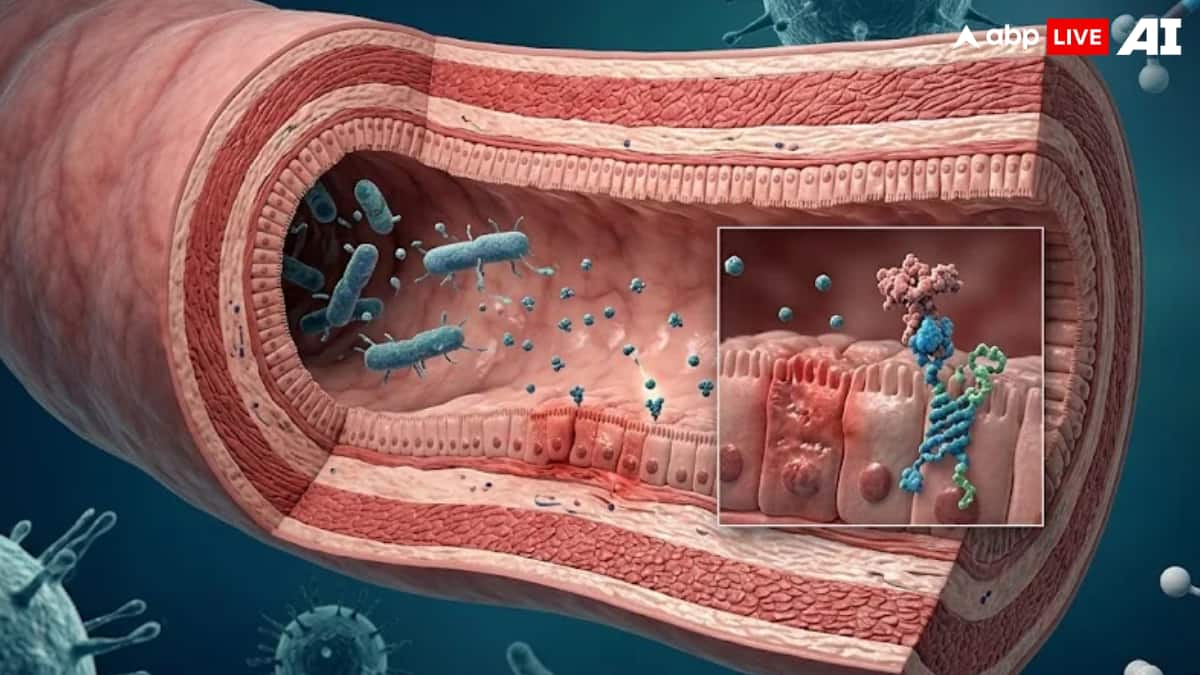
Scientists have uncovered how a common gut bacterium may contribute to colorectal cancer by damaging the intestine's protective lining. Researchers at Johns Hopkins have identified a protein that allows the bacterium's toxin to attach to colon cells and begin its harmful activity. The discovery solves a scientific mystery that has remained unanswered for nearly two decades and could pave the way for new approaches to preventing toxin-related damage.
The study, published in the journal Nature, also highlights a potential way to stop the toxin before it attacks intestinal cells. Researchers developed a molecular decoy that successfully intercepted the toxin and protected mice from its damaging effects.
How A Common Gut Bacterium May Promote Colon Cancer
The research focuses on Bacteroides fragilis, a bacterium found in the intestines of up to 20% of healthy people. Its presence does not necessarily indicate a cancer risk. However, certain strains produce a toxin called B. fragilis toxin (BFT), which can damage the colon's protective barrier, trigger persistent inflammation and encourage tumour formation.
Scientists have investigated this connection for years. In a landmark 2009 study published in Nature Medicine, senior researcher Cynthia Sears and her colleagues established that the bacterial toxin could promote colon tumour development.
Earlier research also showed that BFT breaks down E-cadherin, a protein responsible for keeping neighbouring cells connected and maintaining the intestinal barrier. Damage to this protein weakens the protective lining, potentially exposing surrounding tissues to harmful substances.
However, scientists could not explain how the toxin initially attached itself to intestinal cells.
The latest research has answered that question. The team identified claudin-4, a protein that helps neighbouring cells form tight junctions and maintain the intestinal barrier, as the receptor that BFT uses to attach to colon cells.
"We've made several attempts over time to identify the receptor, so this is an exciting moment," says senior author Cynthia Sears, M.D., Bloomberg-Kimmel Professor of Cancer Immunotherapy and professor of medicine at Johns Hopkins, as quoted on the website of ScienceDaily.
"Understanding how bacterial toxins work can open doors to new approaches for detection and therapy for associated diseases, including diarrhoea, colorectal cancer and bloodstream infections," added Cynthia.
CRISPR Technology Helps Scientists Identify The Missing Protein
To identify the missing receptor, researchers used CRISPR, a gene-editing technology that allows scientists to switch off specific genes and examine their functions.
Maxwell White, an M.D./Ph.D. candidate in Sears' laboratory, led a genome-wide screening project alongside Matthew Waldor's laboratory at Harvard Medical School. The team systematically disabled genes in colon epithelial cells to identify which ones were essential for the toxin to attach and cause damage.
One gene emerged as a particularly strong finding. It produces claudin-4, a protein that helps maintain the seals between neighbouring intestinal cells.
When researchers switched off this gene, BFT could no longer attach to colon cells or attack E-cadherin. This established claudin-4 as the crucial entry point for the toxin's harmful activity.
"It took a while to get the assay working and validate the approach, but once we were able to do the screen, claudin-4 was a clear, resounding top hit," says White. "That was an exciting moment."
The finding also surprised the research team. Scientists had initially expected the toxin to interact with a protein involved in cellular signalling. Instead, they discovered that it uses claudin-4, which primarily helps maintain connections between neighbouring cells.
Further laboratory experiments, conducted in collaboration with structural biologists F. Xavier Gomis-Rüth and Ulrich Eckhard at the Molecular Biology Institute of Barcelona, confirmed that BFT and claudin-4 form a tightly bound molecular complex.
Molecular Decoy Blocks The Toxin From Attacking Colon Cells
Identifying the receptor also gave researchers a possible way to interrupt the damaging process.
The team developed a molecular decoy using a soluble protein containing sequences from claudin-4. The idea was to attract BFT towards the substitute protein instead of allowing it to bind to receptors on colon cells.
Researchers then collaborated with Min Dong's laboratory at Harvard Medical School, including Kang Wang and colleagues, to test the approach in mice.
The results were encouraging. The toxin attached itself to the decoy proteins rather than the receptors on colon cells, protecting the mice against BFT-induced tissue damage.
This approach could potentially prevent the toxin from initiating its attack, rather than attempting to repair intestinal damage afterwards.
"This approach could be iterated upon with small molecules or other biologics that have better pharmacological properties," says White.
The researchers are now examining which molecular approaches could prove most effective at blocking the toxin. Small molecules and biologic treatments could offer possibilities for developing more practical versions of the decoy strategy.
ALSO READ: Male Contraceptive Pill: New Birth Control Pill For Men Could Work In Just 30 Mins
Can This Discovery Help Prevent Colorectal Cancer?
Although the findings represent an important advance in understanding how bacterial toxins damage the intestine, researchers say further work is necessary.
The team has established that BFT binds to claudin-4 and that interrupting this interaction can protect mice from toxin-related damage. However, scientists have not yet determined the precise three-dimensional structure of the molecular interaction.
Even advanced artificial intelligence tools, including AlphaFold, have not fully resolved how the two molecules fit together. Understanding this structure could help researchers develop more effective compounds to prevent the toxin from attaching to intestinal cells.
Importantly, the experiments have demonstrated protection against tissue damage in mice, not prevention of colorectal cancer in humans. Further studies will be needed to establish whether the approach is safe and effective in people.
Nevertheless, the discovery answers a significant question that has challenged scientists since the link between BFT and colon tumour formation was established in 2009.
By identifying the protein that allows the toxin to attach to intestinal cells, researchers have found a potential target for interrupting this harmful process. The findings could eventually contribute to new approaches for detecting or treating conditions associated with bacterial toxins, including diarrhoea, colorectal cancer and bloodstream infections, according to ScienceDaily.
(With inputs from ANI)
This content is published by ABP Live - Health and has not been created or edited by Hello Headlines. View original