Mumbai activist raises Gaza, minority rights at UNHRC in Geneva
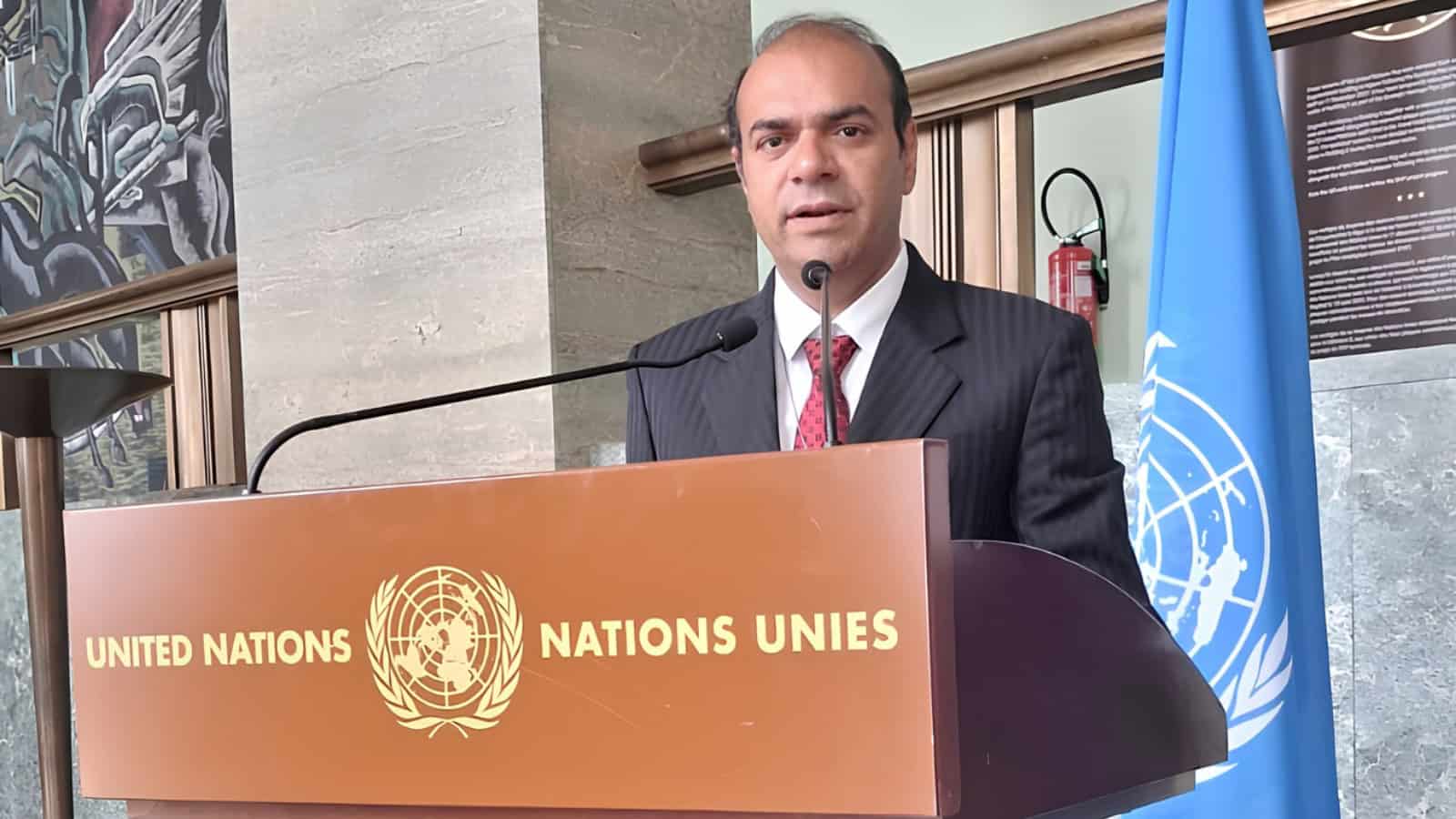
Mumbai: Human rights cannot have double standards, Dr Faizan Ahmed Azizi, founder and president of the Mumbai-based Human Social Care Foundation (HSCF), told the 63rd session of the UN Human Rights Council in Geneva.
At the session, held from September 7 to October 7, Dr Azizi took part in discussions and presented oral and written views on a wide range of concerns such as the humanitarian crisis in Palestine, especially Gaza; the protection of children and minorities, the use of veto power in international decision-making; judicial independence and youth concerns and education, health, social equality and discrimination.
He also met people from international research and civil society organisations to discuss current human rights challenges.
“Human rights cannot depend on geography, religion, race or political influence. When the rights of one child or one community are ignored, the credibility of the entire human-rights system is weakened,” Dr Azizi said.
‘Protecting children is not a political position’
Expressing deep concern over the humanitarian situation in Gaza, Dr Azizi said children and civilians must be protected from killing, violence, sexual abuse, exploitation, arbitrary detention and other serious violations.
“Protecting children is not a political position; it is a fundamental human-rights obligation. The world must not allow an entire generation to grow up surrounded by war, fear and destruction,” he said.
He called for stronger international efforts to protect civilians, deliver humanitarian aid and hold those responsible for serious violations to account.
Veto and the call for UN reform
Dr Azizi also raised concerns about how the UN Security Council‘s veto system affects international action where serious human rights concerns are involved. He urged influential countries, including Russia and France, to support meaningful talks on UN reform and more effective international decision-making.
“The world needs institutions capable of responding to serious violations with credibility, consistency and accountability. UN reform should become a practical objective, not merely a political discussion,” he said.
Courts, classrooms and young voices
An independent judiciary and the rule of law are essential safeguards for human rights, Dr Azizi said. He warned that interference with judicial processes can directly affect citizens’ fundamental rights.
He called on governments to engage with young people through dialogue, rather than treating youth protests only as a law-and-order issue.
“Young people are not simply a challenge for governments; they are the future of every country. Their concerns must be heard through dialogue, participation and democratic processes,” he said.
He also urged governments not to let schools and curricula become tools of political division.
“Education should teach children to live peacefully with differences, not turn those differences into reasons for hatred,” he said.
Minority rights and the fight against drugs
Speaking on discrimination, Dr Azizi said no religious, ethnic or social community should be targeted or stigmatised as a whole. He called for equal protection of the law and stronger safeguards for minorities.
On drug policy, he said governments must go after trafficking networks and organised crime, not communities. Discriminatory enforcement, he warned, can deepen social divisions while letting the real criminal networks off the hook.
Dr Azizi described health, education, poverty and social inequality as integral parts of human rights. He stressed the need to protect vulnerable groups, particularly women, children and young people, and called for a stronger role for civil society in international decision-making.
“The purpose of international human-rights forums should not end with speeches. The real test is whether discussions lead to action that reaches people on the ground,” he said.
On the sidelines of the session, Dr Azizi held constructive meetings with senior diplomats, UN officials and international human rights representatives.
Get the latest updates in Hyderabad City News, Technology, Entertainment, Sports, Politics and Top Stories on WhatsApp & Telegram by subscribing to our channels. You can also download our app for Android and iOS.
This content is published by The Siasat Daily and has not been created or edited by Hello Headlines. View original