How a Faridabad Couple Is Raising Their 3-YO to Love a Diwali, Without Crackers or New Clothes
This story is part of “Parenting: What Google Won’t Tell You” — The Better India’s people-led parenting series that goes beyond conventional advice to document how real families are actually raising their children. Through real parents, parenting coaches, influencers and experts, the series brings honest, diverse and relatable perspectives on the questions, choices, challenges and solutions that shape everyday parenting — the things Google can’t always answer.
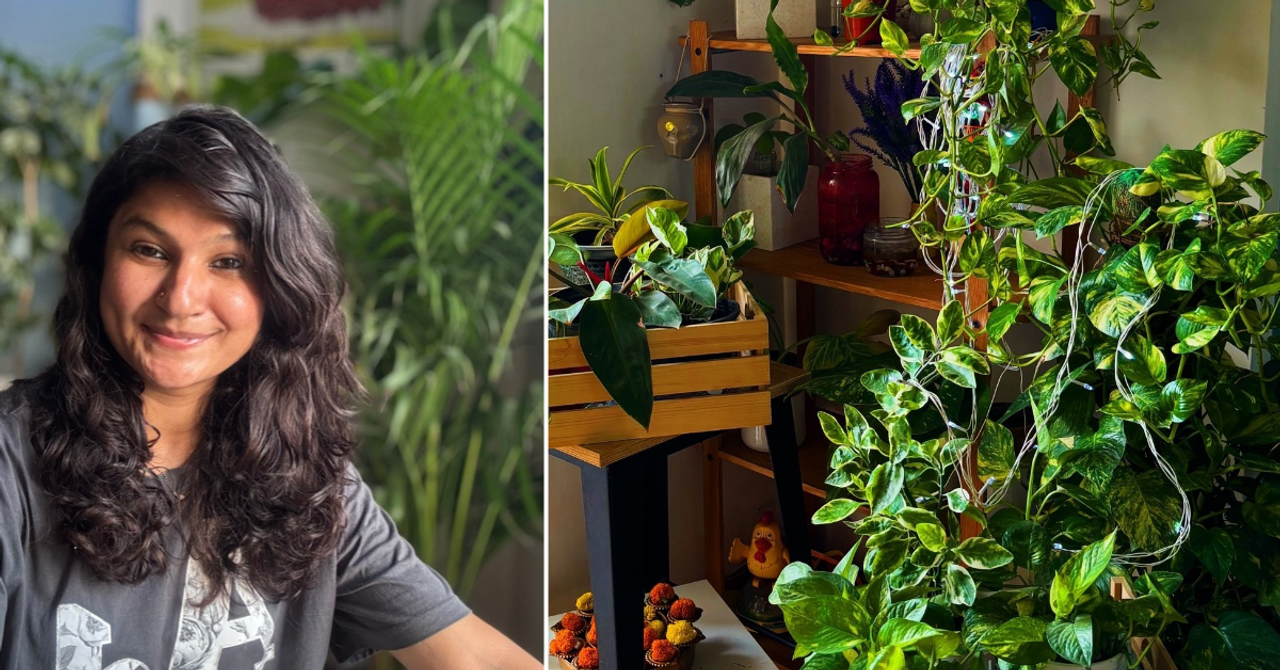
As the evening sky turns dark, little diyas begin to flicker along balconies and windowsills. Inside one Faridabad home, the preparations for Diwali are a little different. Three-year-old Rishaan Garg Batra is getting ready to celebrate with his parents, Neha Garg and Siddhant Batra, and his four furry siblings, the family's dogs. There are diyas to light, a family photograph to take, friends and relatives to meet, games to play and, of course, plenty of good food to look forward to.
There is one thing missing from the celebrations, though: firecrackers. There is also no last-minute rush to buy new clothes or festive decorations.

For Neha, a podcaster, writer and brand strategist, and Siddhant, an IT and sports entrepreneur, Diwali has always been about the simple joys of being together. The couple has never been particularly drawn to loud celebrations or the idea of buying something new for every occasion. Over the years, they have built their own little traditions around the festival of lights, and now they are bringing up Rishaan with the same understanding.
For Rishaan, this is what Diwali looks like: a few lights, familiar faces, meals shared with loved ones and memories made together.
2 childhood experiences that changed how they celebrate Diwali
Neha and Siddhant had each grown uncomfortable with firecrackers long before becoming parents, though for different reasons.
Siddhant's turning point came when his sister spoke to him about child labour associated with the manufacture of firecrackers. The two siblings decided to stop bursting them around Grades 5 or 6. Eventually, the rest of the family also adopted a low-noise Diwali.
Neha, on the other hand, grew up in a large joint family where firecrackers were an important part of the festivities. Every year, a huge stock would be purchased and divided among the different family units, with each child receiving their share.
But she was never particularly fond of them.
"I just didn't like the loudness and the cloud of smoke that is left behind after we burst them,” she recalls.
Something else stayed with her, too. Her mother suffered from severe allergies because of the smoke. While the rest of the family went upstairs to burst crackers, her mother would often remain in the kitchen, coughing and struggling with the fumes.

"Seeing her, I would feel really triggered, and I would always wonder, why are we doing this if this is making her so uncomfortable?” says Neha.
Instead of joining the others, she would stay back with her mother and help prepare the elaborate Diwali meal.
As they grew older, both began to understand the wider consequences of the practice, from air and noise pollution to the distress it causes animals. Being dog lovers, the latter was particularly difficult for them to overlook.
When they eventually came together as a couple, not bursting firecrackers was simply something they agreed on.
‘90% of our kid’s wardrobe is preloved pieces’
Another thing that Neha and Siddhant have never associated with festivals is shopping.
Despite growing up in very different family settings, both had similar ideas about buying new clothes for special occasions. For Neha, weddings were when new clothes were usually purchased. With several weddings taking place in her extended family, there were always outfits that could be reused for festivals.
Siddhant, too, never really understood the idea that every festival had to come with a new wardrobe. In fact, he would find it difficult to relate to school essays that described buying new clothes as an essential part of festive celebrations.
Today, the couple follows the same approach at home. “We wear clothes we already own, restyle outfits and avoid shopping simply because a festival is around the corner,” says Neha.

Instead, if they choose to spend on something, it is usually food or an experience they can enjoy with family and friends.
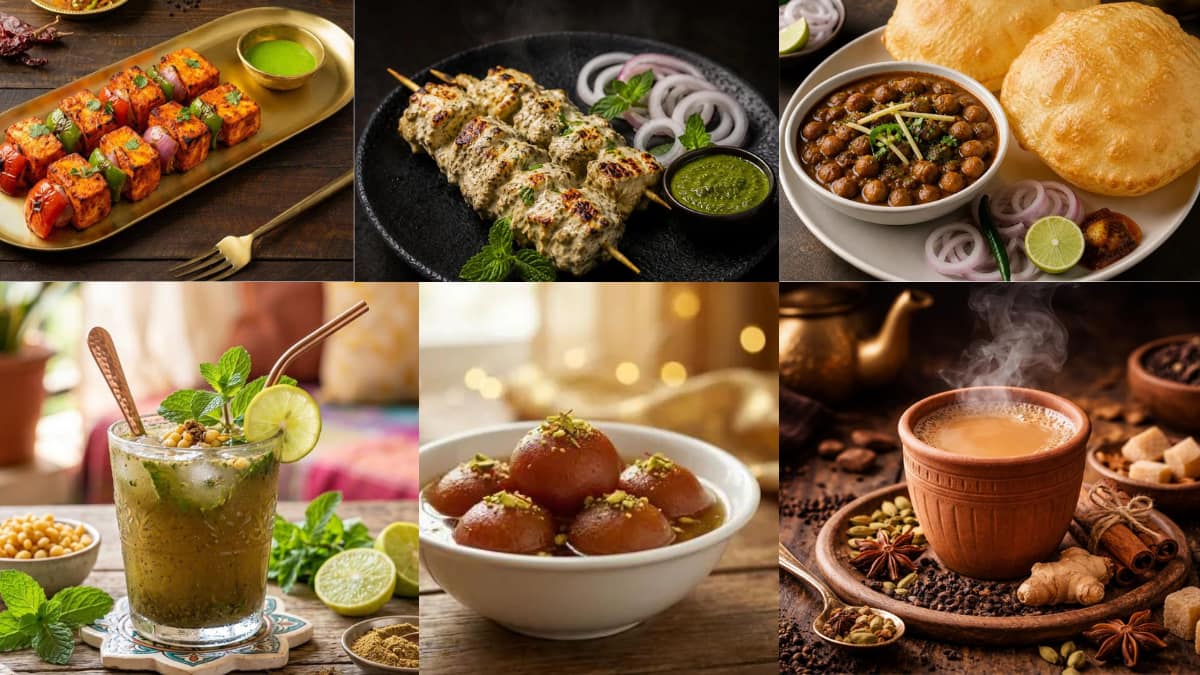
"Food is a big, big part of how we celebrate and how we see celebrations and how we see togetherness. And if at all our money goes in anything material, it goes on food," Neha says.
The same thinking extends to Rishaan's wardrobe. Since he was born, the couple has consciously encouraged friends and family to give him preloved clothes instead of buying new ones.
Today, nearly 90 per cent of his wardrobe consists of preloved pieces, including everyday outfits, party wear and traditional clothes such as kurtas.
For Neha and Siddhant, this is not something they practise only during Diwali. It is a lifestyle choice they want their son to grow up considering perfectly normal.
Growing up with four furry siblings
At home, some of Rishaan's earliest lessons about being mindful come through his relationship with the family's four dogs.
The little one knows that firecrackers can frighten his furry siblings and that the smoke and noise affect animals around them. He has also begun understanding why his parents choose not to burst crackers.
Siddhant says Rishaan sometimes takes it upon himself to explain this to others.
"If he sees people burning crackers, he goes up to them and says that, you know, this is a bad thing. You should not do it; it causes pollution."

The couple makes it a point to explain the reasoning behind their choices rather than simply asking Rishaan to follow certain rules. They talk to him about what happens when people burst firecrackers, why buying things unnecessarily adds to waste, and what they are choosing when they decide to celebrate differently.
For them, he must understand the thought behind these decisions.
"Kids are not dumb people. They are very intelligent. They understand if you explain to them logically why you're doing what you're doing," Neha says.
A family photograph that includes everyone
While Neha and Siddhant prefer simple Diwali celebrations, one family tradition has grown more meaningful as their family has grown.
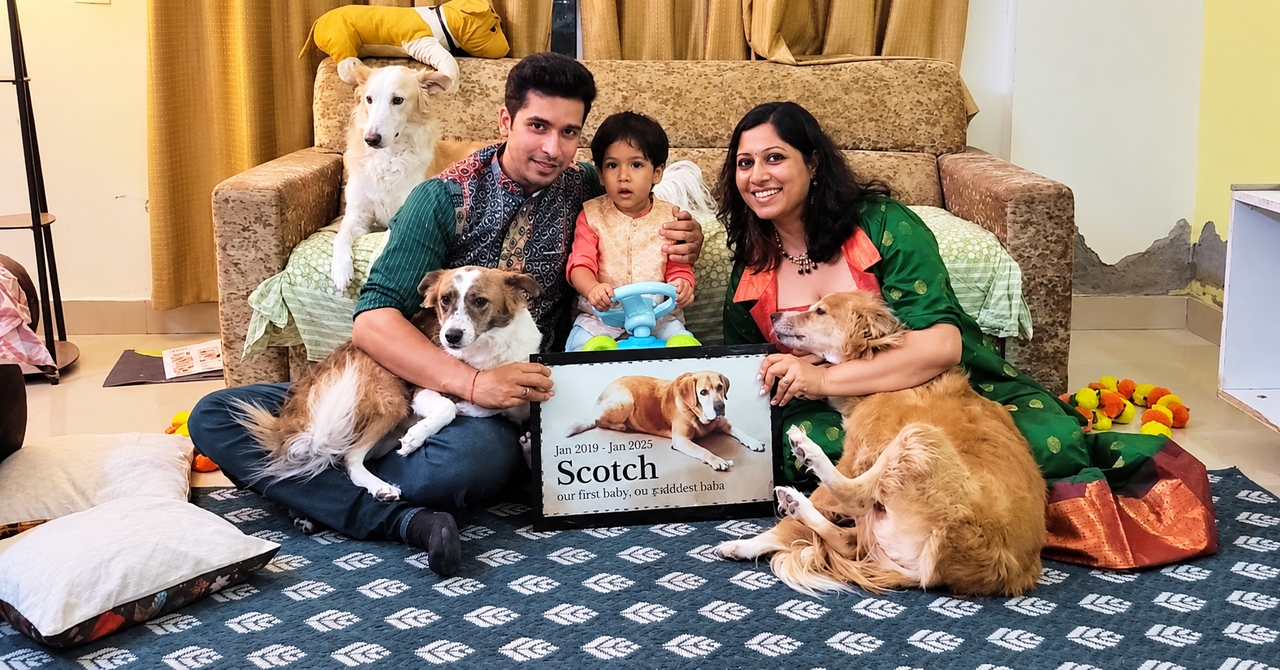
One of their favourite rituals is an annual family photograph. It includes the couple, Rishaan, their four dogs and photographs of the three dogs who have passed away.
The tradition began quite spontaneously when it was just Neha, Siddhant and their first two dogs, Koch and Maya. As their family grew, so did the photograph. When one of their dogs passed away, they decided to include his picture in the frame. The tradition has continued ever since.

Today, the photograph is a way of bringing the entire family together, including the furry members who are no longer around.
Another ritual they have created is lighting diyas together. On Diwali evening, the family gathers around the lights, takes turns praying and then prays together.
"We just pray to the light because it is a festival of light. So on that evening, we light diyas and we pray as a family and we pray as individuals to whatever force there might be," Neha shares.
The rest of the day is spent visiting friends and relatives, eating good food and playing games such as Tambola, cards and Dumb Charades.
There is no elaborate checklist to get through or pressure to make the day look a certain way. Just time spent with people they love.
The little traditions they want their son to carry forward
Neha says that becoming parents has made Diwali more meaningful for them. Earlier, the couple was happy keeping the festival simple. Now, they want to create memories and traditions that Rishaan can look forward to every year.
Living in Faridabad, they are also aware of the pollution that surrounds the festive season. The family hopes to eventually spend Diwali somewhere less polluted and noisy, away from the city's festivities, although they have not managed to put that plan into action yet.
When asked what she hopes Rishaan remembers about Diwali when he grows up, Neha doesn't talk about the things they chose to leave out. Instead, she hopes he remembers the happiness, the food, the games, the family photographs and the time spent with friends and loved ones.

And for parents who might want to make their celebrations more mindful but worry that their children will miss out, she has a thought drawn from her own experience.
"Children miss out on only what they know. If they know your way, they will not miss out on any other way."
For Neha and Siddhant, the hope is that Rishaan grows up understanding the reasons behind their choices and finding happiness in the traditions they share.
For this family, Diwali is about lighting a few diyas, gathering everyone for that much-loved photograph and making sure there is always room at the table for one more.
All images courtesy of Neha Garg
This content is published by The Better India and has not been created or edited by Hello Headlines. View original