Why best consumer brands are built on everyday habits, not one-time marketing campaign
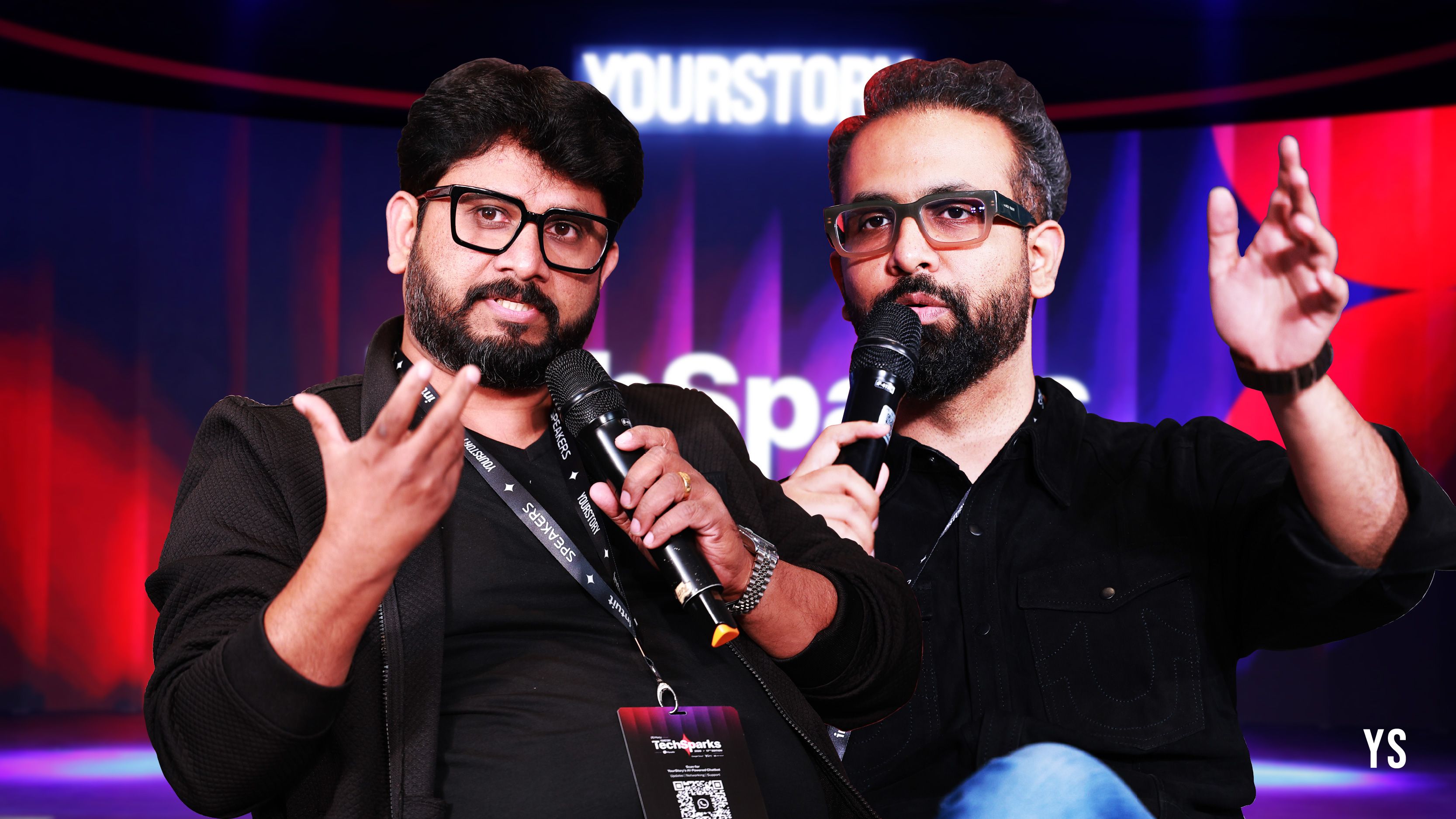
Acquiring a customer may take a marketing campaign, but retaining one requires a product that becomes indispensable. At YourStory's Techsparks 2026, Sangeeth Krishna, founder, BRÜK and Nikhil Rajpal, founder of Qubo explained why design, reliability and an obsession with consumer behaviour are key to building lasting brands.
A security camera that lets parents check on their children, or an air purifier that quietly becomes part of a household routine. These products may serve very different needs, but they have one thing in common: their success depends on becoming part of consumers' everyday lives.
For consumer brands, getting customers to try a product is only the first hurdle. The bigger challenge is getting them to return, particularly in a market where choices are abundant, competing products are easily accessible and new brands are constantly emerging.
For Nikhil Rajpal, Co-founder of smart devices maker Qubo, the transition from a product being used regularly to becoming a habit is not necessarily reflected in usage metrics alone. "Real product-market fit happens once you've hit those hygiene usage metrics. If you speak to consumers, are they using superlatives? Are they saying things like, 'I can't live without this now'? That is when you realise you have probably hit product-market fit," he said.
The absence of a product, he believes, is often the best indicator of whether it has become a habit.
"A habit is not defined by usage metrics. A habit is defined by how much anxiety it causes you in its absence," said Rajpal, drawing a parallel with quick-commerce and food-delivery platforms that consumers increasingly depend on.
Designing for everyday use
Krishna of BRÜK saw that the opportunity in the drinkware market came from observing an emerging consumer trend. He noticed people matching their tumblers with their clothes and bags, much like they did with other lifestyle accessories.
He also saw a gap in the Indian market for premium drinkware with better finishing and build quality. The idea was to create a product that combined functionality with aesthetics, offering consumers an alternative in a category dominated by established players.
BRÜK’s product development focused on everyday convenience, particularly for people working in offices. "These are the small things we were very clear about. It has to be convenient for people to hold, carry and use," he said.
The broader principle is that a product must solve a real consumer problem before a brand can expect it to become a daily-use item.
Qubo's experience in the home-security category offers another example. Rajpal said consumers are generally reluctant to experiment with security products because the consequences of a failure could be significant.
"All you need to do is a good job. Provide a reliable service that consumers can depend on," he said. For Qubo, consistent performance and reliability are central to building trust, particularly in categories where consumers are unlikely to switch brands easily once that trust has been established.
Why retention cannot be a marketing function
With customer acquisition becoming increasingly expensive, brands often look at features, incentives and performance marketing to drive repeat usage. But Rajpal believes retention should primarily be a consequence of the product's usefulness.
"Marketing can only help you with acquisition, make users try for the first time. The product is responsible for making users come back and use it every day," he said. He cautioned against relying excessively on incentives such as streaks, points and cashback to bring customers back to a platform. Instead, brands should work backwards from consumer needs and build products that naturally encourage repeat usage.
Beyond the first purchase
For brands selling durable products such as tumblers, repeat purchases present a different challenge. Unlike consumables, customers are unlikely to replace their drinkware every few weeks or months.
Besides expanding its product range, BRÜK is also exploring adjacent product categories such as lunchboxes and protein shakers, building on its understanding of consumers' everyday routines. Adding to this, Krishna said founders need to constantly observe how consumers use products, including how they adapt them beyond their original purpose. He pointed to the accessories people add to their tumblers and the different bottles they carry to offices and gyms as examples of opportunities that can emerge from everyday observations.
"If you observe a person from morning to evening, you will get ideas. There is nothing magical about it. Just go around and observe," he said.
Premium pricing needs product value
Another challenge for emerging consumer brands is convincing customers to pay a premium when cheaper alternatives and established brands are already available.
Rajpal outlined two possible approaches: competing with established brands on the strength of a differentiated offering, or disrupting the market by providing comparable capabilities at a lower price through operational efficiencies.
As a brand gains consumer trust, it can gradually move away from an initial penetration-pricing strategy and improve margins.
"People are ready to pay if you have a quality product. The most important things are the build, the quality, the materials and the finish," said Krishna. For him, compromising on price simply to chase volumes is not necessarily the right strategy. A smaller but clearly defined customer base willing to pay for the product can be more valuable.
Ultimately, building a lasting consumer brand requires more than visibility or an aggressive acquisition strategy. In a crowded consumer market, that may be the strongest competitive advantage a brand can build.
This content is published by YourStory and has not been created or edited by Hello Headlines. View original