Govardhan Puja 2026: Why Is Chhappan Bhog Offered To Lord Krishna? Know The Story Behind The Tradition
The word 'Annakut' literally translates to 'mountain of food'. The festival is not just associated with religious rituals but also represents gratitude towards nature, farmers, cattle and the community. The tradition of offering 56 food items to Lord Krishna and preparing a special mixed vegetable dish on this occasion has deep religious, cultural and seasonal significance.
Why Are 56 Food Items Offered To Lord Krishna?
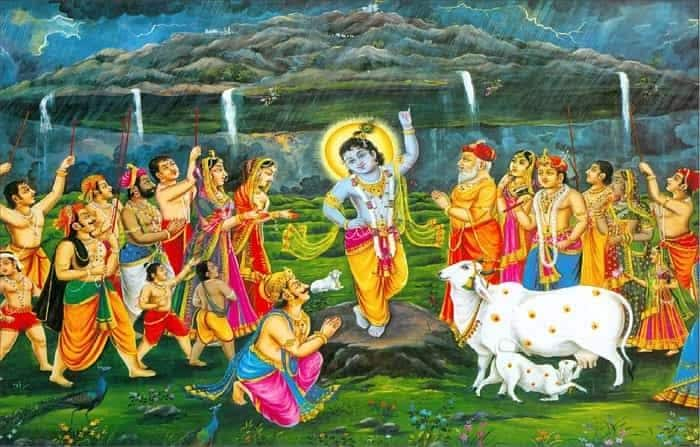
The tradition of Chhappan Bhog is associated with a childhood episode of Lord Krishna from the Dwapar Yuga. According to religious beliefs, when Lord Indra unleashed heavy rainfall over Braj, Lord Krishna lifted Govardhan Hill on his little finger to protect the people of Gokul from the torrential rain.
It is believed that Lord Krishna held the mountain for seven consecutive days without consuming food or water. During this period, he did not eat anything as he remained focused on protecting the people and cattle of Braj.
According to another belief, Lord Krishna used to have eight meals during the eight Prahars (divisions of the day). After the rain stopped on the seventh day, Mata Yashoda and the people of Braj prepared 56 different food items to make up for the eight meals he had missed over seven days.
The calculation behind Chhappan Bhog is based on seven days multiplied by eight Prahars, which equals 56. Thus, devotees offer 56 different dishes to Lord Krishna as a symbol of love, devotion and gratitude.
Spiritually, the number 56 is also associated with the seven notes or holes of Lord Krishna's flute and the eight principal ragas of Indian classical music. This connection is believed to represent the joy of the union between the divine and devotees.
ALSO READ | Dhanteras 2026 Shopping Muhurat: Check Auspicious Timings To Buy Gold, Silver, Vehicles And Utensils
How Is Chhappan Bhog Arranged During Annakut Utsav?
The 56 food items offered to Lord Krishna are traditionally arranged in a particular order in temples. The placement of different dishes is considered significant and is not done randomly.
The upper section, closest to the deity, generally includes dairy-based preparations such as makhan, mishri, malai, peda, rabri and rasmalai. The middle section consists of savoury preparations such as kachori, puri, mathri and different types of namkeen and farsan. The lower section usually contains heavier food items, including kadhi, dal, grains and khichdi.
A large mound of cooked rice is placed at the centre of the offering. It represents Govardhan Hill and symbolises the central theme of Annakut Utsav.
Annakut Special Mixed Vegetable Dish And Its Seasonal Significance
One of the special preparations made during Annakut Utsav is the traditional mixed vegetable dish, commonly known as Gadd Ki Sabzi. Apart from its religious significance, the preparation also reflects the seasonal transition during the month of Kartik.
This period marks the shift from summer to winter, when seasonal vegetables from both harvest cycles are available in markets. Vegetables such as pumpkin and bottle gourd, along with winter produce like carrots, cauliflower, peas, spinach and fenugreek, are combined to prepare the dish.
Traditionally, around 15 to 20 varieties of seasonal vegetables are used in this preparation. The dish is cooked without onion and garlic, following the principles of Satvik food.
It is generally prepared using asafoetida, cumin seeds and pure mustard oil or ghee. The vegetables are cooked and mashed together until their flavours blend, giving the dish its distinctive taste.
ALSO READ | Rama Ekadashi 2026: Why Are Rama Ekadashi And Govatsa Dwadashi Falling On November 5?
Annakut Utsav Promotes Community Bonding And Equality
Annakut Utsav is celebrated with great devotion at several temples across India. The festivities are particularly prominent at Shrinathji Temple in Nathdwara, Rajasthan, and Banke Bihari Temple in Mathura-Vrindavan.
The festival is also celebrated in Gujarat, where it coincides with Bestu Varas, the Gujarati New Year. One of the most significant aspects of the celebration is the distribution of the food offered to the deity as prasad. After the grand offering, the food is shared among devotees without discrimination based on their social or economic backgrounds.
This tradition reflects the values of equality, community participation and gratitude towards nature that are central to Indian culture.
[Disclaimer: The information provided here is based solely on beliefs and information. It's important to note that ABPLive.com does not endorse any beliefs or information. Consult a relevant expert before acting on any information or information.]
This content is published by ABP Live - Lifestyle and has not been created or edited by Hello Headlines. View original