Kashmir’s Cluster University Faces Mid-Course Fee Row
Kashmir, Observer, Jammu, Srinagar, Latest Kashmir News, Kashmir News, Kashmir Latest News
By Syed Sammar Mehdi
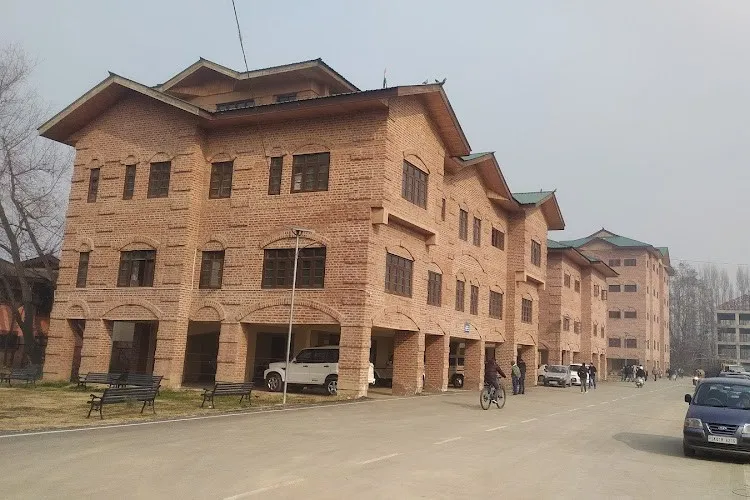
On a crisp October morning in Srinagar, postgraduate students of the 2025 batch in Data Science and Artificial Intelligence & Machine Learning gathered outside the Cluster University offices after receiving an unexpected bill.
The university demanded ₹18,435 for Semesters III and IV.
Many of these students come from families of modest means. They had planned their budgets around the fee structure fixed at the time of their admission.
The new figure represented an increase of ₹4,885 over the original recurring component.
The original structure appeared in Notification No. 08-CUS of 2025. It fixed the total fee for the first and second semesters at ₹16,050.
This amount included a one-time enrollment fee of ₹2,500 and a recurring university component of ₹13,550.
Students paid it, completed two semesters, and moved into the third.
On October 7, 2026, the university released Notification No. 09-CUS of 2026. The document carried the title “Revision of Fee Structure for admission to 1st & 2nd Semester” and raised the total to ₹20,935.
The same day, Notice No. CUS/Adm-Reg/PG/2026/5646-66 applied the revised amount minus the one-time fee to the 2025 batch already enrolled.
The increase amounted to 30.4 percent on the original total and 36.1 percent on the recurring component.
Students drafted a formal representation dated 10 October 2026 and submitted it under Dispatch No. 530 to the Vice-Chancellor. Copies went to the registrar, the dean of academic affairs, the controller of examinations, the finance officer, the assistant registrar for admissions, the students’ grievance redressal committee and the university ombudsperson.
The letter stating their position with precision, raised no objection to fee revisions for future admissions. Their objection focused on the application of a revision framed expressly for first- and second-semester admissions to students who had already completed two semesters under the 2025 structure.
The representation requested three clear steps: confirmation that the 2026 notification did not apply to their batch, written authority and reasons for the demand, and interim protection against any adverse academic action while the issue remained open.
That afternoon at 3:34 p.m., Sarfaraz Mir sent the representation by email from sfmir000@gmail.com to vc@cusrinagar.edu.in. He copied the registrar, controller, dean of academic affairs, admissions office and other senior officials.
The message attached the full document and summarized the core request concerning the enhancement from ₹13,550 to ₹18,435.
Ten days later the students issued a second letter. They noted the passage of time and the absence of any acknowledgement or diary number.
Meanwhile, Semester III had begun. Registration forms, examination processes and attendance records remained unsettled.
Students described the practical effects in direct language. Many found concentration difficult during classes, assignments and practical sessions. The financial pressure and the open questions about academic records produced stress that pulled attention away from coursework.
The letter asked for a written acknowledgement of Dispatch No. 530, a reply within five working days, assurance that registration, admit cards, attendance and results would continue without interruption, clarity on interim fee handling, an early decision, and a short hearing for five student representatives.
Authorised contacts listed on the letter included Sarfaraz Mukhtar Mir, Siyaan, Anees Ahmad Lone and Ganga Maya.
Students also prepared a grievance for the JK Samadhan portal. The document restated the facts and asked the government authority to direct the university to examine the representation, clarify the legal basis for applying a first-and-second-semester revision to an already-enrolled batch, hold the disputed amount in abeyance, and protect students from academic consequences while the grievance remained under review.
Parallel to this, they drafted a detailed Right to Information application under Section 6(1) of the RTI Act. The application sought the complete file on Notification No. 09-CUS of 2026 and the accompanying notice, including original proposals, noting sheets with names and dates, drafts, correspondence and the statutory authority behind the decision.
The episode unfolds against a recent Supreme Court ruling on professional education fees.
The Court examined self-financing higher education institutions and upheld the principle that fees fixed at the start of a course remain binding through the programme.
The judgment balanced the need of institutions for adequate resources against the need of students for certainty about costs. It required fee-fixation processes to follow clear institutional procedures.
University administrators have given limited public response. One senior official spoke in a low voice when asked about the demand. “It’s a routine kind of a matter,” the official said, then declined further comment. Other officers declined to discuss the revision, the representation or the pending demand.
The students continue attending classes while the financial question remains open.
They state their readiness to meet legitimate dues under the applicable rules. Their formal letters, email trail, grievance draft and RTI request remain on the record.
The central request stays simple: a clear written decision that allows them to return full attention to their studies.
The outcome will determine whether a fee fixed at admission holds steady through the course or shifts after students have already invested two semesters of time and money.
The post Kashmir’s Cluster University Faces Mid-Course Fee Row appeared first on Kashmir Observer.
This content is published by Kashmir Observer and has not been created or edited by Hello Headlines. View original