Why Is Vitamin K Injection Given To Newborns? Know Its Role In Preventing Dangerous Bleeding
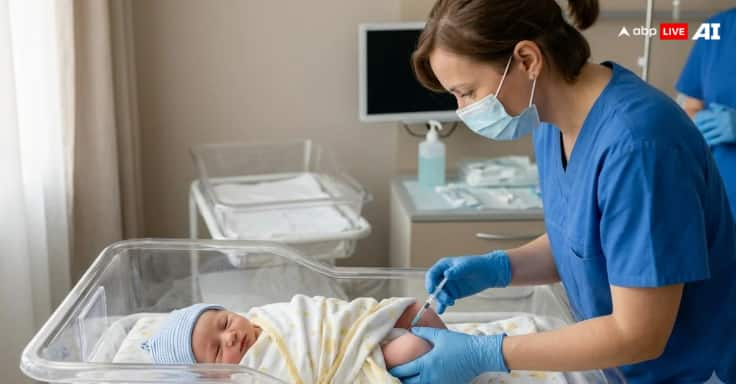
The birth of a newborn is one of the happiest moments for parents and their families. After delivery, doctors and nurses conduct several health checks and administer essential vaccines and supplements to protect the baby. However, one small injection given immediately after birth plays a crucial role in protecting a newborn's life.
Recent global medical research and reports by paediatric experts have highlighted that newborns who do not receive a Vitamin K injection shortly after birth face a significantly higher risk of sudden internal bleeding. This serious and potentially life-threatening condition is medically known as Vitamin K Deficiency Bleeding (VKDB).
Why Do Newborn Babies Have Vitamin K Deficiency?
Newborn babies naturally have very low levels of Vitamin K at birth. There are two main biological reasons behind this deficiency.
Firstly, during pregnancy, only a small amount of Vitamin K passes from the mother's body to the baby through the placenta.
Secondly, Vitamin K is produced by beneficial bacteria present in the stomach and intestines. However, a newborn's intestines do not yet have an established bacterial population. Additionally, breast milk contains only small amounts of Vitamin K.
As a result, during the first few weeks of life, a baby's body may not have enough Vitamin K to produce the proteins required for normal blood clotting.
ALSO READ | Delhi AQI Hits 421 Near AIIMS: How Breathing Toxic Air Can Put Your Heart At Risk
What Is VKDB And How Dangerous Can It Be?
Vitamin K plays an important role in activating proteins that help the blood clot. When the body does not have enough of this vitamin, bleeding may continue because the blood cannot clot properly.
Vitamin K Deficiency Bleeding (VKDB) in newborns is generally classified into three types: early, classic and late.
Late VKDB is considered the most dangerous form. In this condition, sudden bleeding can occur inside the baby's brain or intestines, even without any external injury.
Bleeding inside the brain can cause severe brain damage and may even become life-threatening.
ALSO READ | Cancer Drug Prices Reduced In India: 120 Medicines Get Cheaper, Patients May Save Rs 3,357 Crore
What Does The Research Say And What Do Doctors Recommend?
According to recent data published in an international paediatric journal, babies whose parents refuse the Vitamin K injection at birth because of natural or alternative approaches have an 81 times higher risk of developing late VKDB compared to babies who receive the injection.
Doctors emphasise that this condition is largely preventable. A single dose of 1 mg of Vitamin K1 is administered into the muscle of a newborn's thigh shortly after birth.
This dose is safely stored in the baby's liver and helps protect against bleeding risks until the child begins consuming solid foods.
Parents should ensure that their newborn has received the recommended Vitamin K injection before being discharged from the hospital.
[Disclaimer: The information provided in the article is intended for general informational purposes only. It is not a substitute for professional medical advice, diagnosis, or treatment. Always seek the advice of your physician or other qualified healthcare provider with any questions you may have regarding a medical condition.]
This content is published by ABP Live - Health and has not been created or edited by Hello Headlines. View original