Understanding AQI: What air quality readings mean for your health
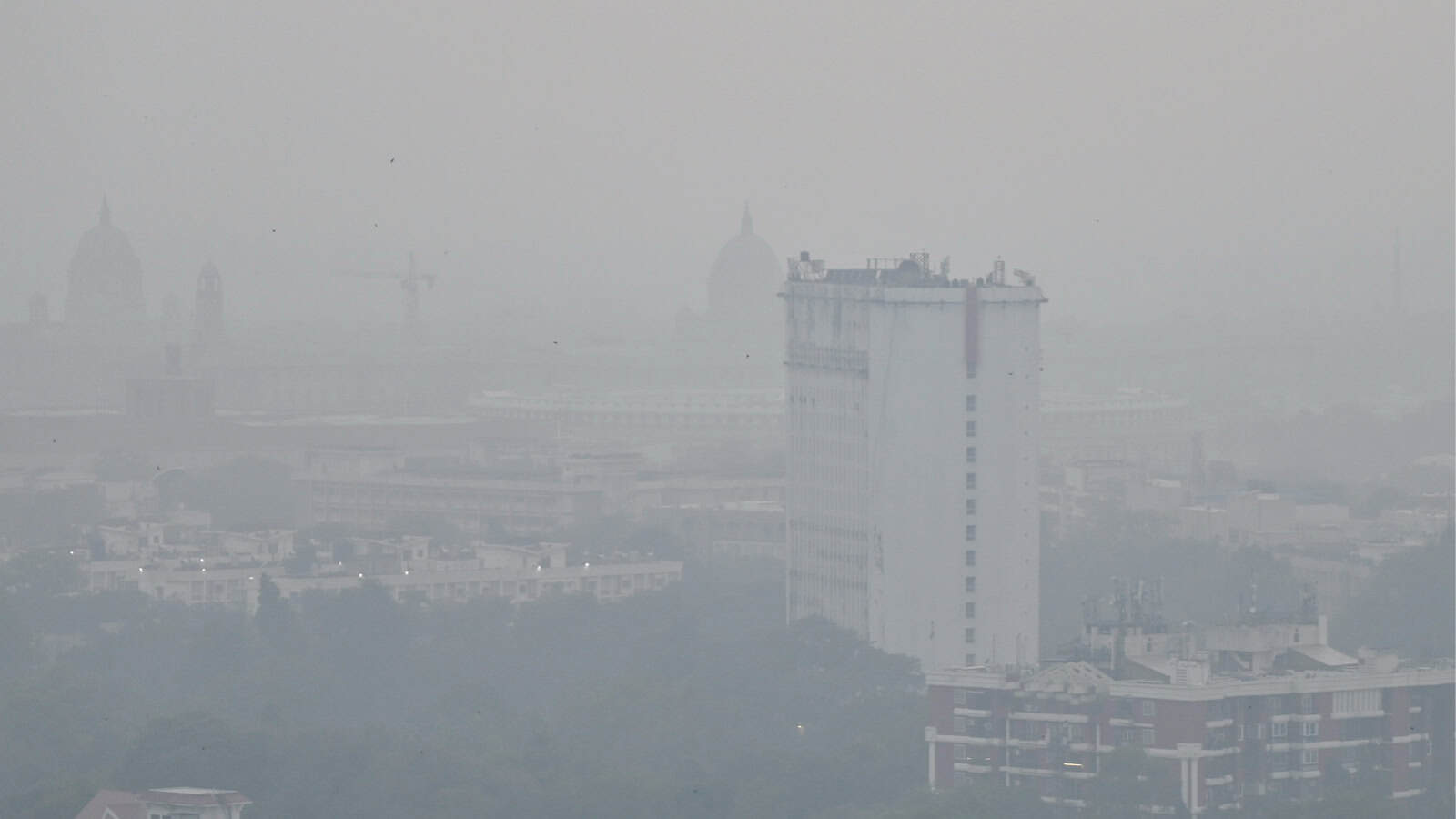
Hyderabad: Every winter, and especially after Diwali, one number dominates the headlines: the Air Quality Index (AQI). But what does a reading of 150, 300 or 500 actually mean for the air you breathe?
Here’s everything you need to know about what actually AQI means and its impact on people’s health.
What is AQI?
The AQI turns complicated pollution data into a single number, a name and a colour, so that ordinary people can understand how clean or dirty the air is. India’s National Air Quality Index was launched in New Delhi in September 2014 under the Swachh Bharat Abhiyan.
The index considers eight pollutants, including fine particles known as PM2.5 and PM10. The overall AQI is set by whichever pollutant is worst at that moment. The rule is simple, the higher the number, the dirtier the air.
The rule is simple. The higher the number, the dirtier the air.
What are PM2.5 and PM10?
PM stands for particulate matter, the tiny bits of dust, soot, smoke and liquid droplets suspended in the air. The number refers to their size.
PM10 covers particles 10 micrometres or less across. These are the coarser ones, kicked up as road and construction dust, pollen and industrial dust.
PM2.5 covers particles 2.5 micrometres or less, about 20 to 30 times thinner than a human hair. They come mostly from burning things such as vehicle exhaust, factory emissions, garbage and crop-stubble fires, and firecrackers.
Size is what makes the difference. The nose and throat trap much of the PM10, though it can still irritate the airways and trigger coughing and asthma attacks. PM2.5 slips past these defences, settles deep in the lungs and can enter the bloodstream. Long-term exposure is linked to heart disease, stroke, lung cancer and weaker lungs in children.
This is why PM2.5 is usually the pollutant behind the worst AQI readings, especially after Diwali, when firecracker smoke is made up mostly of fine particles.
India’s six categories
On the Central Pollution Control Board (CPCB) scale, an AQI between zero and 50 is “good,” 51 to 100 is “satisfactory,” 101 to 200 is “moderate,” 201 to 300 is “poor,” 301 to 400 is “very poor” and 401 to 500 is “severe”.
Here is what each band means for your health, according to the CPCB:
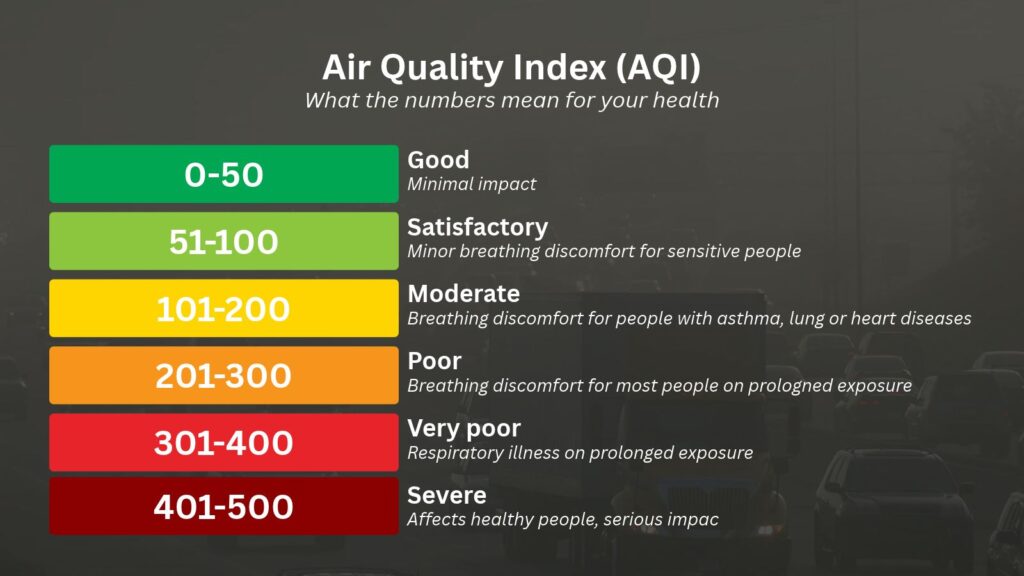
The “severe” band is the one to worry about. At that level, even healthy people are affected and those with existing illnesses face serious harm.
Why some platforms show ‘hazardous’?
Readers often see different numbers and labels for the same city. That is because not every platform uses India’s scale.
Some private apps and websites use the scale of the US Environmental Protection Agency (EPA), which is stricter. On the US scale, “unhealthy for sensitive groups” begins at 101, “unhealthy” at 151 and “very unhealthy” at 201, while 301 to 500 is “hazardous,” an emergency condition.
So, the same air can be “moderate” on India’s scale and “unhealthy” on the American one. Under the US system, readings can also go beyond 500 when pollution is extreme. This explains figures such as 509 or 828 that show up on some trackers during Diwali.
What you should do
When the AQI is poor or worse, doctors generally advise cutting down outdoor exercise, keeping windows shut during peak pollution hours and wearing an N95 mask outdoors. Children, the elderly, pregnant women and people with asthma or heart disease should be the most careful.
At “severe” or “hazardous” levels, the advice is simple: stay indoors as much as possible.
Get the latest updates in Hyderabad City News, Technology, Entertainment, Sports, Politics and Top Stories on WhatsApp & Telegram by subscribing to our channels. You can also download our app for Android and iOS.
This content is published by The Siasat Daily and has not been created or edited by Hello Headlines. View original