POT POURRI
Rescue of Kabul’s crumbling Bala Hissar fortress reveals 2,000 years of Afghan history
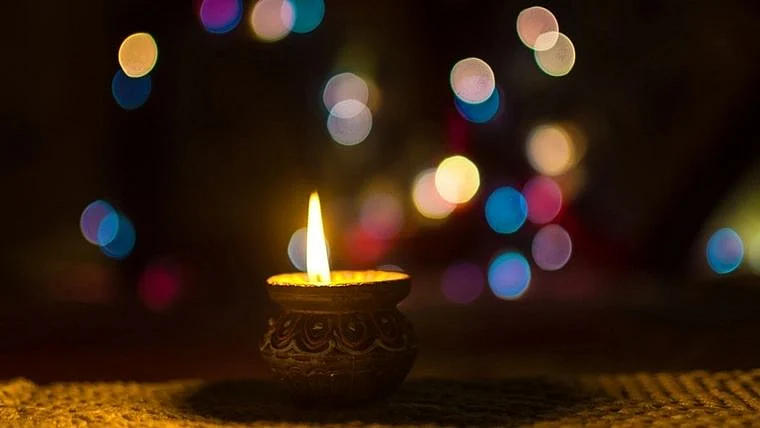
festival of Tihar (also known as Diwali), in Kathmandu, Nepal, on Monday. (PTI)
Kabul, Nov 9: Perched high above the southern edge of Kabul’s old city, the imposing fortress of Bala Hissar has endured centuries of invasions, uprisings and conflict that scarred Afghanistan and left the citadel crumbling.
Now, an extensive, yearslong project by the Aga Khan Trust for Culture, or AKTC, is painstakingly conserving Bala Hissar. The aim is to turn the site into a public archaeological park, complete with landscaped gardens, restaurants and a museum.
Despite decades of neglect and war, archaeological treasures gradually unearthed within the walls of the strategic fortress in the Afghan capital are revealing more than two millennia of the country’s tumultuous history.
The excavations are uncovering an astonishing wealth of finds, from evidence of ancient human habitation to the remains of a Buddhist monastery and the luxurious baths of a Mughal palace.
“We never thought we would find so much,” said archaeologist Babak Rafiei-Alavi, standing at one of Bala Hissar’s excavation sites as workers with trowels painstakingly sifted through the earth. “It’s like a submarine coming out of the ocean.”
Work in five separate trenches at the site has unearthed ancient coins, fragments of Buddhist statues, glazed Islamic ceramics, oil lamps, countless pieces of pottery and the remains of palaces, monasteries and dwellings.
“In some parts we were expecting something. But not this,” Rafiei-Alavi said of the discovery of remnants of a Mughal palace, complete with murals, a thronelike structure and a star-shaped pool carved into the rock at the top of the hill.
The location of Bala Hissar, which means High Fort in Dari, is key to its significance.
Cascading down a prominent outcrop of the Kuh-e-Sher Darwaza mountain ridge, the fortress occupies a commanding position above the old city that helped it protect access routes to Kabul.
Bala Hissar was also an important religious settlement and political centre of power along a crucial trade route connecting the Indian subcontinent to Central Asia and beyond. (AP)
This content is published by The Shillong Times and has not been created or edited by Hello Headlines. View original