Maharashtra UCC Row: Asaduddin Owaisi Calls Proposed Code a Hindu Civil Code, Questions Survey Today
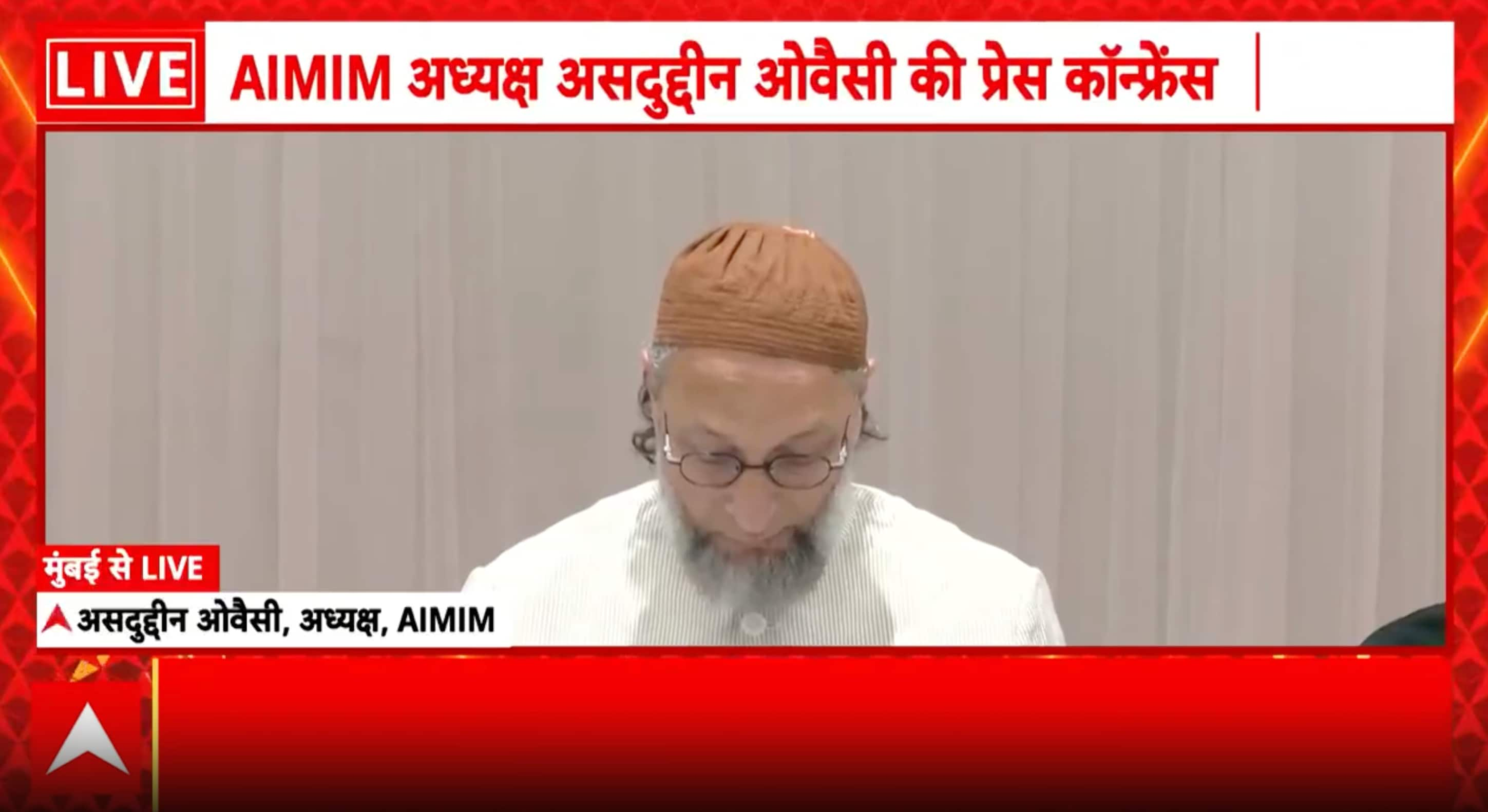
A fresh political debate has erupted over the proposed Uniform Civil Code (UCC) in Maharashtra, with AIMIM chief Asaduddin Owaisi raising serious questions about the state government's approach. Addressing a press conference, Owaisi alleged that the proposed legislation could function as a “Hindu Civil Code” rather than a genuinely uniform law, claiming that its provisions may be imposed on non-Hindu communities. He also questioned the format of the questionnaire being used to seek public opinion on the UCC. According to Owaisi, most questions follow a simple yes-or-no format without clearly explaining what the proposed Uniform Civil Code would actually contain. He specifically highlighted a question asking whether respondents support implementing the UCC in Maharashtra at this point, arguing that people cannot give an informed response without knowing the details of the proposed law. Owaisi also referred to the reported resignation of retired Bombay High Court judge R.C. Chauhan, claiming that concerns had been raised over the absence of minority-community representation in the exercise. Raising another concern, he cited the possible implications for tribal communities, questioning whether a tribal woman's decision to support the UCC would change if she later learned about provisions affecting children born from relationships between tribal women and non-tribal men. Owaisi further invoked the Supreme Court's Shayara Bano judgment, referring to observations by judges Justice Kurian Joseph and Justice Abdul Nazeer on personal laws, religious freedom and Article 25 of the Constitution. He cited paragraphs 146 and 165 while presenting his argument on constitutional protection for personal laws. He also said Article 44, frequently cited in the UCC debate, is part of the Directive Principles of State Policy.
This content is published by ABP Live - India and has not been created or edited by Hello Headlines. View original