From conversations to action: How Cogover is addressing commitment leakage in Indian enterprises
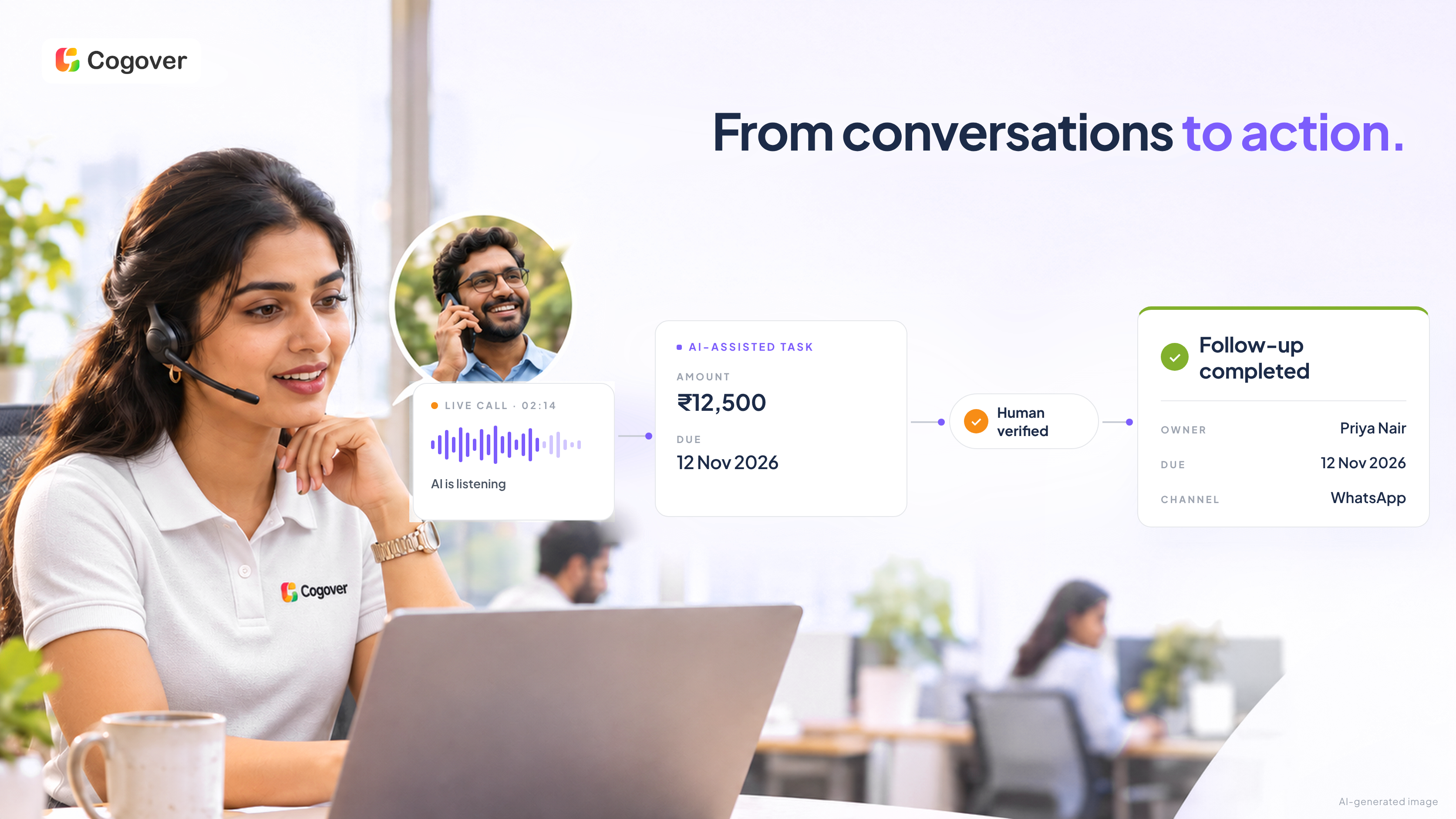
At 11 am, a borrower tells a collections agent they will make a payment on Friday. The conversation is recorded, the agent moves to the next call, and the account may be handled by someone else days later. When Friday arrives, does the team know what was promised, who owns the follow-up, and whether payment was received?
This is the problem Cogover calls ‘commitment leakage’: customer commitments that lose context, ownership, or follow-through as work moves between people and disconnected systems.
For Indian enterprises managing large volumes of calls, approvals and customer requests, the cost is not simply missed tasks. It is repeated conversations, delayed resolutions, and limited visibility into whether work actually gets done.
The gap between a conversation and an outcome
Most enterprises already have tools to store customer records, manage calls, and track tasks. The difficulty arises when employees must manually connect them.
In lending, a promise-to-pay may be recorded without a clear next action. In brokerage, a customer seeking help with KYC can wait while teams coordinate. In real estate, a promised site visit may never become a confirmed appointment.
Managers can see call volumes but may struggle to identify unresolved commitments. Employees piece together notes and messages, while customers repeat information they have already shared.
Cogover is addressing that operational gap with an Agentic Enterprise Platform that brings CRM, built-in calling, workflows, and AI agents into one environment. Its central proposition is straightforward: a customer interaction should lead to a visible, accountable next step.
What makes the approach agentic?
An AI summary can save time, but it does not by itself assign an owner, approve an exception, or ensure a follow-up happens.
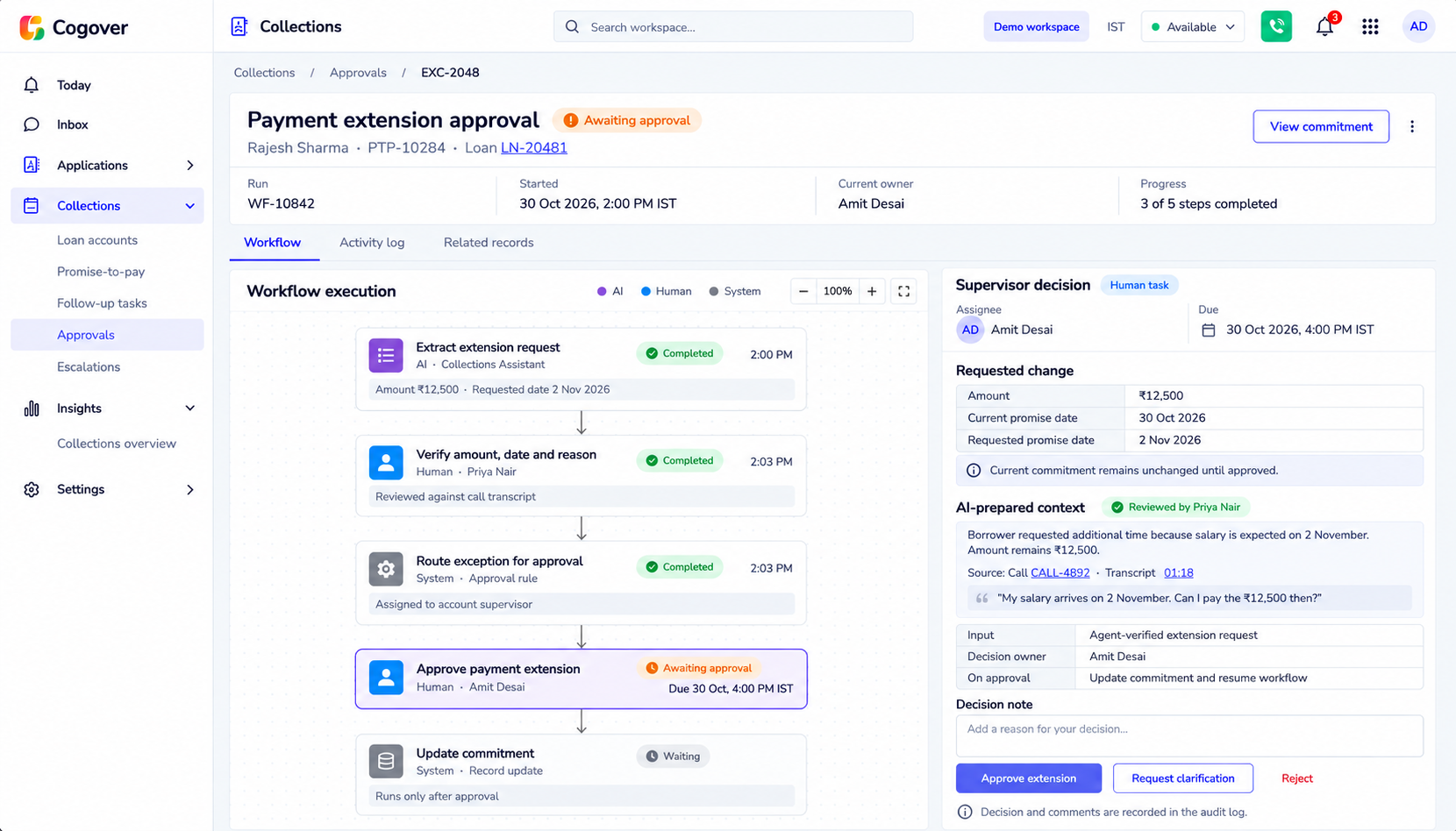
In Cogover, AI agents are designed to participate in defined business processes. They can help extract information from a conversation, propose a record update or prepare a task. Permissions and workflow rules determine what can proceed automatically and what requires human review.
Because calling is built into the same platform, an employee can dial from a customer record and access the relevant history, disposition, and subsequent work without moving between separate tools. A supervisor reviewing an exception can trace a task back to its originating interaction.
The goal is not to replace employee judgment. It is to make the context, responsibility, and next action available to the right person at the right time.
A promise-to-pay, followed through
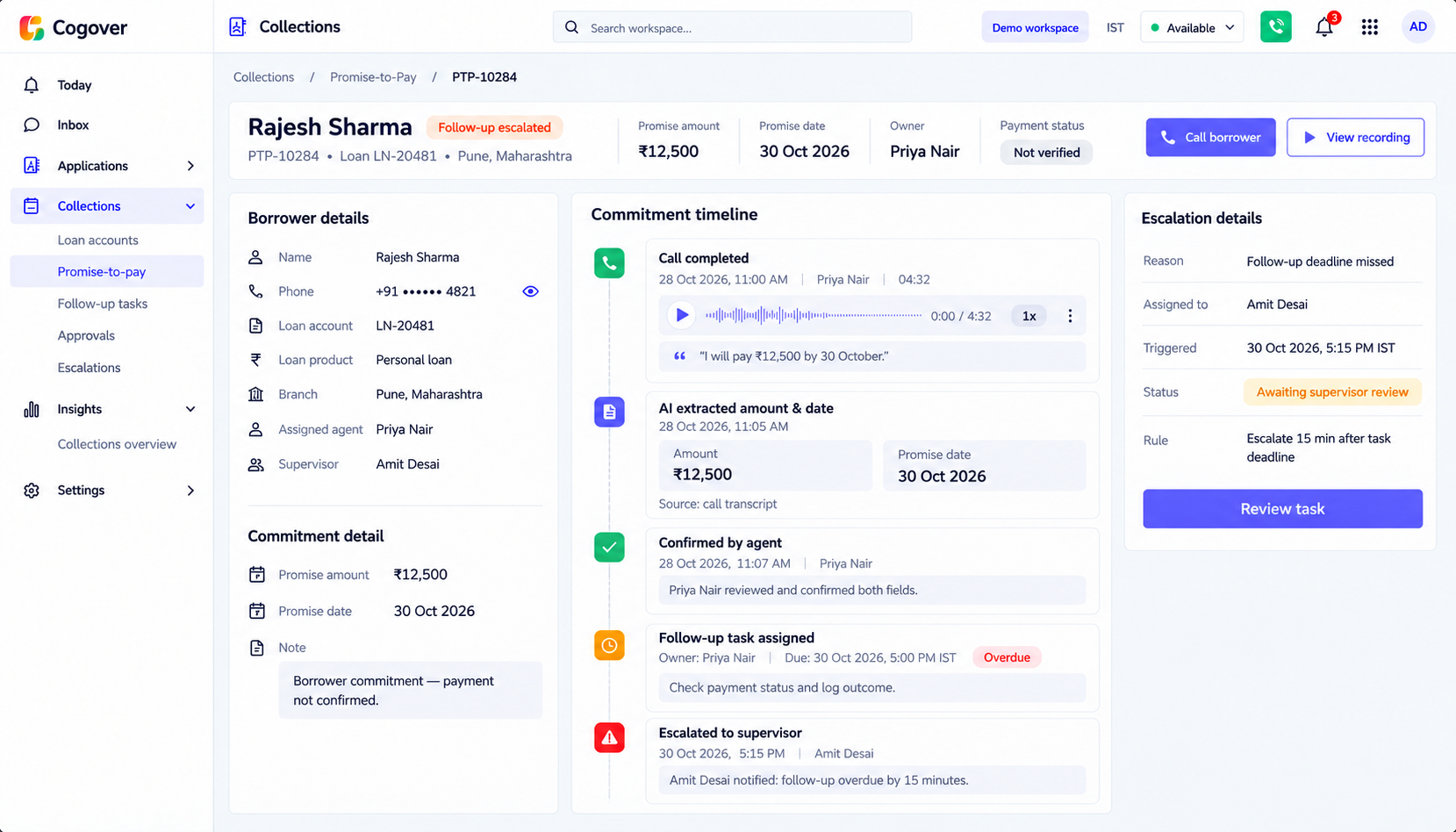
Consider a collections workflow. An agent calls a borrower from the account record. AI helps identify the proposed amount, payment date and intent. The employee checks those details before confirming the commitment.
The workflow then assigns a follow-up with an owner and deadline. If the borrower requests an arrangement beyond the agent’s authority, the request moves to an approver with the conversation context attached. If a relevant payment-status integration is available, that update can guide the next action.
When a deadline passes, the unresolved item becomes visible to the responsible supervisor instead of disappearing into personal notes.
Crucially, the process distinguishes what the customer promised, what the employee must do, and whether the business outcome occurred. A completed follow-up is not the same as a received payment. Both need to be measurable.
The same design can support brokerage KYC resolution, real-estate site-visit coordination and service escalations, each with its own ownership, approval and exception rules.
Building around real enterprise processes
Enterprise workflows rarely match a rigid template. An approval may depend on transaction value, customer type, or branch. A service exception might involve sales, operations, and finance.
Cogover combines AI-assisted application creation with low-code configuration so teams can shape fields, stages, permissions, and escalation paths around those realities. They can review an initial working application and refine it against actual cases rather than relying solely on a static specification.
That flexibility matters in enterprises where formal systems coexist with conversations, messaging and cross-functional decisions. To operate reliably, those informal handoffs must become explicit business rules.
Why NetApp Excellerator matters
Cogover’s selection for NetApp Excellerator creates an opportunity to connect this application-led approach with a broader enterprise data perspective.
One customer request may depend on a recording, CRM history, an approval policy and a transaction update. For AI to assist responsibly, it needs relevant data and controlled access. For the organization to trust the process, actions need ownership and traceability.
NetApp brings an enterprise data infrastructure perspective; Cogover brings the customer interactions and operational workflows where data is translated into decisions and actions. Participation in the program provides a setting to explore that connection further.
Measure actions, not just activity
For businesses evaluating agentic AI, Cogover suggests starting with a specific workflow rather than a broad automation target.
Can managers identify every commitment made yesterday and its owner? Can approvers access the original context? How many follow-ups are overdue? How often must customers call again for an update?
A focused pilot can measure ownership coverage, approval turnaround, missed deadlines, repeated data entry, and customer follow-up rates. Teams should also monitor errors and human corrections, not merely processing speed.
For simple, low-volume work, shared task tracking may be sufficient. As customer interactions, handoffs, and approvals multiply, a connected system becomes more valuable.
Cogover’s argument is that enterprise AI delivers practical value when it moves beyond generating information to helping people complete work with clear permissions, accountability, and evidence of outcomes.
This content is published by YourStory and has not been created or edited by Hello Headlines. View original