This Scientist Showed a Goa Town How to Turn 1 Tonne of Kitchen Scraps Into Compost in 2 Days
Every day, vegetable peels, leftover food and other kitchen scraps find their way into garbage bins across Indian homes. Once collected, much of this biodegradable waste ends up in landfills, adding to the country's growing waste management problem.
But what if this waste could be turned into manure within 24 to 48 hours, right where it is collected?

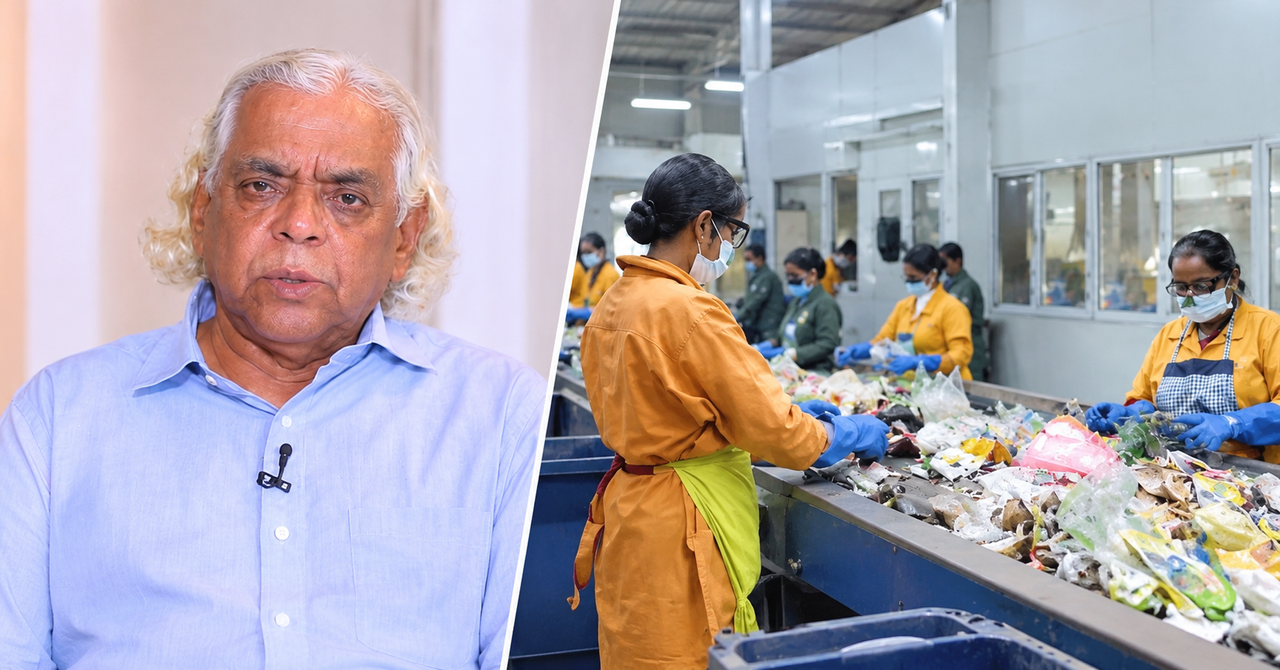
That is what Nisargruna, a waste-processing technology developed by Dr Sharad P Kale, a scientist at the Bhabha Atomic Research Centre (BARC), aims to do. Already being used in Goa, the technology converts one tonne of kitchen waste into around 150 kg of nutrient-rich manure.
Turning a tonne of kitchen waste into manure in two days
The process begins with separating food waste, including vegetable peels and leftover food, from plastic and other dry waste.
The biodegradable waste is then cut into tiny pieces before a special mixture containing microorganisms is added. These microorganisms break down the organic matter naturally, while air is supplied to speed up the process.
View this post on Instagram
Within 24 to 48 hours, the waste is converted into manure that can be used to nourish plants and soil.
Unlike conventional waste disposal systems that transport garbage to distant dumping grounds, Nisargruna allows the entire process to take place at the point where the waste is collected.
This means kitchen waste can be treated locally instead of being mixed with other garbage and sent to landfills.
Treating food waste close to home
India generates around 78 million tonnes of food waste every year. When biodegradable waste is mixed with plastic and other discarded materials, managing and recovering useful resources becomes harder.
Nisargruna offers a way to handle this problem at the source.

By processing wet waste locally, the technology can reduce the amount of garbage that needs to be transported to landfills. It can also mean fewer garbage trucks on the road and cleaner dry waste, making it easier to recover and recycle materials such as plastic.
The manure produced in the process can also find use in gardening and soil enrichment, giving discarded food scraps another purpose.
Could more Goan villages turn their food waste into manure?
The technology's journey in Goa began in Bicholim, where Nisargruna was first implemented.
Now, plans are underway to set up these units across municipalities and village panchayats in the state, taking decentralised waste processing to more communities.

Photograph: (X/@The Logical India)
For cities and villages dealing with mounting piles of mixed garbage, the idea offers a practical alternative: instead of transporting every bit of waste elsewhere, process what can be reused where it is generated.
A vegetable peel need not end its journey in a landfill. With the right process, it could return to the soil as manure within just two days.
This content is published by The Better India and has not been created or edited by Hello Headlines. View original