Why Does Winter Fog Blanket Delhi but Rarely Bengaluru? The Science Behind India’s Changing Morning Skies
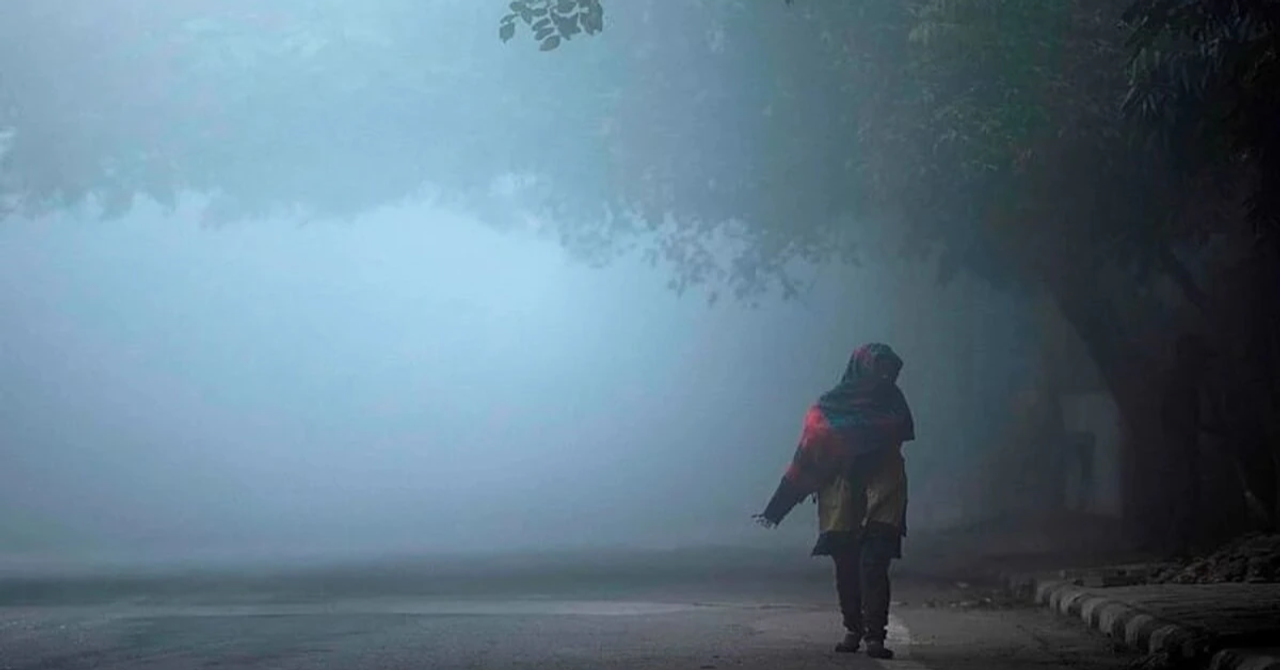
At 7 am in Delhi, the morning commute could become a visibility test over the next couple of weeks.
In Lucknow and Patna, similar scenes play out as winter fog settles over roads, neighbourhoods and railway tracks, sometimes remaining until late morning.
Now picture a winter morning in Bengaluru or Hyderabad.
The temperature may have dropped overnight, and residents may step out wearing jackets, but the city is unlikely to wake up under the same blanket of persistent fog.
So, if both regions experience winter, why does one see frequent spells of dense fog while the other experiences it far less often?
The answer lies in more than temperature. Geography, moisture in the air, wind speed, overnight cooling and atmospheric conditions determine whether fog forms, how thick it becomes and how long it stays.
Research by the India Meteorological Department (IMD) and other climate scientists offers a closer look at why winter fog varies across India.
Why the northern plains wake up under fog
The Indo-Gangetic Plains, stretching across Punjab, Haryana, Uttar Pradesh, Bihar and West Bengal, are among India's most fog-prone regions during winter.
🚨 Anti smog gun is now being used to spray water to mitigate air pollution. Visuals from Delhi, Ring Road near AIIMS. https://t.co/AWXJMn9NQC
— Mumbai Rains (@rushikesh_agre_) November 9, 2026
An IMD research paper, Study of Winter Fog Over Indian Subcontinent: Climatological Perspectives, published in the journal MAUSAM in January 2014, examined winter visibility patterns across the country using meteorological observations.
The researchers, G K Sawaisarje and colleagues, found that the Indo-Gangetic Plains experienced an average of seven to 10 foggy days in December and more than eight days in January.
The region also had conditions particularly favourable for fog formation. Between December and February, average wind speeds were around 0.6 metres per second, temperatures ranged from 9°C to 15°C, and relative humidity stayed between 72% and 84% during the observations.
But what makes these conditions important?
Much of the fog across northern India is radiation fog.
It forms when the ground loses heat overnight, cooling the air immediately above it. When this air reaches its dew point, the moisture present in it condenses into tiny water droplets, creating fog.
Clear skies, sufficient moisture, and light winds allow this process to continue.
When winds are too strong, the air mixes with warmer layers above, making it harder for fog to develop and remain close to the ground.
Delhi, Lucknow and Patna: What the numbers reveal
A 2023 study published in the International Journal of Climatology, titled Fog Trends in India: Relationships to Fog Type and Western Disturbances, examined three-hourly meteorological observations from 69 locations across India between 2000 and 2020.
Researchers Daniel K E Smith and colleagues identified 10,262 fog events and found that radiation fog accounted for 68.1% of all events and 70% of dense fog events.
The study also recorded an average of 54 fog events annually in Delhi, 45 in Patna and 39 in Lucknow.
It identified statistically significant increasing trends in fog frequency in all three cities over the periods examined.
Another factor influencing these conditions is the movement of western disturbances — weather systems originating around the Mediterranean region and travelling eastwards towards India.
These systems can bring moisture and alter atmospheric conditions over northern India.
In Delhi, 46.9% of radiation fog events beginning in December and January coincided with an active western disturbance.
Kolkata's fog follows a different clock
Move eastwards towards Kolkata, and the pattern begins to change.
A September 2023 study published in Urban Climate, titled Event-Based Fog Climatology and Typology for Cities in Indo-Gangetic Plains, examined half-hourly visibility observations from seven cities between 1991 and 2020.
The researchers, Prasad Deshpande and colleagues, found that fog onset followed an east-to-west pattern, with western cities experiencing delayed onset. Fog intensity, meanwhile, followed a north-to-south pattern, with northern cities recording more intense events.
Kolkata, located near the mouth of the Ganga and influenced by its coastal setting, experienced relatively shorter fog events.
Unlike the other cities studied, fog in Kolkata generally dissipated earlier, between 8 am and 11 am. The city also recorded a smaller proportion of very thick fog events.

Across the seven cities, January recorded the highest proportion of fog events. Around 61% began between 8 pm and 5 am, while approximately 70% dissipated between 9 am and 1 pm.
Why the Deccan experiences less persistent fog
The Deccan Plateau is not entirely free from fog.
The 2014 IMD study documented significant fog occurrences in South Interior Karnataka. Coastal Karnataka also recorded an average of approximately 6.5 foggy days during the winter season.
The Deccan's elevated terrain, varying moisture availability, and different patterns of atmospheric circulation create conditions that are generally less favourable for widespread, prolonged winter fog than those across the northern plains.
Fog Vs Smog
However, fog and smog are not the same. Pollution can reduce visibility even without the atmospheric conditions required for meteorological fog.
When pollutants mix with fog droplets, they can also contribute to persistent winter haze.
Urban heat-island effects, changing aerosol concentrations, and atmospheric circulation can interact in complex ways, making it difficult to attribute changing fog frequency to a single cause.
Ultimately, India's winter fog is not one uniform weather phenomenon. Delhi's frequent radiation fog, Kolkata's shorter morning spells and the relatively rare fog events across much of the Deccan reflect how local geography and atmospheric conditions shape each city's winter.
Understanding these differences matters beyond predicting the morning commute. Fog affects road safety, railway and aviation operations, while the interaction between fog and pollutants has implications for air quality and public health.
Sources:
‘Fog Trends In India: Relationships To Fog Type And Western Disturbances’: By Daniel K. E. Smith, Stephen R. Dorling, Ian A. Renfrew, Andrew N. Ross, Craig Poku, Published On 14 August 2022
‘Event-Based Fog Climatology And Typology For Cities In Indo-Gangetic Plains’: By Prasad Deshpande, Deepika Meena, Shivam Tripathi, Arnab Bhattacharya, Mahendra K. Verma, Published On 18 August 2023
‘Study Of Winter Fog Over Indian Subcontinent : Climatological Perspectives’: G.K. Sawaisarje, P Khare, C.Y. Shirke, S. Deepakumar, N.M. Narkhede, Published On 1 January 2014
This content is published by The Better India and has not been created or edited by Hello Headlines. View original