There’s more than one way to tell a ‘climate story’

At the end of a long workday, many of us want to watch something light, something that helps us switch off. Would a documentary on floods in a climate disaster-prone part of the world make the cut?
Climate messaging is genuinely difficult. Most climate-related news articles, films, documentaries, and other digital media expect audiences to make an active choice to click on them. There is an expectation that people already care, or that they will instinctively stick with the content once they realise it’s about climate change.
It is not that people are unaware of the climate crisis or indifferent to it or unaffected by its impacts. When Youth Ki Awaaz (YKA) polled 1,000 young people across India in October 2026, 81 percent said they felt the effects of climate change in their everyday lives, and more than half said they felt them ‘a lot.’ Similarly, in a 2025 Yale/CVoter survey in India, 96 percent of respondents said that global warming was happening, 89 percent said they’d personally felt its effects, and 90 percent expressed worry about it. When asked how they engage with addressing the climate crisis in their own way, most of the respondents named the usual: saving electricity or using less plastic. Only one in four had joined a clean-up drive or shared a climate campaign online, and one in five had volunteered.
What explains the gap between affect and action? More importantly, what will it take to close it?
The answer may not entirely lie in more numbers or sweeping visuals of ecological destruction. Especially in a country like India, where media is often a form of escapism, spending leisure time engaging with a crisis that is already impacting people’s lives is not a choice that many would make every day.
Instead, what if the message could be delivered in different ways? What if we put climate solutions inside the shows, films, and digital content people are already watching? Not a public service announcement that interrupts the story being told, but a character on screen or an influencer people trust, doing something in their everyday life the viewers could replicate. This side steps the need for the audience to make an active choice to engage with climate solutions: they come for a film or a show they’ve chosen to watch for entertainment reasons, and leave having learned something by osmosis.
Stories resonate beyond the screen
We emulate people we admire or relate to. For example, YKA’s evaluation of its Adolescents for Climate Transformation campaign in Indore found that women in the city’s low-income settlements took up waste segregation and began organising clean-up drives through their self-help groups after fellows from the programme kept coming back to have conversations with them.
Young people similarly recognise the influence of those around them. Asked what would make climate action easier for them, several respondents to the YKA survey pointed to the people around them, one of them writing, “People around me taking similar actions… reinforcing positive peer pressure.”
As observed in social cognitive theory, this extends similarly to stories and characters we see on screen. Since entertainment media reaches a large population, irrespective of geography and (to some extent) identity of the viewers, the effect that characters have on us also creates a bigger opportunity to talk about climate.
Surveys frequently show that people would be interested in climate messaging in the media that they consume but think that there’s a lack of such content. In the YKA poll, only 11 percent of young people said they had come across climate change in a film, TV show, or web series. 93 percent said they would like to see a character they follow deal with heatwaves, floods, or other climate issues in a story.

This is consistent across the results from global surveys. In a survey conducted to understand how people interact with social issues in entertainment media in the US, 77 percent of people said they learned about social issues from fiction, but only 25 percent mentioned they heard about climate that way. One out of two said they wanted climate storylines. In 2023, Netflix published viewership numbers that showed how people interact with climate content on their platform. They found that “over 80 percent of our members choose to watch at least one story on Netflix that helps them better understand climate issues or highlights hopeful solutions around sustainability.”
Globally, there are ample instances where climate solutions embedded in entertainment have worked:
- Succession Season 3: Ewan, a key character in this wildly successful HBO show, leaves his fortune to Greenpeace. Greenpeace UK’s legacy page subsequently got 10x traffic with 22k+ people looking up how to do the same.
- Love Island and eBay: As part of the partnership, every contestant in the popular reality TV show Love Island dressed in pre-loved clothing. This increased eBay searches for “pre-loved fashion” by 700 percent in a month, and listings up by 1,026 percent in three months. This initiative was credited with mainstreaming second-hand clothing for Gen Z in the UK.
- Grey’s Anatomy’s heat dome episode: A study by Rare Entertainment Lab found an episode on extreme heat in the popular medical show raised knowledge of heat risks and support for heat-adaptive policy.
We have our own examples of such stories in India. A romance show by Civic Studios, supported by Climate Spring, hit 15 million views in a month, with viewers applauding the discovery of food waste management through the story. “They [the show] told us about using peels as well; not wasting or [throwing] those away. That was something, I think, that will stay with me,” a participant said in a focus group discussion. Similarly, Civic Studios partnered with comedian Akshatgram and influencer Sheetal Pandya, who spoke about slow and sustainable fashion on their Instagram reels. They also collaborated with mom influencer, Supermom Mitali, who spoke about the importance of a green cover in Mumbai. Their reels crossed hundreds of thousands of views.
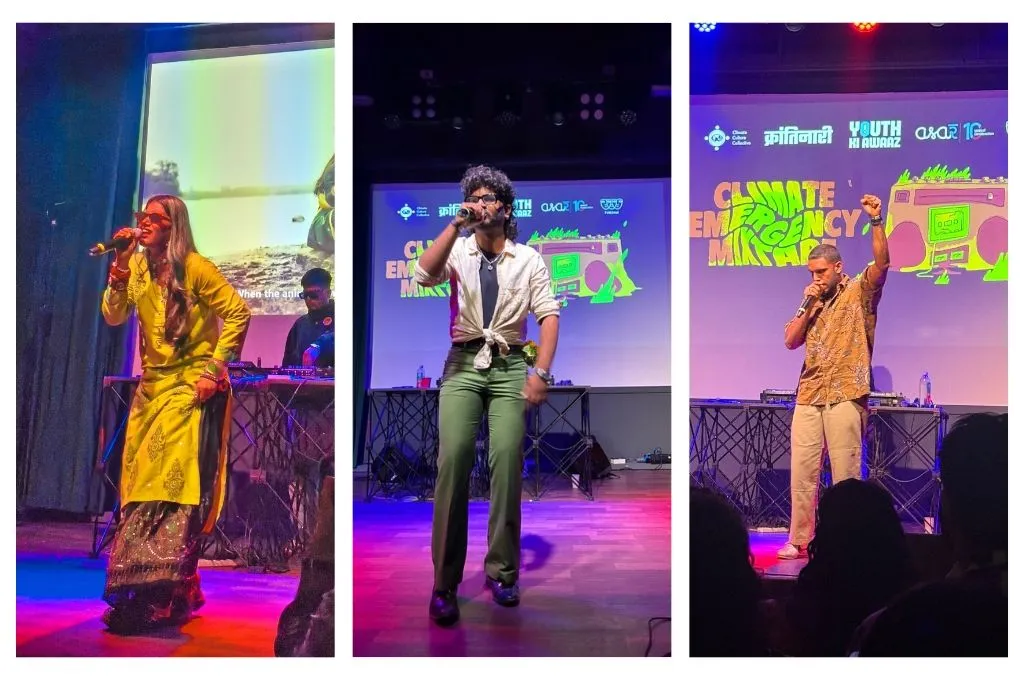
Elsewhere, YKA and ASAR created a Climate Emergency Mixtape, placing climate in the music of popular hip-hop and rap artists people already follow. Six independent hip-hop artists with their own following in Kannada, Marathi, Haryanvi, Hindi, and a Tamil-Kannada folk-rap fusion, garnered a million listens in under three weeks. Each track was rooted in a particular place and shed light on a hyperlocal issue—from Bengaluru’s disappearing lakes to the Aravallis and the Yamuna. The music received widespread news coverage, bringing more attention to the issue. put climate inside the music of popular hip-hop and rap artists audiences already follow.
Among OTT platforms, the SonyLiv show Gullak partnered with the climate thinktank Council on Energy, Environment and Water (CEEW) in early 2026 to spotlight solar rooftop adoption in one of their episodes. Even the major Bollywood movie Main Wapas Aaunga integrated conversations on crop burning and air pollution.
The economics of a climate content model
Studios and creators do not operate from an altruistic mindset, and the business of entertainment is in one of its roughest financial phases. Asking them to be virtuous and bring in climate messaging into their content for free won’t work beyond a handful of good Samaritans in the industry. Financial incentives are key to achieve this at scale.
One mechanism already exists in the form of product placement and branded content. In exchange for a fee, instead of a product logo or a brand, one can integrate a climate solution in films or social media content. It works for studios and creators because contracts, rate cards, and the craft of integration are all already there. What is added is a financial incentive to use storytelling for a cause.
This approach works for audiences as well because stories that explore solutions draw higher engagement than ones that merely talk about the problems. A 2014 Engaging News Project study examined how readers responded to solutions-oriented journalism. It gave 755 readers two versions of the same story, with one group receiving an account that included a solution and the other receiving an account without it. Among those who read the solutions-oriented story, 78 percent wanted to learn how to get involved, compared with 65 percent of those who read the copy with just the problems.
For a large-scale shift towards climate-embedded content models, two types of stakeholders need to come on board. The first are the philanthropists and climate funders who already have communications and awareness budgets, and importantly, can support and amplify the work of smaller and upcoming creators. The second are larger studios and creators who can offer lower integrated content rates absorbing a percentage of the cost themselves.
Funders attempting to work on climate media projects frequently end up spending large amounts to create a new piece of media such as a documentary, with limited expertise or control over the final creative product or its audience reach. Instead, embedding climate into an existing narrative can be more cost effective.
Some of this work has started happening. For instance, Netflix India launched the country’s first Climate Scriptwriting Lab this year with Pluc.tv. UNFCCC, Pluc.tv, and the Producers Guild in Mumbai held a climate storytelling session hosted by Amazon Studios. YKA also partnered with 85 wards in Indore to use storytelling and music to gather data and insights from frontline workers, such as gig workers and waste-pickers, and under-represented communities. This information was ultimately converted into a policy framework for Indore’s Municipal Corporation.
Other examples include a Scriptwriter’s Workshop that was organised by Climate Culture Collective, ASAR, Civic Studios, and other partners in Mumbai, bringing together 25 screenwriters to take existing Indian films and re-imagine them with climate solutions embedded in the narrative.
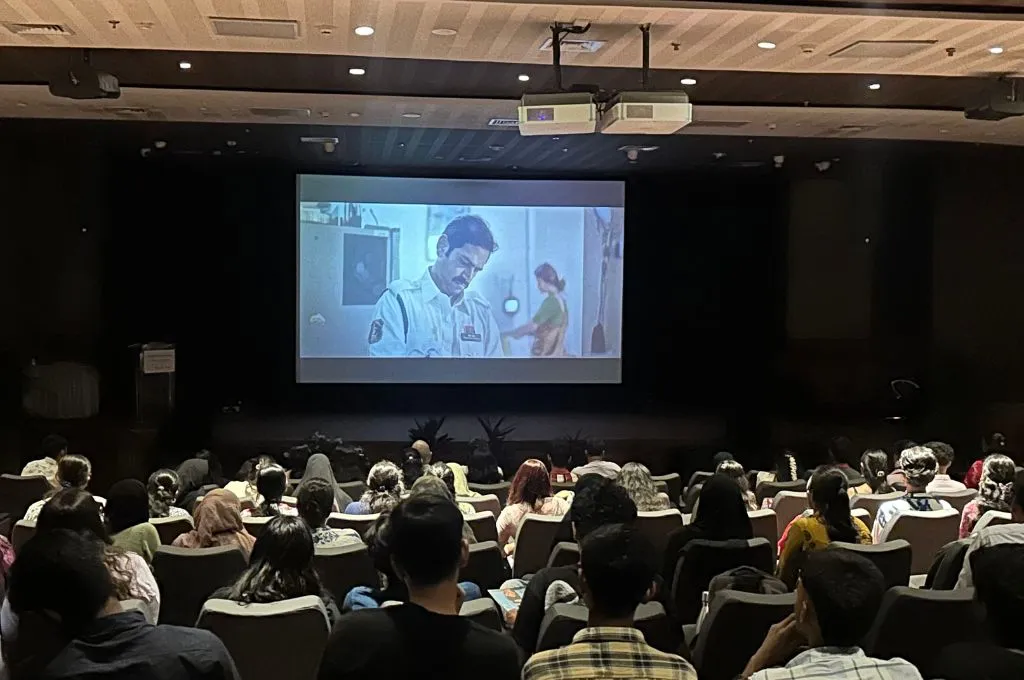
Climate philanthropists and funders can in turn connect these stories and projects to broader climate advocacy and action. For example, Civic Studios partnered with the Brihanmumbai Municipal Corporation (BMC), the United Nations Environment Programme (UNEP), and other organisations to screen their short film ‘It’s Only 47 Degrees Celsius’ that spotlighted solutions on extreme heat for decisionmakers.
As these initiatives grow, investment will serve as a catalyst, and not an end in itself. Creators working on integrated climate content will set examples, practices, and replicable learnings: writers who’ve done it once, producers who’ve seen it work, shows and films people can point to, and young local storytellers who carry the same stories into their own communities and social media—building a case for community-rooted narrative shifts.
The dots for solutions-driven climate storytelling are in place, and the moment to join them is now.
—
Know more
- Learn more about how to bring a ‘Climate Lens’ to storytelling and screenwriting.
- Read this report on communicating climate change in India.
- Understand where climate communication falls short and how campaigns can better connect with people’s realities.
This content is published by India Development Review and has not been created or edited by Hello Headlines. View original