AR Rahman's 'Mangal Rang' Song From 'Ramayana' Faces Backlash Over Sufi And Qawwali Influences
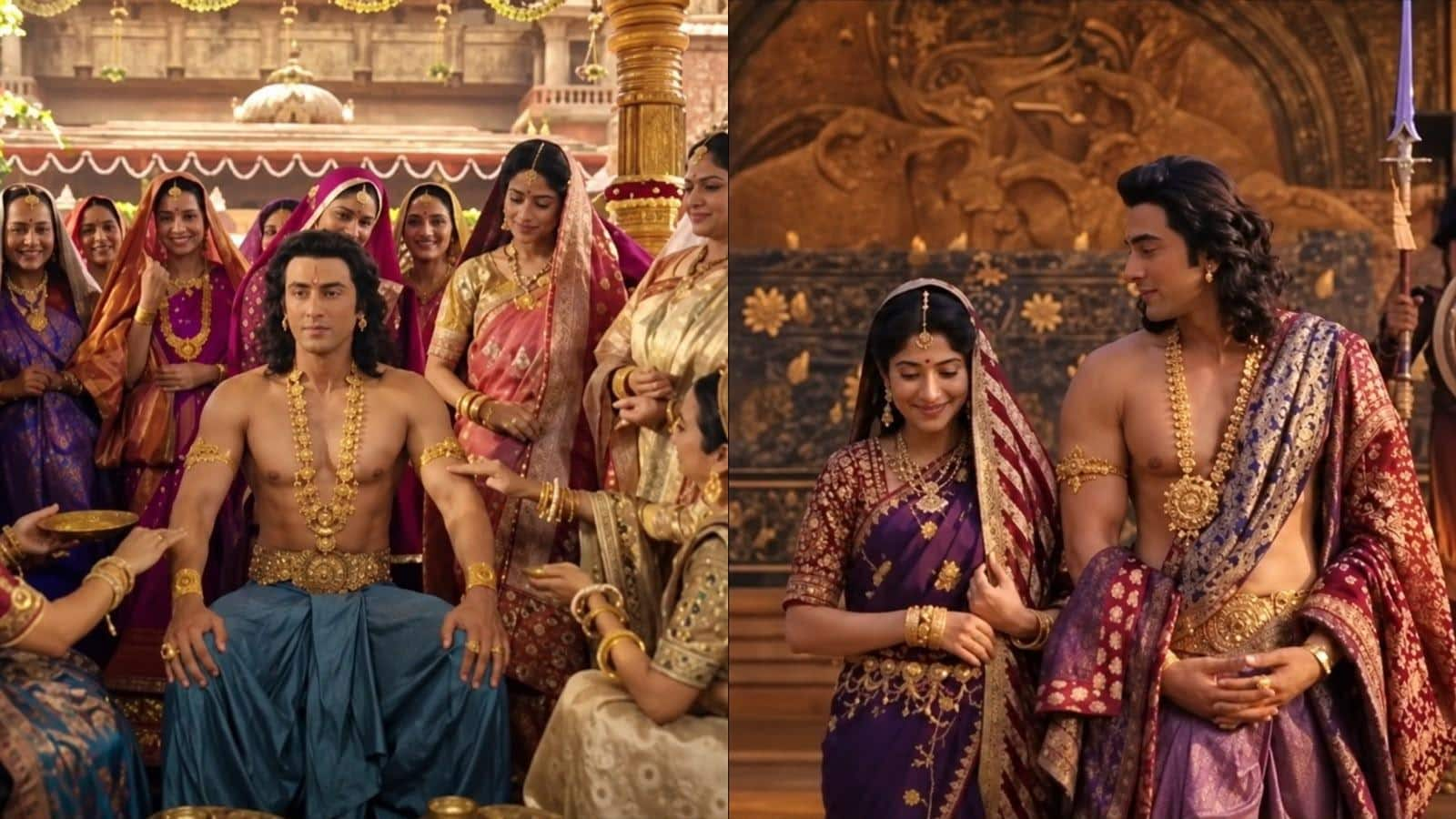
AR Rahman’s song Mangal Rang from Nitesh Tiwari’s Ramayana: The Rise of Legend has triggered a debate on social media over its musical style. Sung by Shreya Ghoshal and Arijit Singh, the track celebrates Lord Rama and Goddess Sita’s wedding and Sita’s arrival in Ayodhya. However, several listeners have objected to what they describe as qawwali and Sufi-inspired elements in the composition. Others have compared parts of the song with Rahman’s earlier work, including Enna Solla Pogirai and Kun Faya Kun. The criticism has also reignited discussions about the music choices made for films based on epics and historical stories.
Mangal Rang Draws Qawwali Comparisons
Mangal Rang, composed by AR Rahman with lyrics by Kumar Vishwas, features Ranbir Kapoor as Lord Rama and Sai Pallavi as Goddess Sita. The song portrays the celebrations surrounding their wedding and Sita’s arrival in Ayodhya. Soon after its release, several listeners took to X to discuss the track’s musical influences. A section of users felt that the arrangement carried noticeable qawwali-style elements, while others questioned whether that sound suited a film centred on the Ramayana.
One X user described the song as “qawwali-coded” and drew a comparison with Rahman’s earlier Tamil composition Enna Solla Pogirai from Kandukondain Kandukondain. The user wrote, "Mangal Rang is an obviously qawwali-coded song in Ramayana - the chorus, the "rang" metaphor (most famously used in Aaj Rang Hai), and the guitar which evokes bulbul tarang. Aside: self-inspired by Enna Solla Pogirai."
ALSO READ | Diljit Dosanjh’s Only Interview Of 2026 To Be On Koffee With Karan 9? Singer Teases Fans
Another user was more direct in criticising the musical approach, writing, "Qawwali in Ramayana. AR Rahman never fails to disappoint."
Listeners Compare Song With Kun Faya Kun
Several reactions also compared Mangal Rang with Kun Faya Kun, Rahman’s much-loved Sufi track from the 2011 film Rockstar, which starred Ranbir Kapoor. One X user questioned whether Rahman was the right choice to compose music for the epic, while suggesting that other composers could have delivered a more traditional sound.
What I was afraid of - some Ramayana songs sound qawwali coded. Why ARR why? It was clever, perhaps even subversive, in Varaha Nadikkarai Oram; it is plain inappropriate and disrespectful in Ramayana.
— Param Arunachalam (@taparam) October 25, 2026
The user wrote, "Disappointing!! AR Rahman was the worst choice as music director for this movie. This sounds more like a qawwali. Heavily inspired by his prior work in Rockstar/Jodha Akbar. Very "Kun faya kun" vibes. Rahman did the same mediocre job with Chhaava as well. Ajay-Atul or Shankar-Ehsaan-Loy would have done justice to the music that this movie deserves. #Ramayana #MangalRang,"
Mangal Rang from "Ramayana" has clear similarities to A.R. Rahman’s "Kun Faya Kun" the chorus, the singing style, the spiritual lift, the overall architecture. Imagine a Sufi style song attached to Bhagavan Ram and Sita Maa... Is it a deliberate callback? Or an older formula given new packaging?
— Āyudhika (@Ayudhika1310) October 25, 2026
Another social media user accused Rahman of bringing what they described as Islamic musical influences into projects rooted in Indian history and mythology. The post read, "First, the songs in Chhaava were subjected to Islamification, and now Ramayana’s Swayamvar song has been copied from a Tamil song and turned into a Sufi qawwali. AR Rahman isn’t missing a single opportunity to Islamify songs,"
A different listener argued that the track should have incorporated more traditional Indian instruments and Sanskrit vocabulary. The user wrote, "This song sounds more like Kun faya Kun; they must have used more of Veena, Sitar, Mridangam and Tabla and Sanskrit words should have been used in the lyrics as it's about Ramayana. The disappointing thing is that the lyrics have "Tu tera mera"; godliness is completely missing."
ALSO READ | Diljit Dosanjh’s Only Interview Of 2026 To Be On Koffee With Karan 9? Singer Teases Fans
AR Rahman Faces Wider Backlash
The criticism has also extended beyond Mangal Rang, with some users bringing up Rahman’s music for other period projects, particularly Chhaava. One X user criticised Nitesh Tiwari and producer Namit Malhotra’s decision to bring Rahman on board for Ramayana, writing, "This is why I hated the decision of Namit and Nitesh to take AR Rahman to compose music for Ramayana. He brought Urdu music into CHHAAVA and destroyed the movie; otherwise, it would have become the biggest blockbuster movie. And even after getting so much trolled for it, he couldn’t stop bringing Sufi music into Ramayana. I don't know how the director accepted this."
ALSO READ | Subodh Uniyal Apologises To Daler Mehndi After Uttarakhand Event Row, Mika Singh Responds
Another post took a personal swipe at the composer, stating, "That Overhyped sasta (cheap) Tansen strikes again and ruins the vibe."
One social media user even suggested that future contracts should place restrictions on Rahman’s musical choices, writing, "AR Rahman Should Be Signed Only On Two Exclusionary Clauses In The Contract : >You Will NOT Sing A Second >You Will NOT Use Qawwali." While the reaction has largely focused on the song’s perceived qawwali and Sufi influences, the discussion has also raised a broader question about how music should sound in films based on Indian epics.
Ramayana: The Rise of Legend is scheduled to release in theatres on November 5, 2026.
This content is published by ABP Live - Entertainment and has not been created or edited by Hello Headlines. View original