91 pc of Indian studies link air pollution to health risks
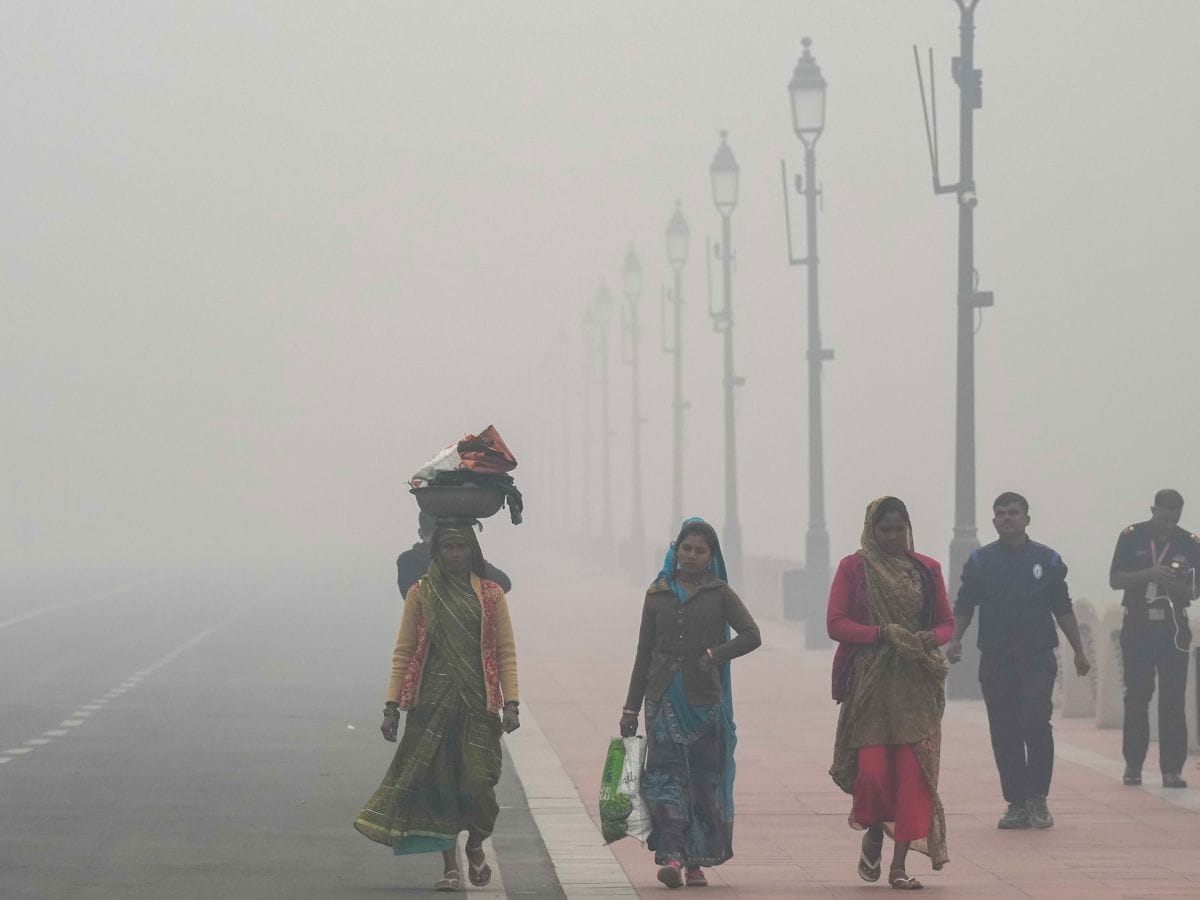
New Delhi: An analysis of more than 180 epidemiological studies examining the health impacts of air pollution across India has found that over 91 per cent of them reported at least one adverse health association with air pollution exposure.
These studies, published between 1975 and 2025, also noted that health impacts extend beyond respiratory diseases to cardiovascular diseases, diabetes, pregnancy complications, impaired child growth, tumours, blood disorders, mental and neurocognitive disorders, among others.
The analysis, released on Friday, November 13, was done by the Centre for Research on Energy and Clean Air (CREA), an independent research organisation focused on revealing the trends, causes, and health impacts, as well as the solutions, to air pollution.
Notably, out of 180 studies, only 40 examined air pollution’s impact on rural populations, of which 38 reported at least one adverse health association, indicating that air pollution’s health impacts are not confined to urban areas.
Further, most studies were conducted on Delhi (26) to examine the link between health and air pollution. The national capital was followed by Punjab with 13 studies, Maharashtra and Uttar Pradesh with 11 each, West Bengal with 10, Tamil Nadu with nine, Karnataka with eight and Telangana with seven, the report said.
In a statement, CREA analyst Manoj Kumar said, “The findings highlight the need to move beyond a city-centric approach and explicitly include rural areas through a regional, airshed-based approach in the next phase of National Clean Air Programme (NCAP 2.0).”
Studies examined a range of air pollutants, with 45 investigating both particulate matter and gaseous pollutants. PM2.5 was examined in 32 studies, PM10 alone in four, and both PM10 and PM2.5 in 16.
Among studies examining gaseous pollutants, statistically significant adverse health associations were reported for increased mortality, acute respiratory hospital and emergency visits, asthma-related hospital admissions, and impaired lung function.
Beyond their direct health effects, gaseous pollutants such as SOx and NOx also contribute to secondary PM2.5 formation by undergoing atmospheric chemical reactions to form sulphate and nitrate particles, respectively.
Kumar said, “Air pollution mitigation must adopt a multipollutant approach, addressing gaseous precursors that contribute to secondary PM2.5 and ground-level ozone formation. This requires emission reductions at major sources, including industries, power plants, residential cooking, and other combustion activities.”
Get the latest updates in Hyderabad City News, Technology, Entertainment, Sports, Politics and Top Stories on WhatsApp & Telegram by subscribing to our channels. You can also download our app for Android and iOS.
This content is published by The Siasat Daily and has not been created or edited by Hello Headlines. View original