Opinion: Children’s Day—the childhood we must not steal
By Vangeepuram Srinivasa Chary
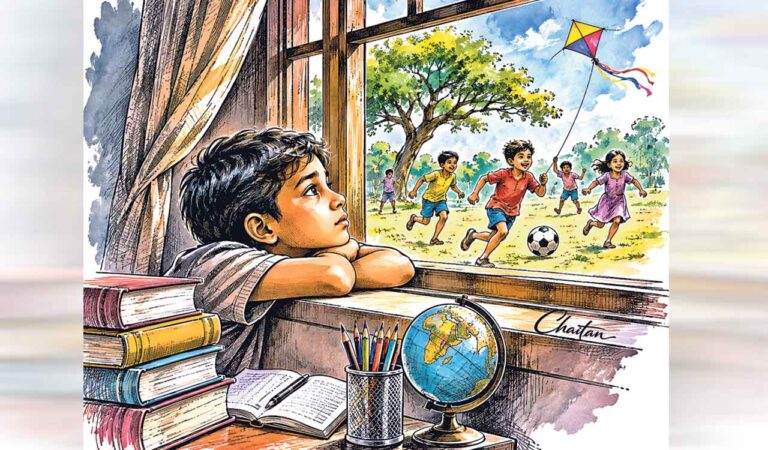
Childhood should be a time of discovery, imagination and carefree exploration. Yet, for many children, daily life is increasingly shaped by academic competition, parental expectations and digital distractions. Their schedules are filled with classes, assignments, tuition and organised activities, leaving little room for unhurried play or curiosity. Adults may believe that such demands prepare children for a competitive world.
But childhood is not simply a waiting room for adulthood. It is a distinct and formative stage of life, with needs and experiences that cannot be postponed. When every hour is planned and every achievement measured, children risk losing the freedom to discover who they are. The question is not whether children should be guided or encouraged to work hard, but whether ambition is gradually taking away the very experiences that make childhood meaningful.
Pressure to Achieve
Children are increasingly expected to excel in academics, sports and extracurricular activities. Competitive examinations, demanding school schedules, private tuition and parental aspirations can turn learning into a continuous performance test. Marks and rankings begin to define achievement, while comparisons with peers can weaken confidence. Even recreational activities may become opportunities to demonstrate excellence rather than enjoy participation.
Parents naturally want their children to succeed, but excessive expectations can create anxiety and a fear of failure. A child who struggles in one subject or shows little interest in a particular activity should not be made to feel inadequate. Education should encourage curiosity and develop individual abilities. Children need room to make mistakes, explore interests and discover their strengths at their own pace. Their worth must never depend on constant performance.
Digital Childhood
Digital technology has transformed how children learn, communicate and entertain themselves. Smartphones, tablets, online games and social media offer valuable opportunities, but excessive screen use can displace experiences essential to growing up. Outdoor play, face-to-face friendships, family conversations and independent exploration may suffer when much of a child’s free time is spent online.
Unrestricted access can also expose young users to inappropriate content, cyberbullying, manipulation and unrealistic comparisons. Simply banning devices is neither practical nor sufficient. Children need adults to set reasonable boundaries, explain online risks and encourage responsible use. Families can make room for screen-free meals, shared activities and time outdoors. Schools can strengthen digital literacy without allowing devices to dominate learning. Technology should be a useful part of childhood, not the centre around which childhood revolves.
Childhood is not a race to adulthood. Let children learn, make mistakes and enjoy the ordinary pleasures of growing up for we cannot give them a childhood twice
Need to be Heard
Children need affection, acceptance and the assurance that they can express their feelings without fear of ridicule or criticism. Yet busy schedules, parental stress and limited family interaction can leave some feeling unheard or misunderstood. Their fears, disappointments and insecurities should not be dismissed as trivial. A child who makes a mistake needs guidance rather than humiliation; one who faces difficulty needs reassurance rather than comparison.
Listening patiently, acknowledging emotions and responding with empathy build trust. Parents and teachers should notice when a child becomes withdrawn, unusually anxious or reluctant to speak. Such changes may have many causes and deserve a calm, caring response. Emotional security does not mean shielding children from every disappointment. It means helping them face difficulties with the confidence that they are loved, respected and supported.
Play is not a distraction from learning; it is one of the ways children learn about themselves and the world. Through games and sports, they practise cooperation, patience, negotiation and resilience in the face of setbacks. Friendships teach them to share, resolve disagreements and appreciate perspectives different from their own. Drawing, music, storytelling, reading and imaginative play nurture creativity and concentration. These experiences have value even when they produce no certificate, prize or measurable outcome.
Excessive Control
Parenting in a rapidly changing world calls for understanding, patience and adaptability. Children need guidance and boundaries, but they also need age-appropriate choices and opportunities to learn from mistakes. Excessive control, constant monitoring and unrealistic expectations can weaken confidence; unrestricted freedom, on the other hand, may expose them to avoidable risks.
The balance lies in being present without directing every step. Parents can communicate openly, listen without immediate judgement and involve children in decisions appropriate to their age. Their own conduct matters: children learn from how adults manage anger, treat others and respond to failure. Affection, consistency and mutual respect create a home in which children feel secure enough to develop independence. Guidance should help them grow, not make them feel that their lives belong to someone else.
Unequal Childhoods
Not every child experiences childhood in the same way. Poverty, disability, gender discrimination, unsafe living conditions and unequal access to education, nutrition and healthcare shape very different childhoods. Some children have books, recreation and supportive learning environments; others face hunger, household responsibilities, exclusion or the need to work.
Children affected by conflict, displacement or abuse may carry burdens that no child should have to bear. These inequalities cannot be overcome by telling children to be resilient or by celebrating their potential. They require practical support from families, communities and public institutions. Children’s Day should therefore be more than a celebration for those who already enjoy opportunity. It should renew attention to children whose needs are less visible and whose voices are less often heard. A society’s commitment to childhood is measured by how it treats its most vulnerable children.
Children’s Day should invite us to examine not only what children are achieving, but also what they are experiencing. Are they laughing, playing, asking questions, forming friendships and feeling safe enough to speak honestly? Or are their days governed by schedules, comparisons and expectations they cannot question? Children need education and guidance, but they also need time, affection, opportunities to pursue their interests and the confidence that they are valued beyond their achievements.
Families, schools and communities must resist the temptation to turn every interest into a competition and every moment into preparation for the future. Let children learn, make mistakes, discover their interests and enjoy the ordinary pleasures of growing up. We cannot give them a childhood twice. As we observe Children’s Day, let us make a genuine commitment to protect the present, not merely invest in the adults children may become. Childhood is not a race to adulthood; it is a vital part of life that deserves to be lived fully.

(The author, an alumnus of NCERT, Mysuru, is a counsellor and human development trainer)
This content is published by Telangana Today and has not been created or edited by Hello Headlines. View original